Noether's Theorem and The Symmetries of Reality
PBS Space Time5 HN recommenders · recommended in 5 months, 2018–2026
explainer · intermediate · evergreen · 2018–2026 on HN
PBS Space Time explains Noether's theorem: conservation laws such as energy and momentum are consequences of deeper symmetries. It also covers why those laws hold only under certain conditions.
HN commenters point to it as an approachable explanation of how symmetries give rise to conservation laws, including the story of Emmy Noether.
Up next
 2 mo on HN
The simple, clever sensor behind automatic windshield wipers
Technology Connections
2 HN recommender · 2024–2026
 3 mo on HN
Is The Alcubierre Warp Drive Possible? | Space Time | PBS Digital Studios
PBS Space Time
3 HN recommender · 2020–2023
 5 mo on HN
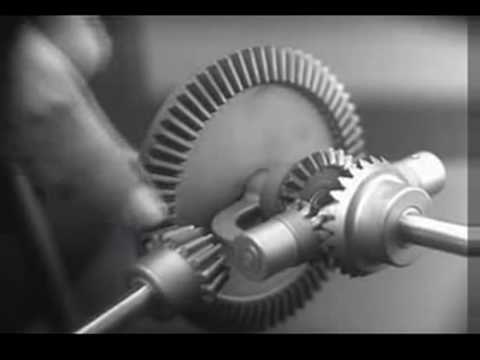
How Differential Gear works (BEST Tutorial)
ConceptVBS
5 HN recommender · 2013–2020
 3 mo on HN
Are Space and Time An Illusion?
PBS Space Time
3 HN recommender · 2016–2020
 4 mo on HN
Should We Colonize Venus Instead of Mars?
PBS Space Time
4 HN recommender · 2016–2022
 3 mo on HN
Risking My Life To Settle A Physics Debate
Veritasium
5 HN recommender · 2021–2023
 1 mo on HN
Series circuit - 3 LEDs
Henryk Gasperowicz
1 HN recommend · 2018–2020
 15 mo on HN
AT&T Archives: Similiarities of Wave Behavior (Bonus Edition)
AT&T Tech Channel
12 HN recommender · 2014–2026
 8 mo on HN
I bought 1000 meters of wire to settle a physics debate
AlphaPhoenix
8 HN recommender · 2021–2026
 8 mo on HN
The Speed of Light is NOT About Light
PBS Space Time
8 HN recommender · 2017–2023
 7 mo on HN
Why No One Has Measured The Speed Of Light
Veritasium
6 HN recommender · 2020–2024
 6 mo on HN
Richard Feynman - The.Character of Physical Law - Part 1 The Law of Gravitation (full version)
Tinkerin' Thinkers
6 HN recommender · 2013–2022
10 comments from Hacker News
TLDR: Do an experiment, then move 10 meters to the left (or rotate 90 degrees, or wait a few days) and do it again. The results don’t change, because the laws of physics don’t change. This realization alone is enough to produce conservation laws. Translational and rotational symmetries produce conservation of linear and angular momentum, and the time symmetry produces conservation of energy. Each symmetry you find leads to new physics. It's such an aha moment. PBS Space Time: ▶ this video
If you like reading about Wu from a woman in physics hidden in plain sight aspect you might like the story of Emmy Noether[0]. A mathematician who worked a few doors down from Einstein and produced era defining result in physics. The connection between symmetry and conservation. Noether's theorem to this day is one of the most profound holy shit moments in many physicists education. Her life was been cut tragically short. [0] ▶ this video
PBS Space Time has done a couple of episodes on Stationary Action and Noether's Theorem that are approachable by those not yet already exposed to Langrangians: link ▶ this video Sabine Hossenfelder also has a good episode on it: link
I'd recommend the two episodes released right before the one about the black hole information paradox too. They set up for what is covered in the information paradox episode. "Why Quantum Information is Never Destroyed" - link "What Survives Inside A Black Hole?" - link Maybe the episode before those two also. I vaguely recall that something from the information paradox episode used something from that (and if I'm misremembering, it was still a neat episode): "Noether's Theorem and The Symmetries of Reality" - ▶ this video I have a question about the episodes you cited. They cover how beyond the event horizon space becomes time and time becomes space. They go over how that means that inside you can't go backwards in space for the same reason that out here in the normal universe you can't go backwards in time. You are doomed to only go forward, which inside means toward the singularity. (Much better than the ridiculous analogy often given that you can't get out of a black hole because the escape velocity equals or exceeds the speed of light. That's a ridiculous analogy because it only explains why you can't get out ballistically). But all their explanations used a simplified black hole in a spacetime with just 1 space dimension and 1 time dimension. We've actually got 3 space dimension. Does that mean that in a real block hole past the event horizon, you end up in a spacetime with 3 time dimensions and 1 space dimension? If so, does anything interesting happen due to having mor
Things are conserved when there's a corresponding symmetry; this is Noether's Theorem.[1] I won't pretend to understand half that article, but here's a video[2] on it. [1]: link [2]: ▶ this video
With the caveat I'm summarising from what PBS Space Time and Dr Becky* say: • Big Bang: we can only see back to surface of last scattering, i.e. the CMB, extrapolating backwards goes "???" at much the same point as it did a few decades back because we still have not unified quantum mechanics and general relativity • CMB should only have isotope distribution of Big Bang nucleosynthesis, that hasn't changed in the last decades, dunno if that's what you meant by "various non-uniform gases were scattered around"? • Variations in density of CMB do exist, key phrase is "Baryon acoustic oscillations", while they're very small magnitude they're also massive in distance scale, so they're how galactic clusters formed (that scale rather than stars directly): link link link • Re: "Perhaps the expansion of space wasn't uniform either": I heard about specifically "Timescape Cosmology", but a quick search says that's part of a broader category of inhomogeneous cosmologies: link link link • Re: "and when space expands or contracts, energy is generated": no, general relativity does not in general conserve energy, and it is related to the curvature of spacetime. Simple example is that the photons in the CMB have much less energy to us than they did to the atoms they were emitted from**: ▶ this video * I assuming I'm correctly judging the level and attention to detail they're providing, given the detail they put in and references to specific research publications. My degree is Software E
The Map is Not the Territory! link Another piece of widespread ignorance I've seen here on HN, is the treatment of conservation laws as if they're baked into the fabric of reality. This results in programmers making philosophical/cosmological arguments in ignorance. As far as we know, conservation laws are not baked into reality. Instead, they are very useful analysis tools which can take advantage of symmetries. (Or near-symmetries.) Any given conservation law can disappear if a given symmetry doesn't apply, but Noether's Theorem still remains. ▶ this video If you want to see an example of how social media "bubbles" can impede the dissemination of knowledge, note that I've actually been flagged on HN for trying to explain this, apparently because someone misread this as advocacy for perpetual motion machines. It is not! (Also, because I used <facepalm> -- but when you're wrong, you're wrong, and when you're wrong and you think it's clever, it feels worse.) (That title, "The Map is Not the Territory" acts as a pointer to a series of literary references. link )
> if you're saying conservation of momentum can be violated, or conservation of energy can be violated, then basically all of modern physics would have to be wrong. Conservation is not a fundamental law, but an emergent property of a deeper principle called Noether's Theorem: link ▶ this video And it is constantly violated.
The section of the video dealing with Noether's Theorem and The Symmetries of Reality actually ends at t=594s :/ so just the main link is needed: ▶ this video If one or another of these so-called fundamental laws is being apparently broken by the EmDrive then that would make it a very very unusual object. Consequently there would need to be repeatable verifiable evidence that it does so and at least the beginnings of a theory as to how in fact this breakage is occurring–Noether's theorem notwithstanding.
Yes the actual laws of physics can't be broken Conservation laws should be considered more as powerful analysis tools than as foundations of reality. So more Newtonian gravity than Relativity. In fact, you can regard Newtonian orbital mechanics as elaborations on conservation of energy and momentum. Conservation laws themselves have an underlying principle: ▶ this video Another analogy: Conservation laws are like Euclidian geometry. On the scale of building a cabinet or an office building, Euclidian geometry rules! On intergalactic scales, it simply fails. So too, with the conservation of energy. If someone tries to sell you a perpetual motion or over unity machine, it is pretty rock solid. But if you're going to try to make some kind of cosmological argument using conservation of energy, that's just plain facepalm territory there. (Some HNer actually reported me for using <facepalm> in response to conservation of energy in a cosmological argument.)