A way to explore Venus
NASA Langley Research CenterRecommended by 1 HN commenter across 1 month, 2019–2021
demo · general · evergreen · 2019–2021 on HN
A NASA Langley concept video for HAVOC, a lighter-than-air vehicle that would carry two astronauts on a 30-day mission in Venus's upper atmosphere. It explains why the planet's surface is so hostile and why the clouds are more habitable.
HN shares it as the go-to visual for the idea of crewed blimps floating above Venus.
Up next
 11 mo on HN
Light Years Ahead | The 1969 Apollo Guidance Computer
TNMoC
Recommended 11× on HN · 2021–2026
 9 mo on HN
The Solar Gravitational Lens will Map Exoplanets. Seriously.
Launch Pad Astronomy
Recommended 10× on HN · 2020–2025
 7 mo on HN
34C3 - The Ultimate Apollo Guidance Computer Talk
media.ccc.de
Recommended 9× on HN · 2018–2025
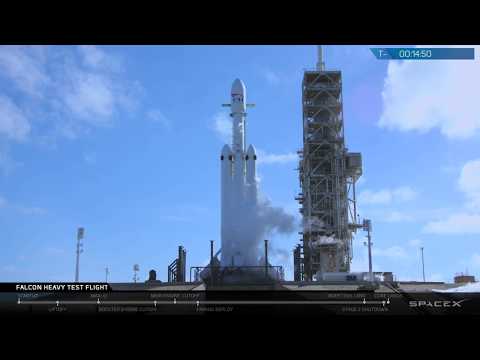 6 mo on HN
Falcon Heavy Test Flight
SpaceX
Recommended 4× on HN · 2018–2026
 7 mo on HN
I Was SCARED To Say This To NASA... (But I said it anyway) - Smarter Every Day 293
SmarterEveryDay
Recommended 9× on HN · 2023–2025
 8 mo on HN
Starbase Tour with Elon Musk [PART 1 // Summer 2021]
Everyday Astronaut
Recommended 11× on HN · 2021–2024
 5 mo on HN
Carl Sagan - Pale Blue Dot
carlsagandotcom
Recommended 5× on HN · 2011–2026
 6 mo on HN
Apollo Guidance Computer Part 1: Restoring the computer that put man on the Moon
CuriousMarc
Recommended 8× on HN · 2019–2024
 5 mo on HN
Dr. Robert Zubrin with a brilliant answer to "Why Should We Go To Mars?"
Jamin Gray
Recommended 3× on HN · 2016–2021
 6 mo on HN
The REAL Possibility of Mapping Alien Planets!
PBS Space Time
Recommended 4× on HN · 2023–2024
 6 mo on HN
How Much Do Rockets Pollute? Are They Bad For Our Air?
Everyday Astronaut
Recommended 6× on HN · 2020–2023
 6 mo on HN
Orbital Rings
Isaac Arthur
Recommended 4× on HN · 2017–2025
4 comments from Hacker News
There's this real cool concept about a manned blimp that was produced by NASA a few years ago. It has a really cool video to go with it too. ▶ this video
There is a concept by NASA for such a mission, it is called "High Altitude Venus Operational Concept" or "HAVOC" [0]. They also made a demo video for it [1]. [0] link [1] ▶ this video
A floating habitat on Venus is actually more attractive. Venus (upper atmosphere): -human livable temperatures with modest temperature control -Earth-like pressure (Himalayans) leads to slow leaks that can be patched, and pressure can be increased inside to stop the leaks inward -protected by thick atmosphere from radiation, meteors, asteroids -strong magnetic field against radiation -atmosphere still thin enough for solar panel energy use -the sulfuric acid atmosphere requires a Teflon coating and/or mixing Teflon particles with the metals during fabrication -the escape velocity from the upper atmosphere is low and requires a small rocket and not much fuel, leaving more fuel for return trips -distance between Earth and Venus is 3 months, versus 6 months to a 1 year depending on the window of opportunity.. that means you can rescue crews faster, get them supplies quicker, and replace crew sooner on Venus -oxygen on Venus has a strong lifting power, you can float entire heavy concrete and steel cities on massive platforms, think cloud city from Star Wars(tm) -aerodynamics work similarly to Earth; airships (dirigibles), airplanes, drones are all possible here Concept mission to Venus compliments of NASA: ▶ this video Mars: -inhospitable temperatures not suitable for human or plant life -explosive decompression due to a micro-meteorite causing a hole -no atmosphere to protect against radiation or projectiles -weak magnetic field providing no protection -violent unpredictable wind sto
I know this isn't what you mean by "studied," but here's a NASA produced video mockup of manned blimps over Venus: ▶ this video