The Antique Toaster that's Better than Yours
Technology Connections12 HN recommenders · recommended in 11 months, 2019–2025
explainer · general · evergreen · 2019–2025 on HN
Technology Connections takes apart a 1940s Sunbeam Radiant Control toaster. It senses the toast's own browning and lowers and raises it automatically using purely mechanical parts and no electronics.
HN returns to it again and again as a favorite example of elegant, chip-free mechanical engineering that beats modern toasters.
Up next
 2 mo on HN
Building Prototypes Dan Gelbart part 10 of 18 Flexures
Dan Gelbart
2 HN recommender · 2015–2023
 2 mo on HN
ChatGPT with Rob Miles - Computerphile
Computerphile
4 HN recommender · 2023–2023
 9 mo on HN
USENIX ATC '21/OSDI '21 Joint Keynote Address-It's Time for Operating Systems to Rediscover Hardware
USENIX
12 HN recommender · 2021–2026
 10 mo on HN
USENIX Security '18-Q: Why Do Keynote Speakers Keep Suggesting That Improving Security Is Possible?
USENIX
10 HN recommender · 2018–2026
 4 mo on HN
Building Prototypes Dan Gelbart part 1 of 18 Introduction
Dan Gelbart
4 HN recommender · 2015–2022
 2 mo on HN
Bret Victor Inventing on Principle
Luna Programming Language Tutorials
3 HN recommender · 2020–2022
 2 mo on HN
Leaked: Pentagon's UFO -BUSTED!
Thunderf00t
2 HN recommender · 2021–2021
 3 mo on HN
Prius Hybrid Drive Explained
Niels Blaauw
3 HN recommender · 2019–2024
 15 mo on HN
Around The Corner - How Differential Steering Works (1937)
US Auto Industry
17 HN recommender · 2013–2024
 12 mo on HN
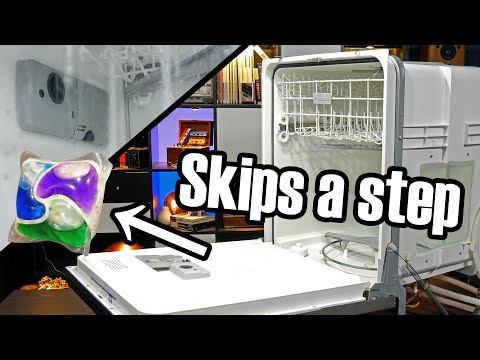
Detergent packs are kinda wishy-washy (Dishwashers Explained)
Technology Connections
15 HN recommender · 2021–2025
 12 mo on HN
Mechanical Computer (All Parts) - Basic Mechanisms In Fire Control Computers
Excelsior10000
13 HN recommender · 2014–2025
 11 mo on HN
U.S. NAVY BASIC MECHANISMS OF FIRE CONTROL COMPUTERS MECHANICAL COMPUTER INSTRUCTIONAL FILM 27794
PeriscopeFilm
11 HN recommender · 2018–2026
12 comments from Hacker News
A related thought, just leaving this here. There's something great about old technology (though obviously one must be aware of survivorship bias when citing such technology), despite the fact that, logically speaking, new technology should have obviously been better. Perhaps it's some variant of Jevons' paradox. The better / more efficient things get, the more of an impetus there is to use them in truly crappy ways. And this is how I'm starting to feel about programming with vs without an AI: you can either program manually to create truly creative, functional, elegant stuff, or use AI to produce garbage more efficiently. There just doesn't seem to be an in-between category, at least in terms of demand. In case you haven't seen this video of a toaster from the 60s before, you're in for a treat: ▶ this video I'm also reminded of Edsger Dijkstra's quote on elegance: link
The Sunbeam Radiant Control Toaster predates both and seems worth mentioning here for it’s superior user experience and unique analog technology. Technology Connections produced a fantastic teardown video of it a while back. ▶ this video
> You might think such a system would involve a thermostat, a microcontroller, and an actuator, but this design [...] has bimetallic arms with steel on the outer surface and copper on the inner surface. As the filament heats up, the arms warm up, causing the copper to expand faster than the steel. This expansion pushes the arms open, releasing the lighter. The coil spring then causes the handle to pop out, signaling that the lighter is ready. Maybe I am in a picky mood, but for me the intro made it sound like all three items (thermostat, microcontroller, actuator) would not be necessary, though of course only the microprocessor is missing from the design (thermostat -> bimetallic arms, actuator -> spring). Mandatory link to another marvel in the same problem space (I found the 19min video worth the time): "An Antique Toaster That's Better Than Today’s [video]" ▶ this video link [2019, 386 points|5 years ago|232 comments]
What sold it for me, was the Sunbeam toaster. I always wondered why in the cartoons people would get shocked sticking a fork in a toaster. And into the rabbit hole I went... ▶ this video
People might _say_ they want something made locally, but when it comes to _spending_ money, they mostly care about price and quality, less about patriotism. Compare the paper 'Prejudice is Free, but Discrimination has Costs' link In any case, if you are interested in fancy toasters, you might like to have a look at ▶ this video
They used to make damned clever toasters, like the Sunbeam Automatic toaster... it was freaking amazing. My dad had one with sales display board, etc... he was super proud of it. Here's a nice video about them.[1] [1] ▶ this video
▶ this video a interesting video on a similar subject, a antique mechanical toaster that works better than many modern ones
YouTuber Technology Connections was featured in the recent discussion on diswashing machines and detergents. He's done a video on a lovely ancient toaster, too: ▶ this video Fully automatic brownness selection, and hands-free insertion and pop-up -- all without any electronic chips at all.
The reason is that old toaster designs had unpolarized plugs and therefore a good chance of uninsulated live wires inside, even when off. Modern toasters don't anymore, but folk wisdom lasts forever. Although you make a good point that if your outlet polarity is reversed, you might still have a problem. I don't know if modern designs are robust to that... I learned this from a video about old Sunbeam toasters that was unexpectedly fascinating: ▶ this video
Since toast is discussed on HN: I remember this video [0] nicely explaining some nice engineering of an interesting toaster. [0]: ▶ this video
I’d technology connections did a 20 minute long episode on the mechanical design of this toaster. I’d recommend it if you haven’t see it. ▶ this video
But then how could you make toast when you're not home, like at a conference, or driving in your car? /s This is a pretty cool toaster: ▶ this video