CNN, Feynman and the Challenger disaster
vsrr831 HN recommender · recommended in 1 month, 2016–2025
interview · general · evergreen · 2016–2025 on HN
A June 1986 CNN interview with physicist Richard Feynman about the Challenger disaster and the management failures he found while serving on the investigating commission.
HN cites it for Feynman's insights on NASA risk reasoning, blame and engineering culture, and the contrast between Apollo and the Shuttle.
Up next
 11 mo on HN
Light Years Ahead | The 1969 Apollo Guidance Computer
TNMoC
11 HN recommender · 2021–2026
 9 mo on HN
The Solar Gravitational Lens will Map Exoplanets. Seriously.
Launch Pad Astronomy
10 HN recommender · 2020–2025
 7 mo on HN
34C3 - The Ultimate Apollo Guidance Computer Talk
media.ccc.de
9 HN recommender · 2018–2025
 6 mo on HN
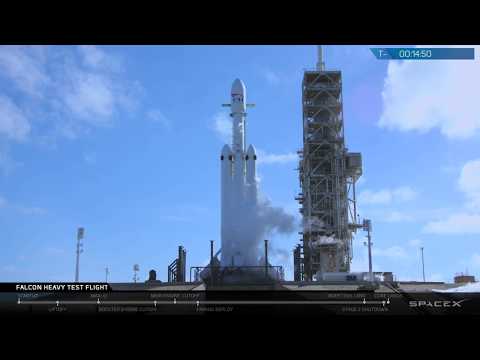
Falcon Heavy Test Flight
SpaceX
4 HN recommender · 2018–2026
 7 mo on HN
I Was SCARED To Say This To NASA... (But I said it anyway) - Smarter Every Day 293
SmarterEveryDay
9 HN recommender · 2023–2025
 8 mo on HN
Starbase Tour with Elon Musk [PART 1 // Summer 2021]
Everyday Astronaut
11 HN recommender · 2021–2024
 5 mo on HN
Carl Sagan - Pale Blue Dot
carlsagandotcom
5 HN recommender · 2011–2026
 6 mo on HN
Apollo Guidance Computer Part 1: Restoring the computer that put man on the Moon
CuriousMarc
8 HN recommender · 2019–2024
 5 mo on HN
Dr. Robert Zubrin with a brilliant answer to "Why Should We Go To Mars?"
Jamin Gray
3 HN recommender · 2016–2021
 6 mo on HN
The REAL Possibility of Mapping Alien Planets!
PBS Space Time
4 HN recommender · 2023–2024
 6 mo on HN
How Much Do Rockets Pollute? Are They Bad For Our Air?
Everyday Astronaut
6 HN recommender · 2020–2023
 6 mo on HN
Orbital Rings
Isaac Arthur
4 HN recommender · 2017–2025
4 comments from Hacker News
It was reusable, but way over promised. Don't take my word for it. Richard Feynman served on the Challenger commission and very nicely summarizes the difference between Apollo and Space Shuttle. ▶ this video SpaceX is doing stuff that's just beyond the scope of what's deemed conventionally realistic. That's achievable and pushes us forward.
> the model of 'public by default, opt in for security' is fundamentally daft in this context. It's daft in most contexts, and is one of the largest sources of security problems. If your design requires enumerating badness [1], you're doing it wrong. > from: link >> Just about every ICO, trust and company used the Parity multisig wallet, and that code was considered well-tested. -sigh- This is, unfortunately, a common problem. "It worked ok the last N times" and "It passed a lot of tests" do not mean it's bug-free and safe to use. Richard Feynman was right during the Challenger investigation when he called this a childish attitude . (He was also right in not wanting to assign blame, instead asking "How do we educate the child?"[2]) [1] link [2] ▶ this video
> the absence of known danger is not the same as safety. Feynman had some interesting comments on this problem regarding NASA's "it worked ok last time" approach to risk assessment before the Challenger Disaster. ▶ this video
Here is Richard Feynman talking about the issues ▶ this video Seems not very different from how companies are managed 30 years later.