Rust: A Language for the Next 40 Years - Carol Nichols
ChariotSolutionsCited 3× on HN, 2021–2024
talk · intro · 2021–2024 on HN
Carol Nichols' Philly ETE 2019 talk on what makes Rust unique. It covers memory safety, how editions let the language evolve without breaking code, and who relies on Rust in production.
Cited as a talk about Rust's long-term outlook, and as the source of the rail-safety analogy for software safety.
Up next
 11 mo on HN
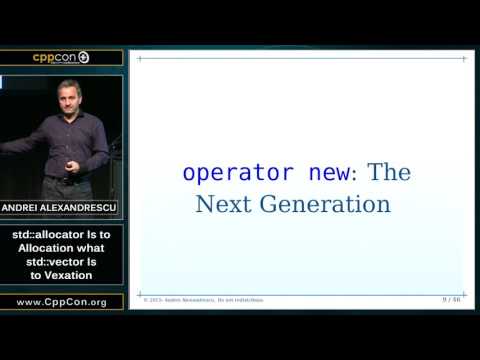
CppCon 2015: Andrei Alexandrescu “std::allocator...”
CppCon
Recommended 7× on HN · 2017–2025
 12 mo on HN
Lexical Scanning in Go - Rob Pike
GoogleFOSSSydney
Recommended 13× on HN · 2012–2025
 10 mo on HN
CppCon 2017: Matt Kulukundis “Designing a Fast, Efficient, Cache-friendly Hash Table, Step by Step”
CppCon
Recommended 9× on HN · 2018–2026
 9 mo on HN
RustConf 2018 - Closing Keynote - Using Rust For Game Development by Catherine West
Rust Programming Language
Recommended 9× on HN · 2018–2023
 10 mo on HN
CppCon 2016: Jason Turner “Rich Code for Tiny Computers: A Simple Commodore 64 Game in C++17”
CppCon
Recommended 13× on HN · 2016–2024
 9 mo on HN
Ideas about a new programming language for games.
Jonathan Blow
Recommended 7× on HN · 2014–2025
 9 mo on HN
CppCon 2014: Mike Acton "Data-Oriented Design and C++"
CppCon
Recommended 9× on HN · 2015–2026
 9 mo on HN
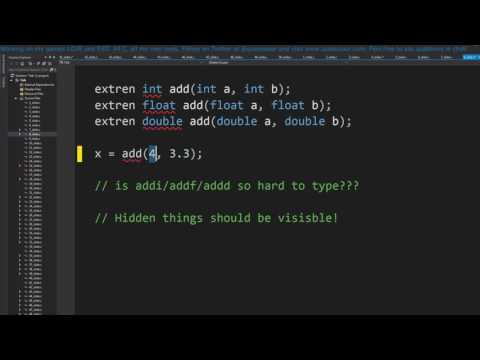
How I program C
Eskil Steenberg
Recommended 8× on HN · 2017–2025
 9 mo on HN
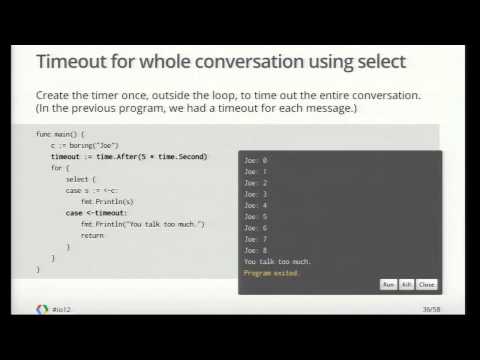
Google I/O 2012 - Go Concurrency Patterns
Google for Developers
Recommended 9× on HN · 2012–2025
 7 mo on HN
CppCon 2015: Kate Gregory “Stop Teaching C"
CppCon
Recommended 7× on HN · 2016–2025
 7 mo on HN
Zig: A programming language designed for robustness, optimality, and clarity – Andrew Kelley
Recurse Center
Recommended 6× on HN · 2018–2024
 7 mo on HN
CppCon 2014: Chandler Carruth "Efficiency with Algorithms, Performance with Data Structures"
CppCon
Recommended 7× on HN · 2014–2024
3 comments from Hacker News
I think Rust team would still have a very small stdlib even if they have more funding, here's a talk[0] where they aim to be relevant for the next 40 years, in that time span there would be a lot of changes and to be backward compatible, you cannot have features in your stdlib that will be irrelevant or change in the next 5, 10, 15, 20 years. [0] ▶ this video
In my opinion, what has been most harmful for evolution of the software engineering profession is the tendency to blame individual developers for not being infallible instead of fixing chronic failures in tooling, processes, and funding. The medical profession, aviation, even rail transportation [1] have all progressed past the point where avoidable failures are entirely the responsibility of the individual. Of course, there was resistance in those fields as well because some considered themselves an "above-average" doctor or pilot who didn't need safeguards, checklists, union rules, or laws. But it empirically improved outcomes. [1] ▶ this video
FYI, Carol Nichols mentioned this in a Rust video [0] and I thought it was pretty interesting! (yes, previously submitted to HN, but long ago with little traction so I think this is within HN guidelines). [0] ▶ this video