Apollo 11 Saturn V Launch Camera E-8
Mark Gray2 HN recommenders · recommended in 2 months, 2016–2024
demo · general · evergreen · 2016–2024 on HN
Raw 500 fps footage from Camera E-8 on the launch tower for the Apollo 11 Saturn V liftoff, transferred in HD from the 16mm original. More than eight minutes of film covers about 30 seconds of real time.
HN commenters recommend it for its slow-motion view of the first seconds of liftoff and cite it when comparing launch pads and engine behavior.
Up next
 4 mo on HN
Flaw in the Enigma Code - Numberphile
Numberphile
4 HN recommender · 2013–2025
 11 mo on HN
Light Years Ahead | The 1969 Apollo Guidance Computer
TNMoC
11 HN recommender · 2021–2026
 9 mo on HN
The Solar Gravitational Lens will Map Exoplanets. Seriously.
Launch Pad Astronomy
10 HN recommender · 2020–2025
 7 mo on HN
34C3 - The Ultimate Apollo Guidance Computer Talk
media.ccc.de
9 HN recommender · 2018–2025
 6 mo on HN
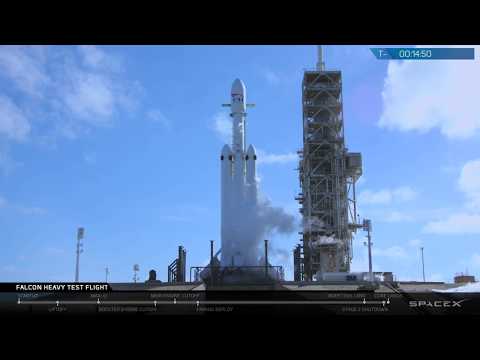
Falcon Heavy Test Flight
SpaceX
4 HN recommender · 2018–2026
 7 mo on HN
I Was SCARED To Say This To NASA... (But I said it anyway) - Smarter Every Day 293
SmarterEveryDay
9 HN recommender · 2023–2025
 8 mo on HN
Starbase Tour with Elon Musk [PART 1 // Summer 2021]
Everyday Astronaut
11 HN recommender · 2021–2024
 5 mo on HN
Carl Sagan - Pale Blue Dot
carlsagandotcom
5 HN recommender · 2011–2026
 6 mo on HN
Apollo Guidance Computer Part 1: Restoring the computer that put man on the Moon
CuriousMarc
8 HN recommender · 2019–2024
 5 mo on HN
Dr. Robert Zubrin with a brilliant answer to "Why Should We Go To Mars?"
Jamin Gray
3 HN recommender · 2016–2021
 6 mo on HN
The REAL Possibility of Mapping Alien Planets!
PBS Space Time
4 HN recommender · 2023–2024
 6 mo on HN
How Much Do Rockets Pollute? Are They Bad For Our Air?
Everyday Astronaut
6 HN recommender · 2020–2023
5 comments from Hacker News
Here is 500 fps film of the Saturn V launch for Apollo 11, narrated by Mark Gray. It explains the sequence of events over the course of 8+ minutes (30 seconds real time). ▶ this video
This version of the same video includes informative narration of what are the first 30 seconds after Apollo 11 liftoff: ▶ this video
You could protect it in the same way they shielded the pad cameras during apollo (such as the E-8 camera ▶ this video ), with a quartz shield
The F1 engine [1] (Saturn V, first stage) used another interesting way to improve efficiency with a gas generator cycle: using the turbopump exhaust gas as a cooling film in the engine nozzle. The fuel-rich exhaust was relatively cool compared to the flame generated by the rocket engine itself, and thus protected the nozzle from the most intense heat. This is why, close up, the flame looks almost black close to the nozzle [2]. [1] link [2] link Edit: Hopefully clarified a little, and changed the link in [2] (from ▶ this video ).
Unlikely, it wouldn't be much of a launch pad if it couldn't handle failure modes for rockets (aka bombs with a hole in one end). Compare to this Saturn V launch. ▶ this video