Is It Really Impossible To Cool A Datacenter In Space?
Scott Manley2 HN recommenders · recommended in 2 months, 2026–2026
explainer · intermediate · 2026–2026 on HN
Scott Manley explains the thermal balance of spacecraft and how a satellite could be configured to radiate away the heat from datacenter-scale computing in space. His rough numbers suggest it is feasible.
HN points to it as a convincing energy-budget analysis in debates over space datacenters, while debating its assumptions.
Up next
 1 mo on HN
Killing the Walk Monster
Molly Rocket
1 HN recommend · 2021–2025
 2 mo on HN
Black Hole Star – The Star That Shouldn't Exist
Kurzgesagt – In a Nutshell
2 HN recommender · 2022–2025
 1 mo on HN
The Uncracked Problem with 33 - Numberphile
Numberphile
1 HN recommend · 2019–2023
 1 mo on HN
Someone improved my code by 40,832,277,770%
Stand-up Maths
1 HN recommend · 2022–2023
 2 mo on HN
What Happens When Maths Goes Wrong? - with Matt Parker
The Royal Institution
2 HN recommender · 2020–2024
 1 mo on HN
"Design in Practice" by Rich Hickey
ClojureTV
2 HN recommender · 2023–2024
 3 mo on HN
Keynote: What is a Component (and Why)? - Luke Wagner, Distinguished Engineer, Fastly
The Linux Foundation
3 HN recommender · 2024–2026
 8 mo on HN
Casey Muratori – The Big OOPs: Anatomy of a Thirty-five-year Mistake – BSC 2025
Better Software Conference
11 HN recommender · 2025–2026
 11 mo on HN
Light Years Ahead | The 1969 Apollo Guidance Computer
TNMoC
11 HN recommender · 2021–2026
 9 mo on HN
The Solar Gravitational Lens will Map Exoplanets. Seriously.
Launch Pad Astronomy
10 HN recommender · 2020–2025
 7 mo on HN
34C3 - The Ultimate Apollo Guidance Computer Talk
media.ccc.de
9 HN recommender · 2018–2025
 6 mo on HN
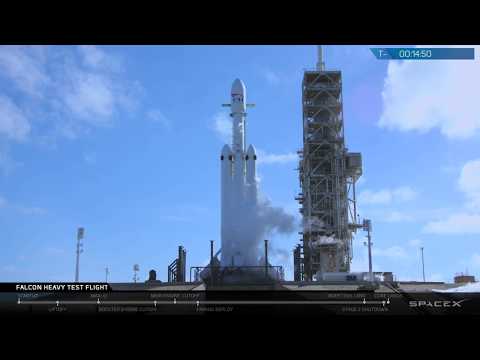
Falcon Heavy Test Flight
SpaceX
4 HN recommender · 2018–2026
7 comments from Hacker News
I went in wanting this to look real bad. But the Scott Manley video alas has sort of convinced me this is pretty feasible, that the energy budget is quite doable. ▶ this video I do think this is a pretty generous estimate he ends up at. I don't think emissivity is perfectly well dealt with. I don't know if his earth reflection emissivity includes the high energy thermal transfer from particles that do exist on the near vacuum (exosphere be hit, ya'll) or if that matters. But his figures seem ballpark correct & my concerns are at best marginal.
It’s very easy to overestimate the difficulty of cooling things in space, unless you actually run the numbers. So please follow along as Scott Manley runs the numbers: < ▶ this video >. Basically a Starlink v3 satellite has an estimated power budget of 20kW. Add in the heat absorbed from the environment (both directly from sunlight and reflected off of the Earth) and you’ll find that it must reject about 22kW of heat. That’s a fair amount, but at 65°C it can radiate it all away just using it’s own surface area! No radiator required at all! Of course the power density of computer racks has been going up over the years. If you want to reach 100kW per satellite then they will need a modest radiator, but nothing extravagant. It would still be smaller than the solar panels, and far smaller than the ones on the ISS. And don’t forget that because radiated heat goes up as the fourth power of temperature, raising the temperature of the system by even a small amount raises the radiation emitted by a lot. If you design the system to run hotter you can minimize the size of the radiator. Most chips these days are designed to max out at 100°C to 110°C without lasting damage, although running them at that temperature 24/7 may reduce their lifespan. There will be some sweet spot in the middle. And it turns out that a Starlink v3 already has a volume somewhat larger than a 48U rack. You talk about launching 250k satellites in order to have 250k GPUs in orbit, but that’s ridiculous. A real compute
He starts with something hot today but viable, 80C. And he goes on to cite and discuss a M*sk tweet about hotter, 97C, and what that density that enables. ▶ this video and ▶ this video
it actually is not that impossible, and in fact can be done in a form factor not that different from Starlink satellites: ▶ this video
▶ this video "Is It Really Impossible To Cool A Datacenter In Space?" - Scott Manley tl;dr -> not impossible.
I don't see how that would lessen their concerns? Exactly because space is a vacuum, cooling is harder since you can't do convection. The math still checks out though. Scott Manley did a video on it, and the top comment has some corrections: ▶ this video
The bit that I wasn't entirely sold on with his analysis was that he was working on 1 satellite per rack ▶ this video (YouTube auto transcribe) > ... but how do you scale this up right 20 kow used to be enough to power a full rack of computer gear but we're seeing predictions now of 100 kilowatts per rack and that's just one rack in a data center racks right the 48U 19in rack which is you know big and it's just dense with computers how does that fit into a flat satellite well it turns out that like 19in rack is about 50 cm wide it's about 1 m deep per unit and if you've got a 24 1/2 square meter satellite and you take all your one U units and stack them ... One rack per satellite doesn't seem like it is that compelling of a story. Put a 100 kW rack in my basement in the winter and hook up the power and I'll be happy to deal with the waste heat for several months (and then ship it to somewhere in the southern hemisphere).