Why Quantum Information is Never Destroyed
PBS Space Time2 HN recommenders · recommended in 2 months, 2019–2021
explainer · general · evergreen · 2019–2021 on HN
A PBS Space Time episode asking whether the universe's information can ever truly be lost, tying quantum mechanics, determinism and black holes together. It sets up the black hole information paradox.
HN commenters point to it as an accessible explanation of abstract modern physics around the black hole information problem.
Up next
 2 mo on HN
The simple, clever sensor behind automatic windshield wipers
Technology Connections
2 HN recommender · 2024–2026
 3 mo on HN
Is The Alcubierre Warp Drive Possible? | Space Time | PBS Digital Studios
PBS Space Time
3 HN recommender · 2020–2023
 5 mo on HN
How Differential Gear works (BEST Tutorial)
ConceptVBS
5 HN recommender · 2013–2020
 3 mo on HN
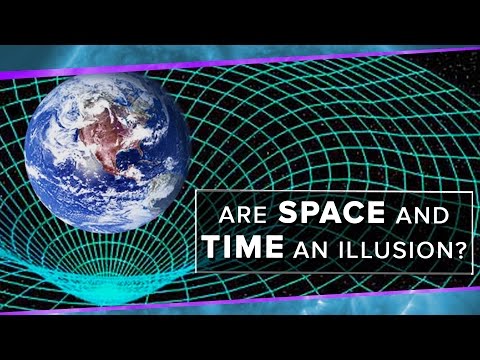
Are Space and Time An Illusion?
PBS Space Time
3 HN recommender · 2016–2020
 4 mo on HN
Should We Colonize Venus Instead of Mars?
PBS Space Time
4 HN recommender · 2016–2022
 3 mo on HN
Risking My Life To Settle A Physics Debate
Veritasium
5 HN recommender · 2021–2023
 1 mo on HN
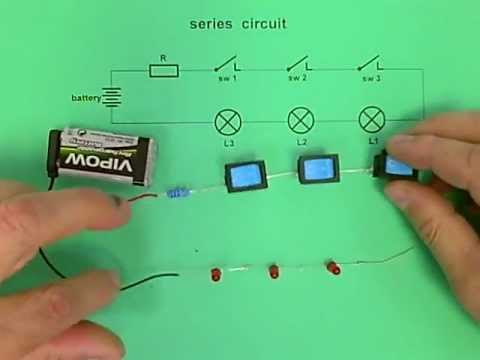
Series circuit - 3 LEDs
Henryk Gasperowicz
1 HN recommend · 2018–2020
 15 mo on HN
AT&T Archives: Similiarities of Wave Behavior (Bonus Edition)
AT&T Tech Channel
12 HN recommender · 2014–2026
 15 mo on HN
The Quantum Conspiracy: What Popularizers of QM Don't Want You to Know
Google TechTalks
11 HN recommender · 2012–2025
 9 mo on HN
Quantum Entanglement & Spooky Action at a Distance
Veritasium
9 HN recommender · 2015–2022
 6 mo on HN
Quantum Fields: The Real Building Blocks of the Universe - with David Tong
The Royal Institution
5 HN recommender · 2019–2025
 6 mo on HN
The Physics and Philosophy of Time - with Carlo Rovelli
The Royal Institution
5 HN recommender · 2018–2022
3 comments from Hacker News
For those of you like me having trouble with the abstract nature of modern physics, I have to recommend the relevant PBS Space Time on the subject: ▶ this video
I'd recommend the two episodes released right before the one about the black hole information paradox too. They set up for what is covered in the information paradox episode. "Why Quantum Information is Never Destroyed" - ▶ this video "What Survives Inside A Black Hole?" - link Maybe the episode before those two also. I vaguely recall that something from the information paradox episode used something from that (and if I'm misremembering, it was still a neat episode): "Noether's Theorem and The Symmetries of Reality" - link I have a question about the episodes you cited. They cover how beyond the event horizon space becomes time and time becomes space. They go over how that means that inside you can't go backwards in space for the same reason that out here in the normal universe you can't go backwards in time. You are doomed to only go forward, which inside means toward the singularity. (Much better than the ridiculous analogy often given that you can't get out of a black hole because the escape velocity equals or exceeds the speed of light. That's a ridiculous analogy because it only explains why you can't get out ballistically). But all their explanations used a simplified black hole in a spacetime with just 1 space dimension and 1 time dimension. We've actually got 3 space dimension. Does that mean that in a real block hole past the event horizon, you end up in a spacetime with 3 time dimensions and 1 space dimension? If so, does anything interesting happen due to having mor
"Why Quantum Information is Never Destroyed" re: determinism and T-Symmetry ("time-reversal symmetry") by PBS SpaceTime ▶ this video Classical information is 'collapsed' quantum information, so that would mean that classical information is never lost either. There appear to be multiple solutions for Navier-Stokes; i.e. somewhat chaotic. If white holes are on the other side of black holes, Hawking radiation would not account for the entirety of the collected energy/information. Is our visible universe within a white hole? Is everything that's ever been embedded in the sidewall of a black hole shredder? Maybe even recordings of dinosaurs walking; or is that lemurs walking in reverse? Do 1/n, 1/∞, and n/∞ approach a symbolic limit where scalars should not be discarded; with piecewise operators?