Republic, Lost | Lawrence Lessig | Talks at Google
Talks at Google10 HN recommenders · recommended in 11 months, 2011–2017
talk · general · evergreen · 2011–2017 on HN
Lawrence Lessig's Talks at Google presentation based on his book Republic, Lost, arguing that money in politics corrupts Congress and eroded public trust, and outlining what could be done about it. It supports the argument with data on political donations.
A perennial HN recommendation whenever lobbying, SOPA, taxes or political corruption come up, with several commenters saying it changed their views.
Up next
 5 mo on HN
How Great Leaders Inspire Action | Simon Sinek | TED
TED
4 HN recommender · 2011–2022
 2 mo on HN
Everything is a Remix Part 3 (Original Series, 2011)
Kirby Ferguson
2 HN recommender · 2011–2018
 3 mo on HN
8/28/2006 Peter Schiff On Kudlow & Co: Predicts The US Economic Collapse
PhilDeCarolis
3 HN recommender · 2009–2013
 3 mo on HN
Laws that choke creativity | Larry Lessig
TED
2 HN recommender · 2011–2012
 2 mo on HN
John Stossel's Illegal Everything
VP attnm
2 HN recommender · 2012–2026
 3 mo on HN
Principles of economics, translated
Yoram Bauman
3 HN recommender · 2009–2023
 3 mo on HN
The Hobbit: A Long-Expected Autopsy (Part 1/2)
Lindsay Ellis
3 HN recommender · 2019–2022
 3 mo on HN
Buster Keaton - The Art of the Gag
Every Frame a Painting
3 HN recommender · 2019–2025
 12 mo on HN
George Lakoff: Moral Politics
University of California Television (UCTV)
3 HN recommender · 2016–2024
 11 mo on HN
Why Electronic Voting Is Still A Bad Idea
Tom Scott
11 HN recommender · 2020–2026
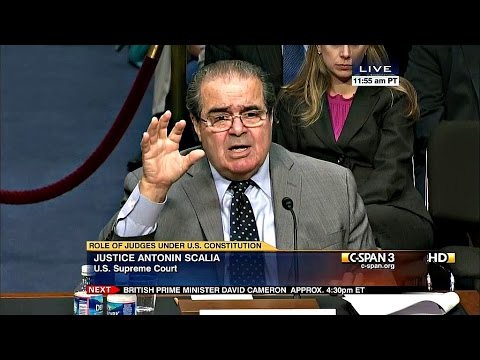 11 mo on HN
Antonin Scalia - On American Exceptionalism
AmericanRhetoric.com
12 HN recommender · 2019–2025
 10 mo on HN
The Cardboard Box Reform - Nixon's Ghost Bill & A Crucial Flaw in Democracy
CRI
9 HN recommender · 2014–2025
12 comments from Hacker News
Actually, They are right. I really think you should take the time to watch this video, understand it, let it sink in and totally mold your brain around it. ▶ this video
I haven't read his previous book, "Republic, Lost", but I saw the 1 hour speech at Google from last year, that was based on it, and it was great. He explains how the Government ended up having a relationship with corporations instead of "the people", and what is needed to solve this (almost unsolvable) problem. ▶ this video
If your really interested in doing something about it, I would suggest taking a look at link And without a second lost, watch this: ▶ this video That video has changed my point of view on the entire subject and has allowed me to start striking at the root.
> This idea that the root cause of all bad legislation is political donations: it's wrong, and not supported by the data. The vast majority of political donations are made by people who are not lobbyists. You make a very bold statement without backing it with any line of reasoning or pointing to any supporting material. I am no expert in this matter so I can not know if you are wrong. But in an older thread someone posted this excellent talk by Lawrence Lessig: ▶ this video . It's well worth watching and counters your statement. His arguments are very well presented and reasoned. He also shows some supporting data. Given that, I cannot attribute much weight to your statement.
Lawrence Lessig's Republic, Lost directly addresses this. His 2011 Google Tech Talk provides a condensed version: ▶ this video
Sorry to punt and give you homework, but Larry Lessig will expand on this better than me. Here's a link if you want to listen to something while you work. His book, Republic Lost, is a good read on this subject if you're interested. ▶ this video
"What are they supposed to do?" For a starter, watch Lawerence Lessig @google talk ▶ this video Get off your butts and vote independent. For those who claim that you're throwing your vote away reply with "No, you're throwing YOUR vote away."
Whose dollars? The dollars used in legislation have little to do with public good and a lot more to do with re-election funding. Lessig covers that topic really well in Republic Lost: ▶ this video Any change in legislation will result in intense lobbying (ie politician funding) because so many vested interests benefit from the current structure. As with many things in American politics, the issue isn't so much about what the objectively best thing to do is, but rather how that could happen with the current political process. There is some light at the end of the tunnel in pushing things to individual states. There is no need to come up with perfection - let 50 states do their own thing and see what works best.
It would be far better if congress is representative of the people of the country and be composed of doctors, engineers, teachers, taxi drivers, farmers, candlestick makers etc. The legislators do not actually write the laws. They have staff as well as there being a process to help improve the text before legislating (eg publishing drafts). For some legislation (eg covering the financial industry) often the law that is passed just requires a government agency (eg SEC) to come up with the rules. One of Michael Moore's films had a clip of a congressman explaining that they don't even read the legislation they vote on. It is a common claim that much of the legislation is written by lobbyists. And if you actually read any of it, it would obviously not really be what you would expect (short, legible). Here is an example of trying to solve the problem: link The representatives use legislation as a fund raising mechanism (contributions are well documented). For example there were several taxes added temporarily to see if they worked well. They did, but congress doesn't make them permanent. Instead they wait to be paid each time to renew them temporarily again. (This started in the Reagan administration.) See this excellent talk by Lessig: ▶ this video The whole tax provisions as fund raising is covered at 7m30s. And the corruption is obvious at 25m20s.
A big reason for why things are so screwed up is corrupt politicians who use their power as a fund raising mechanism. For example there were several taxes added temporarily to see if they worked well. They did, but congress doesn't make them permanent. Instead they wait to be paid each time to renew them temporarily again. (This started in the Reagan administration.) See this excellent talk by Lessig: ▶ this video The whole tax provisions as fund raising is covered at 7m30s. I congress were actually honourable and I was president I'd mandate that the tax code shrinks by 10% each year. If the politicians can't find 10% then at the end of year every 10th provision is automatically deleted.
We already have progressive tax rates which try to capture this. The problem that is being struggled with is that HNWI don't have frequent taxable events, generally because they hold assets and make savings. However there is a perception they aren't providing value (which is mostly wrong). Generally any scheme you come up with to get at them will also affect everyone else, and to a far greater degree since they have less money and diversity to start with. And the HNWI have far greater incentive to move their money and themselves, as well as pay people to work out how to retain their money. You can move to almost any country in the world by plonking down a lump sum as an "investment" or as savings. (eg see how Dotcom ended up living in New Zealand.) The usual solution to this is to try tweaking the tax code, seeing what the effects are and repeating. However scumbag politicians and the people who vote for them distort that process, so it doesn't have the intended effect. An actually representative democracy would be a good first step rather than tax rate changes. Watch this talk about the US - the UK pretty much follows behind a few years later ▶ this video
If I was ever elected president, I would direct congress to reduce the size of the tax code by 10% each year. If they fail to do so then 10% are automatically eliminated - eg all those whose last digit of the article number is 3. The real reason for why things are so screwed up is corrupt politicians who use their power as a fund raising mechanism. For example there were several taxes added temporarily to see if they worked well. They did, but congress doesn't make them permanent. Instead they wait to be paid each time to renew them temporarily again. (This started in the Reagan administration.) See this excellent talk by Lessig: ▶ this video The whole tax provisions as fund raising is covered at 7m30s.