SmoothLifeL
Tim Hutton4 HN recommenders · recommended in 4 months, 2012–2022
demo · intermediate · evergreen · 2012–2022 on HN
Tim Hutton's demonstration of SmoothLifeL, a continuous version of Conway's Game of Life using floating point values. It shows gliders traveling in any direction, rotating pairs, and elastic cord-like structures, with config details to run it yourself.
HN points to it whenever Game of Life or cellular automata come up, as the best visual example of a mesmerizing continuous-domain alternative.
Up next
 6 mo on HN
DEF CON 26 - Svea, Suggy, Till - Inside the Fake Science Factory
DEFCONConference
5 HN recommender · 2018–2025
 12 mo on HN
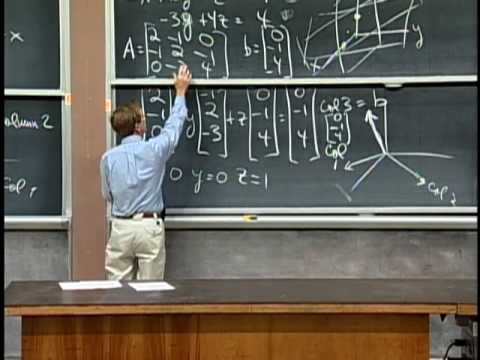
Lec 1 | MIT 18.06 Linear Algebra, Spring 2005
MIT OpenCourseWare
11 HN recommender · 2011–2020
 5 mo on HN
!!Con 2016 - How I Code and Use a Computer at 1,000 WPM!! By Sina Bahram
Confreaks
2 HN recommender · 2019–2022
 3 mo on HN
Hamming, Intro to The Art of Doing Science and Engineering: Learning to Learn (March 28, 1995)
securitylectures
3 HN recommender · 2016–2020
 4 mo on HN
Lone Star Ruby Conference 2010 Real Software Engineering by Glenn Vanderburg
Confreaks
3 HN recommender · 2013–2025
 6 mo on HN
Democracy at Work: Curing Capitalism | Richard Wolff | Talks at Google
Talks at Google
6 HN recommender · 2017–2026
 11 mo on HN
Bret Victor The Future of Programming
Joey Reid
12 HN recommender · 2017–2026
 4 mo on HN
31 Hamming, Learning to Learn: You and Your Research, 6 June 1995
Hamming on Hamming: Learning to Learn
3 HN recommender · 2020–2024
 17 mo on HN
8 Bit & '8 Bitish' Graphics-Outside the Box
GDC Festival of Gaming
13 HN recommender · 2018–2026
 10 mo on HN
elevated by Rgba & TBC | 4k intro (FullHD 1080p demoscene demo)
Demoscene High-Quality Videos (Annikras)
7 HN recommender · 2013–2025
 10 mo on HN
Painting a Character with Maths
Inigo Quilez
13 HN recommender · 2021–2025
 6 mo on HN
The Art of Code - Dylan Beattie
NDC Conferences
6 HN recommender · 2020–2024
10 comments from Hacker News
Must see evolution of GOL: "SmoothLife is a family of rules created by Stephan Rafler. It was designed as a continuous version of Conway's Game of Life - using floating point values instead of integers." ▶ this video link
Toffoli[0] & Margolus’[1] Cellular Automata Machines (1987) is the CA bible, I guess. Andrew Adamatsky edited the encyclopedic Cellular Automata (2018). Ed Fredkin's[2] stuff on reversible CA is fascinating. Gerard Vichniac[3] wrote some great papers in the 80s, e.g. Simulating Physics with Cellular Automata (1984). Kenichi Morita[4] papers. Rudy Rucker[5] has written a lot of stuff on 1 and 2D CA, and worked as a CA programmer. Etc. There are a lot of papers. The very common finite element method of solving differential equations and PDEs is basically the same thing as CA - see e.g. Anderson's Computational Fluid Dynamics . Attractors and approximations for lattice dynamical systems by Shengfan Zhou, 2002. 1954's Studies of Nonlinear Problems by Fermi, Ulam, Pasta, featuring a 1D CA. link Noether's theorem comes up frequently - that every symmetry of the system corresponds to a conservation law.[6] Smooth Life is Stephan Rafler's very cool version of CGOL with every discrete aspect turned into a continuous one.[7] [0] link [1] link link [2] link [3] link [4] link [5] link [6] link [7] best video of SmoothLife ▶ this video link This slideshow by Rafler contains the best, most complete explanation of it I've found: link Shadertoy version link
If you're mesmerized by the "Game of Life" like I am your going to enjoy the Continuously Domain versions like smooth life. Check out the video[0], and an implementation in python[1] on HN. [0]: ▶ this video [1]: link
24 parallel games combined in a way indecipherable to normal human eyes isn't terribly interesting to me. I find SmoothLife more interesting: ▶ this video
Also: link featuring the seminal paper by Stephan Rafler and Tim Hutton's video ▶ this video link featuring a more recent variant
Reminds me of SmoothLife. Generalization of Conway's "Game of Life" to a continuous domain - SmoothLife (Stephan Rafler) link Video of SmoothLifeL: ▶ this video
(not directly related to the article) The cellular automata in the article is a discrete one. For those interested, there are also "continuous" automata ▶ this video .
If you are familiar with Conway's game of life, there is also "smooth life" which uses turing style reaction-diffusion equations: ▶ this video
Original post: link Technical details on the YouTube page: ▶ this video (Two lots of source code available: Stephan's and mine) Other discussions about this: Reddit: link Metafilter: link
Good job. Any idea why using the parameters specified in the video description of ▶ this video do not seem to replicate the output of the video? link I tried the same parameters in the version downloadable at link and it did not seem to produce similar output to the video either.