Space Suit Testing
NaOHKDBOCited 3× on HN, 2015–2019
news · general · evergreen · 2015–2019 on HN
Short footage from a NASA space suit test in which a technician is exposed to near-vacuum after an accidental depressurization. It shows the instantaneous effects on a human body.
Cited as real footage of someone surviving brief vacuum exposure.
Up next
 11 mo on HN
Light Years Ahead | The 1969 Apollo Guidance Computer
TNMoC
Recommended 11× on HN · 2021–2026
 9 mo on HN
The Solar Gravitational Lens will Map Exoplanets. Seriously.
Launch Pad Astronomy
Recommended 10× on HN · 2020–2025
 7 mo on HN
34C3 - The Ultimate Apollo Guidance Computer Talk
media.ccc.de
Recommended 9× on HN · 2018–2025
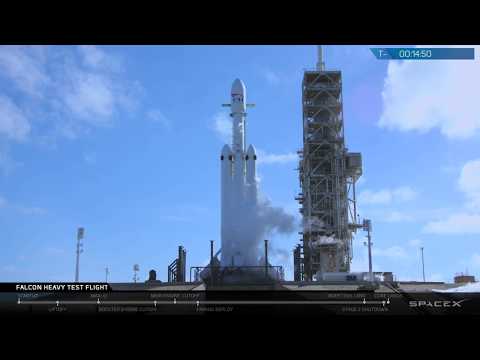 6 mo on HN
Falcon Heavy Test Flight
SpaceX
Recommended 4× on HN · 2018–2026
 7 mo on HN
I Was SCARED To Say This To NASA... (But I said it anyway) - Smarter Every Day 293
SmarterEveryDay
Recommended 9× on HN · 2023–2025
 8 mo on HN
Starbase Tour with Elon Musk [PART 1 // Summer 2021]
Everyday Astronaut
Recommended 11× on HN · 2021–2024
 5 mo on HN
Carl Sagan - Pale Blue Dot
carlsagandotcom
Recommended 5× on HN · 2011–2026
 6 mo on HN
Apollo Guidance Computer Part 1: Restoring the computer that put man on the Moon
CuriousMarc
Recommended 8× on HN · 2019–2024
 5 mo on HN
Dr. Robert Zubrin with a brilliant answer to "Why Should We Go To Mars?"
Jamin Gray
Recommended 3× on HN · 2016–2021
 6 mo on HN
The REAL Possibility of Mapping Alien Planets!
PBS Space Time
Recommended 4× on HN · 2023–2024
 6 mo on HN
How Much Do Rockets Pollute? Are They Bad For Our Air?
Everyday Astronaut
Recommended 6× on HN · 2020–2023
 6 mo on HN
Orbital Rings
Isaac Arthur
Recommended 4× on HN · 2017–2025
3 comments from Hacker News
NASA once accidentally depressurized a man while testing space suits in a vacuum chamber. He lost consciousness in less than 15 seconds, but fully recovered after depressurization. He reported feeling his saliva boil which is... exciting. ▶ this video link During Project Excelsior, Joseph Kittinger's right hand was depressurized at 100,000 feet and swelled up, but he was ultimately unharmed. link
I think this is the actual study: link I fundamentally dissagree that it was trivial, but I worked on large vacuum systems and feel a bit close to the topic. But I also fundamentally agree that the experimentation was barbaric and cruel. But... I also don't see how we could have worked around it. I hope it's some consolation that they never doubly-exposed the dogs; I'm actually surprised that wasn't attempted. Unshielded hard vacuum is horrific. The problem isn't that it's awful - that's obvious - but exactly how does it affect the body? (I've sealed a hole with my hand and got a hickey, but I've never been immersed in it.) Even today, studying things in a vacuum is difficult; it's always behind a think layer of material that's hard to observe through, and even with cleverness you're testing through the neck of a bottle or only looking back on data logged by some gizmo. And there are a lot of confounding variables; narrowing the time-to-unconciousness/death was the most critical, and each test batch needed multiple samples to make sure no data was wasted. One note that came out was that it seems clearly better to recompress with pure oxygen; would that fire hazard be worth the risk in space (especially after Apollo 1), or would they need to design a mechanism to temporarily mange it? I could see that argument having a significant impact on the cabin design. But yeah. We can do better. A damn sight better. We can illuminate and record and monitor so much better. A couple yea
There was a notable incident in the 1960s where a NASA spacesuit technician named Jim LeBlanc survived an accidental (but brief) depressurization. There's a YouTube video describing the accident which includes film of the accident itself: ▶ this video .