Is SpaceX's Raptor engine the king of rocket engines?
Everyday Astronaut4 HN recommenders · recommended in 4 months, 2019–2022
explainer · intro · evergreen · 2019–2022 on HN
Everyday Astronaut explains the basic physics of rocket engines, the main engine cycles and fuel types, then compares SpaceX's methane-fueled full-flow staged combustion Raptor to other engines. It runs nearly 50 minutes with chapter markers.
HN commenters send people here as the best accessible starting point for understanding why Raptor and fuel choice matter for Starship.
Up next
 1 mo on HN
Mach-E Thermal System Part 2: A Detailed Comparison to the Model Y
Munro Live
1 HN recommend · 2021–2023
 1 mo on HN
2023 Investor Day | Tesla
Tesla
1 HN recommend · 2023–2025
 6 mo on HN
Jack Szostak (Harvard/HHMI) Part 1: The Origin of Cellular Life on Earth
Science Communication Lab
6 HN recommender · 2016–2021
 11 mo on HN
Light Years Ahead | The 1969 Apollo Guidance Computer
TNMoC
11 HN recommender · 2021–2026
 9 mo on HN
The Solar Gravitational Lens will Map Exoplanets. Seriously.
Launch Pad Astronomy
10 HN recommender · 2020–2025
 7 mo on HN
34C3 - The Ultimate Apollo Guidance Computer Talk
media.ccc.de
9 HN recommender · 2018–2025
 6 mo on HN
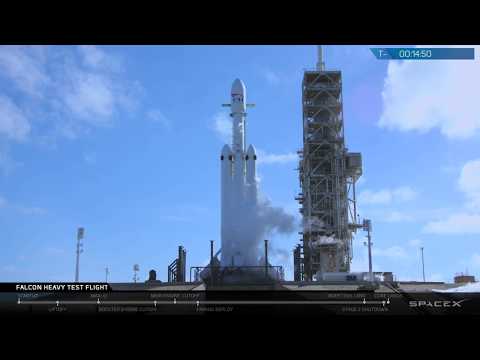
Falcon Heavy Test Flight
SpaceX
4 HN recommender · 2018–2026
 7 mo on HN
I Was SCARED To Say This To NASA... (But I said it anyway) - Smarter Every Day 293
SmarterEveryDay
9 HN recommender · 2023–2025
 8 mo on HN
Starbase Tour with Elon Musk [PART 1 // Summer 2021]
Everyday Astronaut
11 HN recommender · 2021–2024
 5 mo on HN
Carl Sagan - Pale Blue Dot
carlsagandotcom
5 HN recommender · 2011–2026
 6 mo on HN
Apollo Guidance Computer Part 1: Restoring the computer that put man on the Moon
CuriousMarc
8 HN recommender · 2019–2024
 5 mo on HN
Dr. Robert Zubrin with a brilliant answer to "Why Should We Go To Mars?"
Jamin Gray
3 HN recommender · 2016–2021
6 comments from Hacker News
Because the assumptions made for one class of payload don't apply to another class of payload with vastly different mission specifications. A great place to start is this amazing video by The Everyday Astronaut: ▶ this video Notice how the type of fuel used itself is a consideration for the type of rockets we may send to Mars if we're considering In-Situ refueling.
NASA's big project for launch is a disposable rocket using Space Shuttle technology. It will cost at least a billion dollars per launch. SpaceX's project is a fully reusable rocket, with rapid turnaround because it uses methane fuel in the world's first clean-burning full-flow engine. They expect to be able to launch three times per day. On top of that the rocket is built of cheap stainless steel instead of carbon fiber. With that amount of reuse, each launch basically pays for fuel and ground support, each of which costs about a million dollars per launch. Given their payload of at least 100 tonnes, that's $20/kg. They've already done a single-engine hop test, and hope to reach orbit within six months. Here's a great video on what makes the new SpaceX engine revolutionary: ▶ this video
SpaceX is making significant breakthroughs that you can appreciate if you understand the tech. > As of 2019, only three full-flow staged combustion rocket engines had ever progressed sufficiently to be tested on test stands; the Soviet Energomash RD-270 project in the 1960s, the US government-funded Aerojet Rocketdyne Integrated powerhead demonstration project in the mid-2000s,[6] and SpaceX's flight capable Raptor engine first test-fired in February 2019. link If you want to learn more ▶ this video
Raptor is a breakthrough engine. If NASA with nation state resources and 23B is 6 years late, let’s cut SpaceX some slack for building a profitable launch business with multiple successful vehicles while also being very close with Starship. > As of 2019, only three full-flow staged combustion rocket engines had ever progressed sufficiently to be tested on test stands; the Soviet Energomash RD-270 project in the 1960s, the US government-funded Aerojet Rocketdyne Integrated powerhead demonstration project in the mid-2000s,[6] and SpaceX's flight capable Raptor engine first test-fired in February 2019. link If you want to learn more ▶ this video
Starship is a pretty radical redesign with the main goal being reusability. Everything about it is with reusability and and thus scale in mind. A new engine was needed because while the Merlin is a great engine, it could never be reused the thousands of times Raptor is designed to be reused. You can think of engine design as the simultaneous, interdependent optimization across 10+ dimensions, but as an example of one of dimensions - Raptor uses Methane (rather than Kerosene) because it burns cleaner (does not leave residue) and can be manufactured on Mars more easily. Here's an in-depth video about Raptor: ▶ this video The rest of the rocket is similar, in that it is done with manufacturability, reusability and scale in mind. The Falcon design could never stretch to these demands.
Both you and I agree that aerospace companies should do large scale vehicle simulations, which they do. In addition SpaceX does complex fluid dynamics simulations to design and test their engines. That's likely part of why they have successfully made the "holy grail" of Full-Flow staged combustion work in the Raptor. [0] None of the failures so far could have been detected through simulation since they were complex integration issues. At some point the cost of simulation is vastly larger than the cost of just creating a test article. Components like drogue chutes, explosive bolts, failsafe valves and abort systems are typically validated both analytically (by reviewing designs) and are often hard to fully validate by testing. Since validating components is so expensive, it leads companies that rely on analyitical validation (like Boeing) to become overly attached to previously analysed and working components because analysis is so time consuming and expensive. You end up with modern rockets built with space-shuttle engines as components (SLS) and old jets with new engines tacked on (747 Max). When you talk about explosive deconstruction of a test article after something new was learnt you fail to realise the learning (not the landing) was the goal. If SN9 had landed correctly, it is very likely they would have deconstructed it anyway. They just deconstructed SN12, 13 and 14 to make way for SN15 which has a very improved design. 0: ▶ this video "Is SpaceX's Raptor engine the king o