Mike Mullane - Normalisation of deviance - IAFF - Part 1
Stuart Walker4 HN recommenders · recommended in 4 months, 2018–2022
talk · general · evergreen · 2018–2022 on HN
Astronaut Mike Mullane explains normalisation of deviance, where teams gradually come to accept violations of their own safety standards. He uses the Challenger shuttle disaster as the main case, drawing on NASA's ignored warnings before the launch. It is the…
HN commenters cite it whenever a thread involves ignored warnings, shortcuts or routine risk, as the clearest introduction to the concept.
Up next
 9 mo on HN
Dr. Michael Greger | How Not To Die | Talks at Google
Talks at Google
8 HN recommender · 2016–2022
 3 mo on HN
ClojureScript for Skeptics - Derek Slager
ClojureTV
4 HN recommender · 2015–2017
 2 mo on HN
The Secret Life of the Radio - Remastered
tim hunkin
2 HN recommender · 2021–2024
 11 mo on HN
Light Years Ahead | The 1969 Apollo Guidance Computer
TNMoC
11 HN recommender · 2021–2026
 9 mo on HN
The Solar Gravitational Lens will Map Exoplanets. Seriously.
Launch Pad Astronomy
10 HN recommender · 2020–2025
 7 mo on HN
34C3 - The Ultimate Apollo Guidance Computer Talk
media.ccc.de
9 HN recommender · 2018–2025
 6 mo on HN
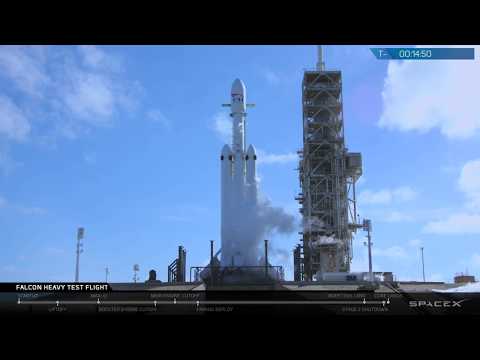
Falcon Heavy Test Flight
SpaceX
4 HN recommender · 2018–2026
 7 mo on HN
I Was SCARED To Say This To NASA... (But I said it anyway) - Smarter Every Day 293
SmarterEveryDay
9 HN recommender · 2023–2025
 8 mo on HN
Starbase Tour with Elon Musk [PART 1 // Summer 2021]
Everyday Astronaut
11 HN recommender · 2021–2024
 5 mo on HN
Carl Sagan - Pale Blue Dot
carlsagandotcom
5 HN recommender · 2011–2026
 6 mo on HN
Apollo Guidance Computer Part 1: Restoring the computer that put man on the Moon
CuriousMarc
8 HN recommender · 2019–2024
 5 mo on HN
Dr. Robert Zubrin with a brilliant answer to "Why Should We Go To Mars?"
Jamin Gray
3 HN recommender · 2016–2021
9 comments from Hacker News
Here is an excellent talk on this subject[0]. It's one of the few presentations I like to watch every once in a while. [0] ▶ this video
The “preventable mistakes” point reminds me of this great video about “normalization of deviance” [from routine/checklists] ▶ this video
I like the term "normalization of deviance" and would recommand the Mike Mullane's talk on the Challenger disaster [1]. [1]: ▶ this video
Mike Mullane’s “Normalisation of Deviance” talk to a group of firefighters[1] is relevant here. He describes how the Challenger shuttle disaster happened despite internal memos about the problem years prior. The message of the talk is, essentially, that a person or team can get used to ignoring their own standards when under pressure. [1]: ▶ this video
> A human breaks the rolling stop rule on a case by case basis and is responsible for the consequences Not really. You can fail to see a pedestrian and cripple them and you won't see a whole lot of consequences for your "accident" (negligence). Breaking rules on a case-by-case basis is also how the normalization of deviance occurs: ▶ this video If you break rules when you think you don't need to follow them you'll find that you're not 99.9% perfect and you will inevitably cause a crash. If you follow the rules all the time you won't make that error. The reason why computers should ultimately replace human drivers is precisely because we're dangerously incompetent and overconfident and shouldn't be breaking any rules.
You're just encouraging the normalization of deviance. "Everyone does it". ▶ this video You can get away with it a hundred times, or a thousand times, but eventually you'll be tired and do it and clobber a pedestrian you didn't see because "you were tired" (so its not your fault, even though it 100% is). Stop thinking the way you do and stop being one of the 88% of American drivers who think they're above average. Follow the goddamn rules because you're not 99.99% perfect and its the .01% that is going to hurt someone else. And "I see the police doing it all the time" clearly isn't the right moral barometer, if you haven't been paying attention.
Thanks for posting these, I'd only seen Normalisation of Deviance mentioned in these two youtube videos by Mike Mullane and never thought to look any further: ▶ this video link and the uploader references some further links: link link and references this book (about the Challenger Disaster): link which has an overview here: link including these two excerpts I found interesting in this context: "Chapter nine she explains how conformity to the rules, and the work culture, led to the disaster, and not the violation of any rules, as thought by many of the investigators. She concludes her book with a chapter on lessons learned." "She mainly emphasizes on the long-term impact of institutionalization of the political pressure and economic factors, that results in a “culture of production”."
> If you just use them all the time, you don't have to remember to use them in the right situation. I know of dead cave divers who followed protocols only when they really needed to and then one day made a category error and didn't follow the protocol when they really needed to. I've gotten crap for following through the motions of protocols when they I "didn't need to" but if you do it all the time then you never make those kinds of category errors. There's no downside to always following protocols, there's high downside for making category errors that you wouldn't make if you just always followed protocols. Similarly you should always use your parking brake, even if you are on flat ground so that you never make a category error there (or just get hit by someone when you're on flat ground and have a rollaway). Similarly, signal your intentions every single time. You're doing it for the pedestrian you didn't see, or even just some idiot flying up the shoulder of the highway who shouldn't be there, but signal your intentions to take the exit so you move predictably. See also the normalization of deviance: ▶ this video
> In fact the "hick" position is the scientific one. If someone eats unrefrigerated pizza ten times without any Adverse Events, then in fact that's an experiment providing (admittedly crude) scientific data I'm going to strenuously disagree with this one. "I've done it 10 times and it has been fine for me" is the logic behind the normalization of deviance and the Shuttle disasters and (in my world) cave diving fatalities: ▶ this video As a cave diver I also see this leading to fatalities where divers cut corners on the rules of cave diving, see no immediate consequences and continue to do so up until they wind up dead some day (there are often very binary outcomes for breaking the rules in cave diving). The author of this article does provide a fairly compelling science-based _hypothesis_ though as to why eating-8-hour-cold-pizza is safe though that goes beyond his personal experience. He does argue that the N is actually very large due to reasonable assumption that many college students do this and there is no evidence of a plague of college students in ERs. He also argues that pizza specifically should be pretty safe after 8 hours due to most of it being composed of things with longer shelf lives and tomato sauce having a low pH. That is still mostly all the kinds of rationalization that NASA did though. So those should be at least somewhat scientifically tested. A simple survey of college students could determine their practices of how often they ate morning-after pizza that ha