Richard Feynman Magnets
nebulajr4 HN recommenders · recommended in 3 months, 2014–2026
interview · general · evergreen · 2014–2026 on HN
A short clip of Richard Feynman answering an interviewer's question about how magnets work, in which he explains why a why-question has no simple answer without a shared frame of reference.
HN returns to it constantly as a classic on the difficulty of explaining fundamentals and the limits of analogies.
Up next
 2 mo on HN
George Carlin on soft language
Rob Logan
2 HN recommender · 2015–2026
 5 mo on HN
Leonard Susskind on The World As Hologram | TVO Docs
TVO Docs
7 HN recommender · 2013–2021
 5 mo on HN
Feynman: Magnets (and Why?) FUN TO IMAGINE 4/ higher quality version!
Christopher Sykes
5 HN recommender · 2021–2026
 2 mo on HN
Exposing the Honey Influencer Scam
MegaLag
2 HN recommender · 2024–2026
 15 mo on HN
Around The Corner - How Differential Steering Works (1937)
US Auto Industry
17 HN recommender · 2013–2024
 8 mo on HN
I bought 1000 meters of wire to settle a physics debate
AlphaPhoenix
8 HN recommender · 2021–2026
 8 mo on HN
The Speed of Light is NOT About Light
PBS Space Time
8 HN recommender · 2017–2023
 7 mo on HN
Why No One Has Measured The Speed Of Light
Veritasium
6 HN recommender · 2020–2024
 6 mo on HN
Richard Feynman - The.Character of Physical Law - Part 1 The Law of Gravitation (full version)
Tinkerin' Thinkers
6 HN recommender · 2013–2022
 6 mo on HN
HD Feynman: FUN TO IMAGINE complete (with optional Chinese subtitles)
Christopher Sykes
4 HN recommender · 2021–2025
 6 mo on HN
A new way to visualize General Relativity
ScienceClic English
8 HN recommender · 2020–2026
 6 mo on HN
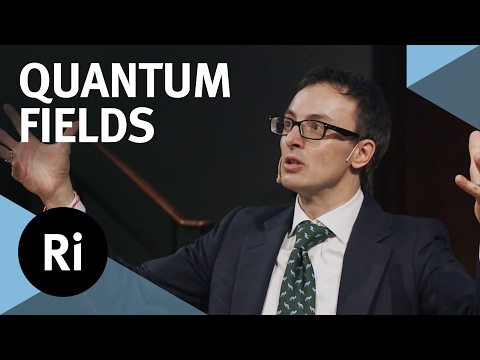
Quantum Fields: The Real Building Blocks of the Universe - with David Tong
The Royal Institution
5 HN recommender · 2019–2025
12 comments from Hacker News
▶ this video Richard Feynman explaining magnets is one of the best layman explainers I've seen (in between the ranting). I honestly didn't understand why magnets worked and found this on a late night youtube binge. (But don't search youtube for anything related to magnets, you end up amongst the perpetual motion nuts) Edit: Just to be clear with this video (it had been a while since I last watched it), he doesn't 'explain' magnets as much as he hints at the concepts involved. I already knew about the spins being lined up etc but it was the "you can't put your hand through the chair" comment that gave me the eureka moment.
I don't know if just going to nature is sufficient to get fascinated with biology. In my opinion it takes a fundamental reset in how you think about anything you see. Humans while smart have obviously had to learn to "ignore" thinking about how things work. You don't think too hard about how anything works really. I mean at a cursory level sure, but by vastly different interpretations of the word "cursory", you can change your thirst to know how things you see work at more and more fundamental levels. You don't need to go into nature to get this curiosity except for the possibility that it makes you more meditative. You can look at your arm and think what the hell happens in there at a molecular level to make you move the muscles. Or when someone says nerves conduct electricity what the hell does that mean? I revisit this feynman video of him explaining (or not) magnets every few months and I think it's relevant to this question. ▶ this video When I think like that I'm just curious why OP and others blame teachers or whoever else for not inducting the curiosity in them. Like it's someone else's job to make you curious? In my opinion you're either born that way or you're not. Some airport store book isn't gonna make you the next whatever scientist you adulate.
I appreciate it. You're absolutely right about how exciting it is to be able to share explanations with people. This is a video of Feynman's answer to an interviewer asking about what and why you feel something when you put two magnets together ▶ this video . It's a great description of the problems inherent to explaining this sort of thing to people. (Also, if anyone knows a video/essay/talk along these lines by a less sexist person, I'd love a link.)
I'm a physicist specifically working with magnetic systems, but I have very little pre-graduate teaching experience, so take this attempt to answer the question with a grain of salt. The reason some people regard Faraday's original explanation of the eponymous law (it is worth noting that at the time it was widely regarded as inadequate and handwavy) as illuminating is because Faraday visualized his "lines of force" as literal chains of polarized particles in a dielectric medium, thereby providing a seemingly mechanistic local explanation of the observed phenomena. Not much of this mindset survived Maxwell's theoretical program and it has very little to do with how we regard magnetism today. Instead, the unification of electricity and magnetism naturally arises from special relativity, whereas the microscopic basis of magnetism requires quantum mechanics. There isn't really any place for naive contact mechanics in the modern picture of physics, so in that sense I would regard Faraday's view as misleading. Finally, I can't end any "explanation" of magnetism without linking the famous Feynman interview snippet [1] where he's specifically asked about magnetism. It doesn't answer your question directly, but it's worth watching all the more because of it. [1] ▶ this video
Two issues with the title. Global warming is not specific to Europe (it is "global"). And the "why" can't be meaningfully answered unless you specify how far you want to go along the cause-and-effect chain (Feynman on magnetism - ▶ this video ). Let me look at cause-and-effect chain for the past 100 years. It is the unbridled industrialisation, captial markets, business push, desire to dominate other countries, vote-bank democracies, exploitation of natural resources and so on. It is not something caused by single person or policy over past few years or decades.
Here's the thing about "fucking magnets; how do they work?" How do magnets work? No less a science communicator than Richard Feynman—he of the rubber sheet gravity spacetime analogy—had no analogy to communicate why ferromagnetism creates attraction and repulsion. Here's his incredibly shaggy dog non-answer to the question about how magnets work wherein he says that there are no pat answers to "why" questions. He gets to the money line: "I cannot explain that attraction in terms of anything else that's familiar to you" ▶ this video So I will defend that line in the song. I will only accept answers from people who can explain why ferromagnetism works to me assuming I know how electromagnets create magnetic fields.
Just listen to Feynmann trying to explain why he can't explain magnetism in macro terms (e.g. ▶ this video )
There's a clip from a short documentary about Richard Feynman in which the interviewer asks him to explain what's going on when you try to push two magnets together head-to-head. Feynman basically says that he could tell you a story like "there are rubber bands pulling the magnets together," but it would be a lie and that if you really want an explanation you have to learn the physics. ▶ this video
To paraphrase Feynman, I can't explain to you how the universe expands in terms that you are familiar with because I don't understand it in terms that you are familiar with. ▶ this video It takes effort to understand those fundamental terms, so if you want to understand this, you'll have to meet people halfway instead of rejecting how somebody is trying to explain something to you.
> they admit they don't now why that happens No, they said “not sufficiently qualified to explain”. Which is not the same as not knowing, given that the same phenomenon can be explained on a lot of different levels depending on when you get tired of asking “why?” - see this video of Richard Feynman “explaining” magnets: ▶ this video
> at least tweak some things That's really understating the problem. Oracle, for example, can be wildly different from MySQL or PostgreSQL. SQLite makes selects extremely cheap, so cheap, that if you try to do a straight migration to a server-based DB it will probably just choke. Assuming any devs on your team realized the benefits of SQLite and took advantage of them. But it gets worst with SQL on things that are not relational DBs. The exact person that SQL-on-Elasticsearch is designed for is also going to be the person that won't know the idiosyncrasies of Elasticsearch well enough to know when they are in trouble.[1] They will end up trying to get explanations for what is going on in Elasticsearch in terms of what they know (i.e. SQL on a relational DB). The end result will then be confusion and ultimately re-learning Elasticsearch from the ground up. [1] ▶ this video
One of the world's best expert and teacher said: "It's just one of those things that you have to take as an element of the world.... I can't explain the attraction in terms of anything else that's familiar to you." ▶ this video