Learning from StackOverflow.com
Google TechTalks1 HN recommender · recommended in 1 month, 2009–2021
talk · general · 2009–2021 on HN
Joel Spolsky's 2009 Google Tech Talk on why StackOverflow was built, how it addresses the mess of searching for programming help, and the community design behind it. He also takes jabs at paywalled answer sites.
Cited for Joel's account of how Stack Overflow's design and community thinking were figured out from the start.
Up next
 11 mo on HN
This Is Phil Fish
Innuendo Studios
5 HN recommender · 2014–2025
 10 mo on HN
YouTube's copyright system isn't broken. The world's is.
Tom Scott
13 HN recommender · 2020–2024
 9 mo on HN
The Problem With Facebook
2veritasium
3 HN recommender · 2014–2018
 8 mo on HN
VidMe or Why Platforms Aren't Your Friends
Folding Ideas
8 HN recommender · 2017–2023
 7 mo on HN
This is Financial Advice
Folding Ideas
9 HN recommender · 2023–2026
 7 mo on HN
Why Are You So Angry? Part 1: A Short History of Anita Sarkeesian
Innuendo Studios
7 HN recommender · 2015–2022
 7 mo on HN
Incels | ContraPoints
ContraPoints
7 HN recommender · 2018–2024
 6 mo on HN
Darius Kazemi, Tiny Subversions - XOXO Festival (2014)
XOXO Festival
7 HN recommender · 2015–2024
 6 mo on HN
What Languages Sound Like To Foreigners
Sara Forsberg
6 HN recommender · 2014–2021
 6 mo on HN
Can You Watch This Without Getting Angry?
CGP Grey
6 HN recommender · 2015–2025
 6 mo on HN
Canceling | ContraPoints
ContraPoints
7 HN recommender · 2020–2025
 4 mo on HN
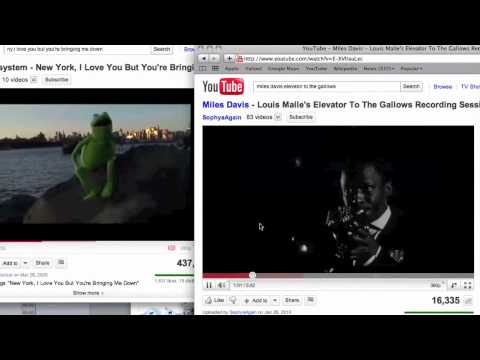
Youtube duet: Miles Davis improvising on LCD Soundsystem
Alessandro Grespan
4 HN recommender · 2021–2024
7 comments from Hacker News
> Just figure out what EE did, and then do the exact opposite. Even if that was the mantra, that's figuring it out from the start. That wasn't the mantra though; EE was only one of the influences. Watch Joel's tech talk ▶ this video - they really did figure a ton of it out at the start. See Joel's tech talk
Spolsky and Atwood had a podcast when they were putting Stackoverflow together and they talk at length about what they wanted to achieve. Its amazing actually to see they had a very precise idea of what they wanted to do and they absolutely hit their own objective. Podcast 1, April 2008 link One thing we are noticing is that the book market, the programming book market has just completely vanished. It is falling apart, catastrophically. The programmers I know don't really learn new technologies from a book any more. What they do is they find a tutorial on the web -- maybe -- and they try to do something and then they page fault in knowledge. Basically, they get stuck on something and they either post to a discussion group, or they type their question into Google. And those are the two things we want to serve basically is the posting to the discussion group and typing things into Google. Our longer term goal, if we’re successful, is that you're trying to figure out how to do something in Python like how to merge two arrays in Python and you go to Google and you type "merge two arrays python" and submit that, and our goal is to be the number one hit that comes up with a really good edited answer to that question that some individual has contributed and maybe other individuals have edited. ----- So then you go search on the Internet for "Mac remote desktop connection beta expired" and you get all kinds of discussions; people discussing what to do and how to work around this pr
To me, I see this strange contradiction in how stackoverflow is evolving. Joel Spolsky (one of the founders) gave a very interesting presentation[1] in 2009. The key takeaway I've always remembered from his comments was the idea of "anthropology". The science of trying to really understand human behavior and make the website amplify good communities. What I see 6 years later is a lot of " why is this question closed as 'not constructive' when it has 500 upvotes?!?! " There is clearly a disconnect between the way the end users see stackoverflow and the way the moderators see it. These days, it seems like the stackoverflow guys (not necessarily Joel specifically) are inexplicably blind to human behaviors that was was highlighted in 2009. But, I don't have the whole story so maybe someone closer to the situation can explain. I don't know who is right or wrong. The thing I'd like to know is if stackoverflow still "works" for the quality contributors who invest their time writing extensive and insightful answers. Or, have a significant percentage abandoned the site because they wade through too many questions from homework, or outsourced sweatshop employees who don't even do modicum of googling, etc. On the other hand, are the majority of complaints distorted because they are mostly voiced by the Eternal September[2] crowd? So, is it experts leaving? Or newcomers overwhelming the site with bad questions? I don't know if one can gather from website analytics which of the 2 situatio
I think that was this talk. ▶ this video Joel says that according to MS study there are 9mln people that write code. link
This is what I don't get. ASP.NET scales pretty well as Joel opines. Why do people think .NET is bad just because it feels enterprise-y? More: ▶ this video
Yes, Joel took quite a few potshots at the "hyphenated site", as he put it, during his talk at Google about StackOverflow ( ▶ this video ). Also, Jeff mentions it in his intro to StackOverflow Coding Horror post ( link ): Stackoverflow is sort of like the anti-experts-exchange (minus the nausea-inducing sleaze and quasi-legal search engine gaming)
The page contains little more than a link to this GoogleTechTalks video: ▶ this video Haven't watched it yet...