Eric Schmidt and Peter Thiel - Fortune Debate, 2012
kykeon2 HN recommenders · recommended in 2 months, 2016–2020
talk · general · 2016–2020 on HN
A 2012 Fortune dinner debate between Peter Thiel and Eric Schmidt over whether technological progress is healthy or stalling and whether Google can still innovate.
HN recalls it as one of the most interesting debates between two contrasting worldviews on progress.
Up next
 11 mo on HN
We Were Taught to Call Death a Blessing
CGP Grey
12 HN recommender · 2018–2025
 12 mo on HN
Preventing the Collapse of Civilization / Jonathan Blow (Thekla, Inc)
DevGAMM
14 HN recommender · 2020–2025
 8 mo on HN
Jonathan Blow - Preventing the Collapse of Civilization (English only)
bus
11 HN recommender · 2019–2023
 8 mo on HN
Blockchains Are a Bad Idea (James Mickens)
HBS Digital Initiative
8 HN recommender · 2018–2023
 6 mo on HN
The LED Traffic Light and the Danger of "But Sometimes!"
Technology Connections
7 HN recommender · 2019–2024
 7 mo on HN
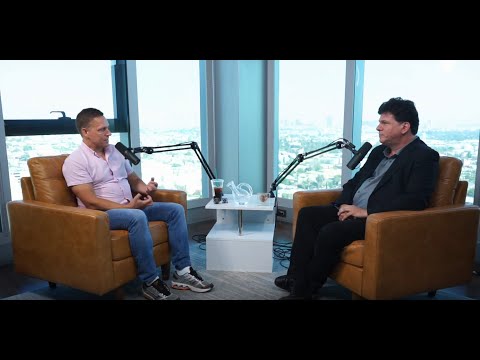
Peter Thiel on "The Portal", Episode #001: "An Era of Stagnation & Universal Institutional Failure."
Eric Weinstein
8 HN recommender · 2019–2024
 6 mo on HN
We're building a dystopia just to make people click on ads | Zeynep Tufekci
TED
6 HN recommender · 2017–2026
 6 mo on HN
Can You Watch This Without Getting Angry?
CGP Grey
6 HN recommender · 2015–2025
 5 mo on HN
Collapse of Complex Societies by Dr. Joseph Tainter
vlada888
5 HN recommender · 2015–2023
 5 mo on HN
College Lecture Series - Neil Postman - "The Surrender of Culture to Technology"
College of DuPage
5 HN recommender · 2014–2025
 5 mo on HN
A Selfish Argument for Making the World a Better Place – Egoistic Altruism
Kurzgesagt – In a Nutshell
4 HN recommender · 2018–2025
 4 mo on HN
Massive-scale online collaboration | Luis von Ahn
TED
4 HN recommender · 2012–2022
5 comments from Hacker News
I used to watch some of these IQ debates in college, they can be really good. The longer format and strong moderation really lend themselves to interesting discussions, and you can learn a lot. One of my favourite debates of this format (though not IQ) is Peter Thiel vs Eric Schmidt (then executive chairman of Google) arguing about whether Google was still capable of innovation [2012]: ▶ this video
One of the most interesting debates was between Eric Schmidt and Peter Thiel back in 2012, especially in the positions that Eric staked out: ▶ this video
It can really be seen as another form of dividend (or payout) depending on how you look at it. And yes it is fairly common when capital is available especially when no major re-investment opportunities present themselves that would utilize the capital in more efficient ways than mere buybacks. Edit: a bit off topic but this "discussion" between Theil and Schmidt in my opinion highlights why companies are buying back their stock ▶ this video
Thiel and Schmidt have two very different worldviews, they had a debate on capital 'P' progress a few years ago. ▶ this video Many people find Thiel's argument hard to believe, especially if they are aspirational middle class types. This is because normal people have a chronocentric bias. Of all our biases, this one is probably the strongest of all. If you find Thiel's position hard to believe, it is worth examining what our grandparents thought about the future. "The Home of the Future in 1999" (from the 1960s) link I am at the point where I consider the optimistic narrative (ex-computation) utterly without supporting evidence. It is all PR and marketing. Here is one example. Consider the discovery of DNA. Important scientifically. And all the resultant research into genetics since. But tell me what relevance any of it has had to the average person? Have we new drugs? More effective treatments? Cheaper medicine? This is a minor heresy among the 'educated' but to me the answer is clearly no. Think about that for a minute or two. Either I am mad, or in half a century there has been no measurable effects. If the second is true then why do we believe CRISPR is going to revolutionize everything outside? The discovery of DNA itself, the Human Genome Project. The cheaper shotgun sequencing. These should have had enormous material effects on society. It does nothing! Food prices should be much lower. They are static or increasing. Timber should be of higher quality. It is actually much
The comments in here remind me of this video: ▶ this video Eric Schmidt takes the side a lot of people here take, which is "everything is getting better", and Peter Thiel takes the other side, that things aren't getting better. I don't think things are getting better at all. You can easily just use your own metrics and then come to the conclusion that everything is getting better. The problem is, your metrics are bullshit so you are coming to the wrong conclusion. I have seen all kinds of metrics used in here like "don't have to hunt", "live longer", "safer", "can watch netflix". I don't think any of these things have to do with whether or not people's lives are getting better. You can just take one of those metrics - "live longer", and see that in itself, it can't measure "getting better", because you can live for 80 years and have a terrible life, or have 60 years of an excellent life. I think people in silicon valley are just completely clueless and are making the wrong bet, which is why they never see things like Trump coming. Things aren't getting better and people know it.