Ali Rahimi's talk at NIPS(NIPS 2017 Test-of-time award presentation)
ObservantVids3 HN recommenders · recommended in 3 months, 2018–2025
talk · intermediate · evergreen · 2018–2025 on HN
Ali Rahimi's NIPS 2017 Test-of-Time award talk, in which he argues that modern machine learning has become alchemy, working without being rigorously understood. He calls for more rigor and understanding in the field.
HN points to it as the sharpest, most-quoted critique of deep learning practice, and cites it whenever ML reliability or understanding is debated.
Up next
 4 mo on HN
Massive-scale online collaboration | Luis von Ahn
TED
4 HN recommender · 2012–2022
 16 mo on HN
How Python was Shaped by leaky Internals, Armin Ronacher, Flask framework
Видео с мероприятий {speach!
15 HN recommender · 2017–2025
 3 mo on HN
Armin Ronacher - A Python for Future Generations
EuroPython Conference
4 HN recommender · 2017–2020
 8 mo on HN
Analogy as the Core of Cognition
Stanford
7 HN recommender · 2012–2025
 3 mo on HN
“What is Success?” by Evan Czaplicki
Elm Europe
2 HN recommender · 2018–2023
 6 mo on HN
The Unreasonable Effectiveness of Multiple Dispatch | Stefan Karpinski | JuliaCon 2019
The Julia Programming Language
9 HN recommender · 2019–2025
 4 mo on HN
Steve Jobs on privacy, Steve Jobs at the D8 Conference (Video)
iwasjojo
4 HN recommender · 2017–2024
 16 mo on HN
The spelled-out intro to neural networks and backpropagation: building micrograd
Andrej Karpathy
17 HN recommender · 2022–2025
 14 mo on HN
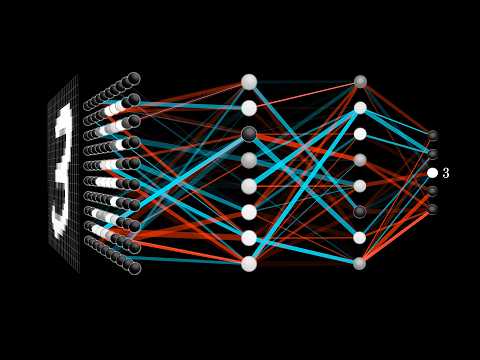
But what is a neural network? | Deep learning chapter 1
3Blue1Brown
16 HN recommender · 2017–2025
 10 mo on HN
AlphaGo - The Movie | Full award-winning documentary
Google DeepMind
10 HN recommender · 2020–2025
 10 mo on HN
Transformers, the tech behind LLMs | Deep Learning Chapter 5
3Blue1Brown
13 HN recommender · 2024–2026
 10 mo on HN
USENIX Security '18-Q: Why Do Keynote Speakers Keep Suggesting That Improving Security Is Possible?
USENIX
10 HN recommender · 2018–2026
4 comments from Hacker News
This article is a little too glib in my opinion, preferring citations and statements to substance and explanations. For a more cutting and insightful critique, watch Ali Rahimi's short talk at NIPS 2017 (where he was presenting for a paper that won the "Test of time" award, for standing out in value a decade after publication). The standing ovation he received at the end indicate that his comments resonated with a significant fraction of the attendees. ▶ this video Here's a teaser from the talk: "How many of you have devised a deep neural net from scratch, architecture and all, and trained it from the ground up, and when it didn't work, felt bad about yourself, like you did something wrong? This happens to me about every three months, and let me tell you, I don't think it's you [...] I think it's gradient descent's fault. I'll illustrate..." [Addendum] Ben Recht and Ali Rahimi published an adendum to the talk, elaborating on the direction they envision -- link Ali also has a post taking a stab at organizing some puzzling basic observations about deep learning, and motivating that with analogous historical progress in optics -- link ----- PS: The first 11 minutes, on the idea of using random features (the main idea in the research he presented) are also interesting.
Ali Rahimi's NIPS 2017 Test of Time award talk. "Artificial intelligence is not like electricity (quoting Andrew Ng), but alchemy" ▶ this video
>In no way can I believe that the corporation doesn’t have a good understanding of exactly how it can manipulate the AI systems it leverages to achieve its goals. See this talk which compares modern AI work to alchemy (i.e. it works, unreliably, and we don't always know why): ▶ this video
I'm also an AI researcher and I'm not hopeful that the hype will die down anytime soon. People have been touting insignificant results through shoddy science for a long time now. They've noticed it works well enough because current ML is still pretty much alchemy (Ali Rahimi's 2017 NIPS Test of Time [1] talk still resonates today) so people rarely spend the effort to effectively refute the bogus claims. As a result, I've opted out of the system and I'm working on trying ambitious ideas I have to try to upend the current paradigm of training on big data, which is truly insane (by age 4 the most erudite of children have probably only been exposed to 45 million words [2] and yet exhibit vastly more understanding and fluency than any language model trained on a similar amount of data). [1]: ▶ this video [2]: link