Controlling Your Dopamine For Motivation, Focus & Satisfaction
Andrew Huberman12 HN recommenders · recommended in 10 months, 2021–2024
podcast · general · evergreen · 2021–2024 on HN
Andrew Huberman's long Huberman Lab episode is a masterclass on dopamine. It covers the neural circuits, peaks and baselines, dopamine depletion, and 14 tools for motivation, focus and avoiding addiction.
HN recommends it repeatedly to people struggling with motivation, distraction or phone and internet addiction, as a science-based guide to dopamine.
Up next
 3 mo on HN
#NSDR (Non-Sleep Deep Rest) with Dr. Andrew Huberman
Virtusan
4 HN recommender · 2022–2023
 3 mo on HN
ADHD & How Anyone Can Improve Their Focus
Andrew Huberman
3 HN recommender · 2022–2024
 6 mo on HN
Lecture: 2017 Maps of Meaning 01: Context and Background
Jordan B Peterson
6 HN recommender · 2017–2022
 5 mo on HN
Steve Reich, "Music for 18 Musicians" - FULL PERFORMANCE with eighth blackbird
Vic Firth
4 HN recommender · 2016–2025
 1 mo on HN
My Video Got 2 Companies Shut Down! (And even worse negative ion products)
The Thought Emporium
1 HN recommend · 2021–2025
 1 mo on HN
Noam Chomsky - The Crimes of U.S. Presidents
Chomsky's Philosophy
1 HN recommend · 2018–2025
 5 mo on HN
How one tweet can ruin your life | Jon Ronson
TED
5 HN recommender · 2018–2025
 1 mo on HN
Noam Chomsky - Freedom of Speech for Views You Don't Like
Chomsky's Philosophy
1 HN recommend · 2020–2021
 15 mo on HN
1. Introduction to Human Behavioral Biology
Stanford
15 HN recommender · 2012–2026
 12 mo on HN
Stanford's Sapolsky On Depression in U.S. (Full Lecture)
Stanford
14 HN recommender · 2009–2026
 11 mo on HN
What Bodies Think About: Bioelectric Computation Outside the Nervous System - NeurIPS 2018
The Artificial Intelligence Channel
12 HN recommender · 2018–2024
 11 mo on HN
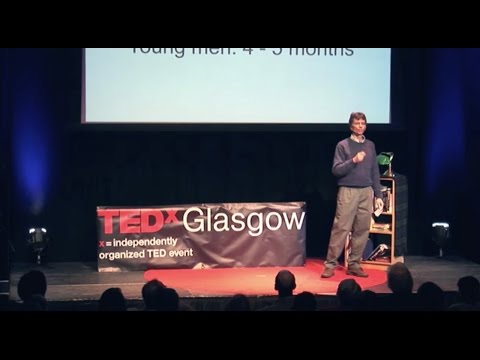
The great porn experiment | Gary Wilson | TEDxGlasgow
TEDx Talks
10 HN recommender · 2012–2023
12 comments from Hacker News
I don't understand this comment at all. Huberman, to me, has provided the most nuanced understanding of dopamine and dopaminergic effects accessible to the broader public. There's a lot of clickbait around him, and no doubt many "influencer doctors" who make a bad name for themselves, but this is a very clear take on dopamine: ▶ this video . I wouldn't call it babble. (Huberman is also not a physician, but a PhD, which is an important distinction.)
This is an area I'm pretty passionate about. So first of all, it's pretty clear that you _do_ have some interests. You mention Feynman and Kazantzakis. That sounds like you're interested in the history of science and literature. That sounds pretty cool. Many people will recommend going to a professional which I won't try to dissuade you from but that's not mutually exclusive with examining your lifestyle. I'm obsessed with this podcast by Andrew Huberman (Stanford Neuroscientist) because he's talking about a scientific basis for stuff that has "felt" true to me for a while. Your food diet affects how you feel but your information diet does massively as well. There is a neurochemical basis for this with your baseline dopamine levels, that sets your motivation. ▶ this video I also recommend reading the book Dopamine Nation. Too much social media will fry your brain. If you're checking Hacker News more than a handful times of day, work on doing less of that. If you're addicted to Reddit, Twitter, or pornography, work on doing less of that. Exercise. Spend time in the outdoors. Focus hard on sleep hygiene. Eat less sugar and processed foods. You can not change all this stuff overnight but if you can take baby steps it will help massively. You will not feel better tomorrow or next week but if you take tiny steps you will feel a tiny bit better in a few months. I would also highly recommend learning about mindfulness, meditation, and yoga. A lot of dissatisfaction is aversion to a feeli
I really recommend everyone to listen to Andrew Huberman's podcast [0] on Dopamine and how it affects motivation, focus, and satisfaction. Many people see Dopamine as just a pleasure chemical, but it actually directly influences motivation and focus. We also all have a somewhat set amount of dopamine in a day, so participating in activities that release a short peak of dopamine (drugs, masturbation, etc) means that we have less dopamine, and therefore less motivation for the rest of the day. I was also recently in a low motivation rut, however after making some lifestyle changes I feel much more motivated throughout the day. I stopped getting high, cut out all porn, and added 2 min of a cold water at the end of my regular shower. It was tough to start, but 100% worth it. [0] ▶ this video
The author is attacking a position that doesn't really exist. You obviously don't fast from dopamine in general. You fast from dopamine peaks. Continuous spiking of dopamine causes your baseline levels to drop, and you feel shitty and unmotivated. A dopamine fast (of the spikes) is intended to let the levels rise back. If you have 2 hours there is no better guide than Andrew Huberman: ▶ this video
+1 for Andrew Huberman Controlling Your Dopamine For Motivation, Focus & Satisfaction: ▶ this video ADHD & How Anyone Can Improve Their Focus: link
An insightful podcast from Andrew Huberman: "Controlling Your Dopamine For Motivation, Focus & Satisfaction | Huberman Lab Podcast #39" — ▶ this video And a clip: "Andrew Huberman - What Overusing Social Media Does To Your Brain" — link
It would probably help if you reduced dopamine spikes and made them more intermittent (less regular). If you stack multiple pleasures together it could be making it harder to focus. (Like drinking + watching something you enjoy + snacks, or smoking weed + playing video games). ▶ this video This video explains the science behind it. Make your dopamine spikes more random and intermittent and try to reduce the peak on them by sometimes enjoying your pleasures separately instead of stacking them all at the same time.
The positive side of plasticity is that your brain can also re-adapt fairly quickly to a lower (healthier) level of stimulation if you can get over the initial hump. My understanding is that most of this is regulated by dopamine, and your dopamine system needs time to reset in order to adapt to new patterns. In the meantime, it's normal to feel bored or lacking in motivation; that's part of the reset process and you just need to wait it out. Personally, I've found it's easiest to change habits and patterns via some sort of healthy distraction that takes my mind off whatever I'm trying to change. Travel, getting into a new hobby/project, or starting a really good book are all great for this. Andrew Huberman goes into this stuff in depth in his podcast, especially this episode: ▶ this video
Has anyone here tried 24 hours isolation [1] to reset perception of time? It's related to dopamine fasts but reportedly more profound. Andrew Huberman from Stanford has an excellent podcast [2] on dopamine. He goes in depth on the importance of using dopamine in the pursuit of goals with a caution around the come down period after achieving goals. [1] link [2] ▶ this video
Also mine. Have gone long stretches between relapses during which time I've felt noticeably better. What typically happens is I'll rationalize its use after a spell, but will find I'll want to watch the next day, and the next. Particularly if sleep suffers, just to get some deliverance. From what I've learned, large sustained dopamine hits lead to deficits in baseline levels. I could intuit early on that some of my negative experience (including sleep) was linked to consumption, but managed to convince myself each time that I "just need to better manage it". Even if the truth stares you in the face it's hard. I like to think of it as a "mild" addiction owing to frequency (it wasn't always) but still an addiction, which is like playing with fire. It can always get worse. I've been enjoying Huberman's videos on the topic of dopamine and other things - ▶ this video
On understanding dopamine, FWIW, I recommend two excellent resources: one is Robert Sapolsky's 720-page tome, Behave —he gives a robust intro to dopamine in the second chapter, "One Second Before", and expands on it further in the book. The other is prof. Andrew Huberman's podcast. He recently did a 2-hour episode[1] on dopamine. The segment on smartphones and how they alter our dopamine circuits starts at 01:15:28[2] [1] link [2] ▶ this video
Check out the latest episode from Huberman Labs regarding dopamine peaks and maintenance: ▶ this video Also an earlier one about addiction, good tips to apply here or similar situations. And it's OK to take some time off and switch to other activities, while your brain replenishes your desire to work on the background. I did, for a couple of months. I was actually in the same spot as you and the guy from another post ( link ), even thought I was getting some sort of early dementia, as my memory was also affected. The unable to start or keeping are also signs of burnout and ADHD. You could try asking others in your team to give you some extra hand-holding, motivation or accountability. Some bumps in the road are solvable with a bit of encouragement, but it's hard to open up given that delivering what they ask from you is the expected thing. Sometimes even when you want to proactively tackle on these matters, it's a process that takes a while. That rejection you feel right now is totally common, and it's could be a sign that you should stop trying for now, it doesn't mean that you won't like it / be able to do it in the future, just a protection mechanism from your body overreacting.