Smelting Iron in Africa (A DEMONSTRATION)
Christopher Roy4 HN recommenders · recommended in 4 months, 2015–2024
documentary · general · evergreen · 2015–2024 on HN
A 105-minute film of a West African smith family in Burkina Faso smelting iron from ore, from making charcoal and building the kiln to forging tools. It is a cultural recreation filmed for the camera, not current practice.
Recommended as an amazing documentary of traditional ironmaking, often used as a baseline for the labor required.
Up next
 3 mo on HN
THE SAGAN SERIES - The Frontier Is Everywhere
Reid Gower
3 HN recommender · 2011–2016
 11 mo on HN
Music Theory and White Supremacy
Adam Neely
11 HN recommender · 2020–2024
 4 mo on HN
Should We Colonize Venus Instead of Mars?
PBS Space Time
4 HN recommender · 2016–2022
 1 mo on HN
iPhone 13 A Repair Nightmare - Teardown and Repair Assessment
Hugh Jeffreys
1 HN recommend · 2021–2024
 2 mo on HN
Your Brain Hallucinates Your Conscious Reality | Anil Seth | TED
TED
2 HN recommender · 2017–2026
 2 mo on HN
Peter Singer - ordinary people are evil
Jeffrey Kaplan
2 HN recommender · 2023–2026
 12 mo on HN
William Byrd on "The Most Beautiful Program Ever Written" [PWL NYC]
PapersWeLove
11 HN recommender · 2017–2026
 2 mo on HN
Epic 2014
jessanmur
2 HN recommender · 2021–2026
 10 mo on HN
Tim Ewald - Clojure: Programming with Hand Tools
ClojureTV
9 HN recommender · 2014–2024
 8 mo on HN
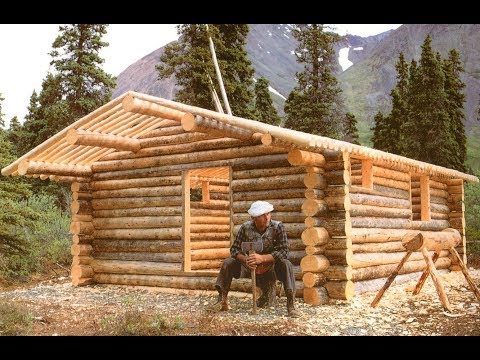
Dick Proenneke in Alone in the Wilderness
swererbob
10 HN recommender · 2012–2023
 9 mo on HN
Origins of Precision
Machine Thinking
11 HN recommender · 2019–2025
 6 mo on HN
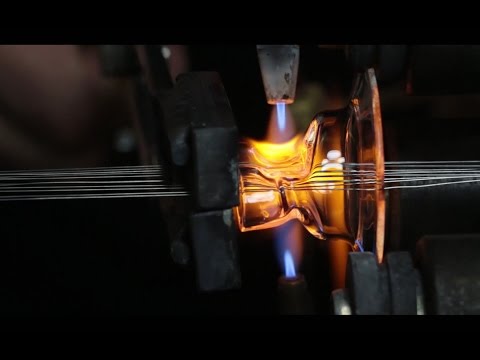
The Art of Making a Nixie Tube
Dalibor Farný
6 HN recommender · 2017–2026
8 comments from Hacker News
One of my favorite videos is a documentary of a village in Africa that goes through the process of producing iron tools from scratch, even though it is not required anymore, to pass on the knowledge. They find ore, construct furnaces, smelt the ore, refine the iron and then work it. It takes an entire village weeks to do this. ▶ this video
If you're interested in traditional ironmaking, Christopher Roy filmed a documentary a few years back on the techniques used up to the beginning of the 20th century in Burkina Faso, From Iron Ore to Iron Hoe: Smelting Iron in Africa : ▶ this video It's amazing to see how much work the traditional technique required. Though I don't know how much the techniques developed over the last 3000 years, none of the materials or manufacturing techniques exhibited in the documentary seem to require anything more than Neolithic products: leather, clay, wood, rope. (With the exception of using the cast-iron knife to carve the sluice, the same is true of Plant's video.) So it's particularly surprising to realize that the Neolithic started 12000 years ago and the Iron Age only started about 3500 years ago (the Painted Gray Ware culture in India). For 8500 years people all over the world had the tools at their disposal to make iron, but didn't know it. That's 3000 years longer than all of recorded history! It's similarly amazing to realize that from 3500 years ago until 2600-2100 years ago all iron was made by hugely inefficient processes like these rather than with blast furnaces, and that until 1000-500 years ago blast furnaces were only used in China. And it wasn't until Bessemer that they could be used to make steel. What similar opportunities are under our noses today? (More examples in link .) If you're interested in this sort of material culture unbootstrapping, you might also be interes
Oh it's my favorite time of the week again on HN! I truly love these blogs. Someone last week posted this[1] documentary which I think more people should see in connection with this series. But I'm still collecting questions, which I may take to Quora or SO at some point but I'd love to know how did we get started with (i.e. discover) this process and how does it differ from steel. Apparently we will learn about the latter in the next blog though, so I can wait on that. [1]. ▶ this video
They seem to do a similar thing with Youtube. I have both Youtube watch history and Youtube search history off. The other day I watched a very amazing video about iron smelting in Africa. Now, each time a open a Youtube link, that specific iron smelting video appears as "recommended for me". So, it is obvious that Google remembers which videos I have watched and openly advertises them again to me. By the way, the video itself is super interesting: ▶ this video
a nail rusted into a lump of hematite is still a lump of very rich ore, and the hazard and labor involved in fishing it out of a pile of rotted wood is not disproportionate to the hazard and labor involved in reducing it back to iron, either by artisanal manual processes or by mass-production processes. artisanal manual processes require tens of person-days per kilogram of iron. see christopher roy's documentary ▶ this video your point about entropy is confused; it's reminiscent of the creationist argument that evolution is impossible because it produces more ordered structures from less ordered ones. yes, human activities do increase entropy, mostly in the form of slightly increasing the amount of infrared radiation into space from earth, but less so than other biological activities they displace. this is almost completely irrelevant to the question of whether landfills are richer or poorer ore deposits than banded iron formations or karst bauxite deposits, because the contribution of that term to the system's total entropy change is insignificantly small, and can therefore easily be positive or negative
> By the way, the video itself is super interesting: ▶ this video Covering up your tracks, eh? Ok, we'll play along. Everybody click on the link provided by Jorge "Totally not into iron smelting more than anyone else" GT.
On a more-than-proof-of-concept scale, you have ▶ this video , a traditional blacksmith family in Burkina Faso mining a few kilograms of iron with several person-days of work, which is probably about 1000× as productive as the Primitive Technology guy achieved (perhaps a gram of iron after about a person-day of work). But the US steel industry employs 87000 people to produce about 120 million tonnes of iron and steel per year, which works out to about 5000 kg of iron and steel per person-day. (And that's why Burkina Faso imports its iron instead of smelting it in the way demonstrated in that documentary, the way they had done for the previous 2500 years, until some French guys wrecked a Jeep there in the early 20th century.) So there are something like six or seven orders of magnitude over which "high-tech" machinery can increase your iron productivity, or, to look at it another way, over which the price of iron can vary even once you have the know-how.
He did use modern knowledge, just not modern tools. If you're using modern tools and materials, you can build a Hexayurt. And you should! My point wasn't that today access to knowledge is restricted or that houses today are expensive to build — quite the opposite! My point was that building a house with Stone Age tools and materials is very expensive, and that this is indicative of the causes of the general problem of pre-industrial poverty. I agree with you on that! I'm curious how much you could ease the process by using more modern knowledge, but starting without modern tools or materials. (You'll note that the OP used modern thermodynamics to design his kiln.) For example, could you smelt iron from sand? ▶ this video outlines an approach that's definitely workable, but it's using a bloomery furnace — could you, for example, bootstrap a micro-Bessemer furnace? How about a lathe that you can cut threaded screw fasteners on? (Or even just wooden dowels.) FWIW Bucky's mass-produced-house dream has come to fruition, which is how I was able to live in a trailer park as a child.