This Invention Made Disney MILLIONS, but Then They LOST It!
Corridor Crew2 HN recommenders · recommended in 2 months, 2025–2026
explainer · general · evergreen · 2025–2026 on HN
Corridor Crew tracks down Disney's lost sodium vapor prism process, used for Mary Poppins-era transparency mattes. They explain how a narrow sodium wavelength and a beam splitter enabled better compositing than green screen.
Recommended as a fun, informative rediscovery of a lost film-effects technique.
Up next
 2 mo on HN
The Next Major RTS Will Fail. This Is Why.
GiantGrantGames
2 HN recommender · 2023–2024
 3 mo on HN
How We Made MuseScore 4 - Music App Design is Challenging!
Tantacrul
4 HN recommender · 2022–2026
 3 mo on HN
CheerpX: a WebAssembly-based x86 virtual machine in the browser, Yuri Iozzelli
WebAssembly NA
2 HN recommender · 2020–2025
 7 mo on HN
NaN Gates and Flip FLOPS
suckerpinch
7 HN recommender · 2020–2025
 3 mo on HN
The Closest Thing We Have to Alien Technology
Veritasium
5 HN recommender · 2026–2026
 9 mo on HN
"Turning the database inside out with Apache Samza" by Martin Kleppmann
Strange Loop Conference
9 HN recommender · 2015–2025
 5 mo on HN
Building The World's First Computer - Greeks, Clocks and Rockets - Antikythera Mechanism Episode 1
Clickspring
7 HN recommender · 2018–2024
 5 mo on HN
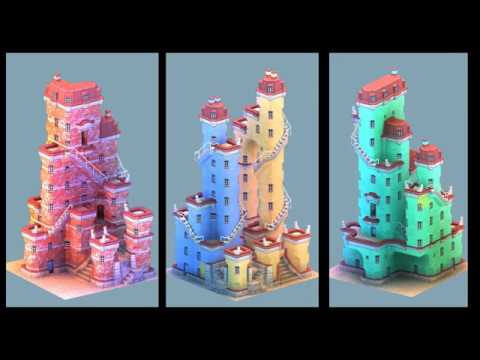
EPC2018 | Wave Function Collapse in Bad North | Oskar Stalberg
BUas Games
4 HN recommender · 2020–2024
 13 mo on HN
The Beauty of Bézier Curves
Freya Holmér
16 HN recommender · 2021–2026
 10 mo on HN
Ed Catmull, Pixar: Keep Your Crises Small
Stanford Graduate School of Business
9 HN recommender · 2010–2017
 8 mo on HN
"Money doesn't interest me" - Ton Roosendaal 2017 Interview
Blender Guru
7 HN recommender · 2018–2025
 8 mo on HN
DNA animation (2002-2014) by Drew Berry and Etsuko Uno wehi.tv #ScienceArt
WEHImovies
9 HN recommender · 2020–2026
6 comments from Hacker News
To add to that (extremely thought-provoking) video, I do think that the Marvel model of "pre-viz everything to death, the edit's already done before filming begins" - link - can lose a lot of spontaneity. Perhaps the fading luster to Marvel films overall will bring us back from this place. On a more tangential note around green screens and their limitations when used ubiquitously, Corridor Digital's quasi-rediscovery of the Sodium Vapor process used by Disney through the early '80s, but lost to history ever since, is a fantastic watch. ▶ this video
Some technologies have been lost, even though they were superior to what is available today. Take, for example, the old “green/blue screen” technique using sodium vapor lamps, used by Walt Disney in film production in the pre-digital era: ▶ this video (12 minutes long, but totally worth it).
The lights are relatively easy to get. iirc (it's been a bit since I watched their full video on the subject[1]) the hard part to find was the splitter that sends the sodium-vapor light to one camera and everything else to another camera. 1. ▶ this video
At the end of this video they link to another video from a year ago [1], where they recreate the sodium vapor process with a rig with a beam splitter, one side had a filter to reject sodium vapor light and the other has one to reject everything but sodium vapor light, and then a camera on each side. The Disney process had the filter essentially built into the beam splitter, but afaik, nobody knows how to make that happen again (or nobody who knows how, knows it's a desirable thing). Seems like the optics might be cumbersome, but the results seem wortwhile. Also, you need still need careful lighting, you don't want your foreground illuminated by sodium vapor, but I wonder if you could light the background screen from behind (like a rear projection setup) to reduce the amount of sodium vapor light that reflects from the foreground to the camera. [1] ▶ this video
> This made them useful for astronomers because their light was easily filtered The wavelength is so specific that it can have all kinds of cool applications: ▶ this video
Half silvered would work too. I was using the 3CCD prism as an example of splitting an image into multiple parts and avoiding issues with parallax. If you stacked cameras on top of each other with their own lenses, you'd inevitably get slightly different focal lengths, focal distances, and camera positions. Aside with the dichotic filter... there was a neat trick that was lost (and refound) with a sodium 589nm dichromic (notch) prism. ▶ this video