The Disaster That Changed Engineering: The Hyatt Regency Collapse
Tom Scott1 HN recommender · recommended in 1 month, 2017–2021
explainer · general · evergreen · 2017–2021 on HN
A Tom Scott guest video by Grady Hillhouse of Practical Engineering on the 1981 Hyatt Regency walkway collapse. A seemingly minor change to the support design led to catastrophic failure, which is why the case is taught as a lesson to check and double-check e…
HN cites it as the standard case study of how a small unchecked design change causes disaster, and of why engineering process and bureaucracy exist.
Up next
 4 mo on HN
Introduction: The Chemical History of a Candle by Michael Faraday (1/6)
engineerguy
4 HN recommender · 2018–2022
 6 mo on HN
Do Chairs Exist?
Vsauce
6 HN recommender · 2021–2025
 3 mo on HN
The Perfect Sourdough Pizza (Bread Porn)
LifebyMikeG
4 HN recommender · 2019–2021
 3 mo on HN
Every Melody Has Been Copyrighted (and they're all on this hard drive)
Adam Neely
4 HN recommender · 2020–2022
 3 mo on HN
The GUI should be better. A lot better.
Accursed Farms
4 HN recommender · 2020–2024
 5 mo on HN
Mike Monteiro - "Fuck you pay me" (PT Br)
Montalvo Machado
6 HN recommender · 2013–2017
 7 mo on HN
Mastering the Vim Language
thoughtbot
5 HN recommender · 2016–2026
 5 mo on HN
College Lecture Series - Neil Postman - "The Surrender of Culture to Technology"
College of DuPage
5 HN recommender · 2014–2025
 11 mo on HN
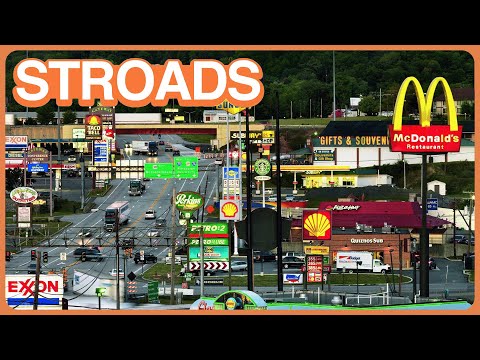
Stroads are Ugly, Expensive, and Dangerous (and they're everywhere) [ST05]
Not Just Bikes
12 HN recommender · 2021–2025
 8 mo on HN
1. How Buildings Learn - Stewart Brand - 1 of 6 - “Flow”
Stewart Brand
8 HN recommender · 2013–2020
 7 mo on HN
What Really Happened During the Texas Power Grid Outage?
Practical Engineering
6 HN recommender · 2021–2026
 6 mo on HN
Orbital Rings
Isaac Arthur
4 HN recommender · 2017–2025
5 comments from Hacker News
... buildings don't fall all of sudden... False. Large structural failures can be catastrophic and unexpected. Buildings can and do collapse quite suddenly. The examples here are not necessarily caused by reinforced concrete failures (though several cases make use of reinforced concrete --- generally other failures lead to the collapse). But the final failure of a system under load and near its structural limits can be quite sudden. Taiwan bridge: link link Minnesota I35W bridge collapse: link Jerusalem dance floor: link Morandi bridge, Italy: link Hard Rock Hotel New Orleans (under construction): link Sampoong Department Store, Korea (visualisation): link The Kansas City Hyatt Regency skywalk collapse (1981) would be another instance. I don't believe there's video of the failure itself, though Grady from Practical Engineering has a great explainer of what went wrong: ▶ this video
False premise. Building failures occur all the time. By relative frequency, not so often: physical structures are simpler, tangible, better understood. But they still fail often. link link link In 1st-world countries as well: link link ▶ this video
They do think of that. I've seen old bridges where extra barriers had been installed to prevent the full width being used because it was judged not capable of supporting the weight of being filled with people by modern standards. On the other hand, sometimes it all goes wrong: ▶ this video
Yeah I could imagine an article coming from the opposite direction, deriding ivory tower calculations in favor of real world experimentalism in some case where the developers didn't do enough physical testing. There are definitely plenty of cases where design mistakes have been unaddressed to tragic consequences: poor modeling in the Hyatt Regency collapse ( ▶ this video ), underspecified gusset plates causing the Minneapolis bridge collapse and possibly the novel methods chosen for the recently collapsed Florida pedestrian bridge, etc. Ultimately, the methodology is probably less important than whether the business chose to recklessly defraud people about the risks and safety concerns or acted in good faith.
The case-study of the Hyatt Regency collapse might a major root cause of the bureaucracy you're describing. The change that caused the issue was approved by the engineers in that case, but I think made us a lot more instituionally cautious: * link * ▶ this video