Marco Baringer's SLIME Tutorial Video
손주일 (Cecil)2 HN recommenders · recommended in 2 months, 2019–2024
tutorial · intro · evergreen · 2019–2024 on HN
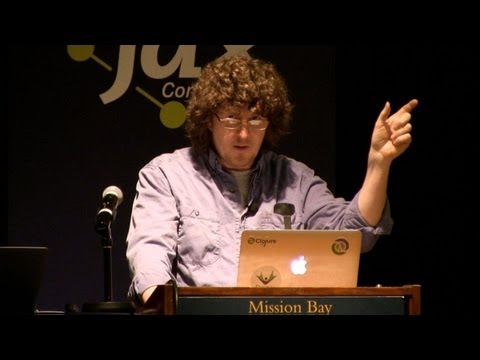
Marco Baringer's tutorial video on SLIME, the Emacs mode for developing Common Lisp. It demonstrates the interactive workflow of working against a live Lisp image.
HN points to it to show what the Lisp REPL workflow is like and as a good tour of SLIME.
Up next
 5 mo on HN
Jon Stewart on Crossfire
Alex Felker
5 HN recommender · 2009–2025
 18 mo on HN
Ruby Conf 12 - Y Not- Adventures in Functional Programming by Jim Weirich
Confreaks
17 HN recommender · 2013–2026
 14 mo on HN
The Soul of Erlang and Elixir • Sasa Juric • GOTO 2019
GOTO Conferences
16 HN recommender · 2019–2024
 14 mo on HN
"Simple Made Easy" - Rich Hickey (2011)
Strange Loop Conference
14 HN recommender · 2022–2026
 13 mo on HN
"Making Impossible States Impossible" by Richard Feldman
elm-conf
9 HN recommender · 2017–2026
 12 mo on HN
William Byrd on "The Most Beautiful Program Ever Written" [PWL NYC]
PapersWeLove
11 HN recommender · 2017–2026
 11 mo on HN
The Value of Values with Rich Hickey
InfoQ
10 HN recommender · 2014–2023
 12 mo on HN
Why Isn't Functional Programming the Norm? – Richard Feldman
Metosin
12 HN recommender · 2019–2025
 11 mo on HN
Maybe Not - Rich Hickey
ClojureTV
14 HN recommender · 2018–2025
 11 mo on HN
Solving Problems the Clojure Way - Rafal Dittwald
Clojure/north
10 HN recommender · 2019–2025
 10 mo on HN
Lecture 1A: Overview and Introduction to Lisp
MIT OpenCourseWare
10 HN recommender · 2019–2026
 10 mo on HN
Conway's Game Of Life in APL
Dyalog
11 HN recommender · 2010–2024
3 comments from Hacker News
This is what the lisp repl is like. There's not much else like it: ▶ this video PS: You can also do copy and paste :)
Not really. With Clojure you don't even have to leave your editor (I use Emacs with the fantastic CIDER package). You can put your cursor over an S-expression, hit two keys, and evaluate and see the results of the S-expression directly within the text buffer. The feedback loop is so quick it's basically instant - even tabbing over to a browser or terminal window feels lethargic in comparison. I haven't used Common Lisp much, but I've seen a few really impressive demos of debugging in its available REPLs. This is a longer one, but a good tour of SLIME (also an Emacs package): ▶ this video
I'm not saying that I don't understand the appeal; it's just that interactive development is usually done in Jupyter Notebooks due to the shortcomings of various editors not able to do code evaluation. I'm dreaming about something like Emacs Slime[0] for other languages (that aren't Common Lisp) where you can write code, evaluate it in the editor, switch to the REPL and test it, recompile while debugging.... etc. [1] And the most similar tool of the other languages... is basically jupyter-notebook. There is no such tool for interactive development except with the bare-bone REPL in the shell. [0] link [1] ▶ this video , link ,