Discovery Channel - Large Asteroid Impact Simulation
Anselmo La MannaCited 6× on HN, 2020–2025
demo · general · evergreen · 2020–2025 on HN
A Discovery Channel computer simulation of a large asteroid impact on Earth, showing the scale of the devastation. It sits in a broader context of early Earth impacts and the moon-forming collision.
HN commenters link it to convey the scale of asteroid impacts, such as the one that killed the dinosaurs, or of ejecta and tsunamis.
Up next
 12 mo on HN
TIMELAPSE OF THE FUTURE: A Journey to the End of Time (4K)
melodysheep
13 HN recommender · 2019–2025
 9 mo on HN
The Solar Gravitational Lens will Map Exoplanets. Seriously.
Launch Pad Astronomy
10 HN recommender · 2020–2025
 8 mo on HN
Powers of Ten™ (1977)
Eames Office
9 HN recommender · 2012–2025
 7 mo on HN
'A Universe From Nothing' by Lawrence Krauss, AAI 2009
Richard Dawkins Foundation for Reason & Science
7 HN recommender · 2009–2024
 6 mo on HN
A new way to visualize General Relativity
ScienceClic English
8 HN recommender · 2020–2026
 5 mo on HN
Carl Sagan - Pale Blue Dot
carlsagandotcom
5 HN recommender · 2011–2026
 6 mo on HN
The REAL Possibility of Mapping Alien Planets!
PBS Space Time
4 HN recommender · 2023–2024
 5 mo on HN
Star Size Comparison 2
morn1415
5 HN recommender · 2016–2022
 5 mo on HN
What Everyone Gets Wrong About Gravity
Veritasium
7 HN recommender · 2020–2025
 5 mo on HN
How Far Are The Nearest Stars?
Cody'sLab
3 HN recommender · 2019–2025
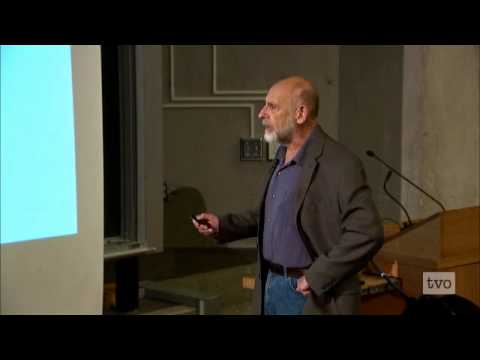 5 mo on HN
Leonard Susskind on The World As Hologram | TVO Docs
TVO Docs
7 HN recommender · 2013–2021
 5 mo on HN
Civilizations at the End of Time: Iron Stars
Isaac Arthur
4 HN recommender · 2017–2022
6 comments from Hacker News
>the energy required to kick up a rock to a trajectory where it will hit Mars (or vice versa) is orders of magnitude more than the energy required to vaporize all nearby life, so we've got a pretty big problem already Not necessarily. Something like the asteroid that killed the dinosaurs would have created temperatures at the impact point high enough to vapourize everything but probably also chucked a lot of more distant stuff into the sky that didn't get as hot. Here's a Discovery channel 'simulation' of a large impact chucking stuff up ▶ this video Not sure it's very accurate but it gives an impression of the sort of thing that may have happened.
Not to spoil your lunch or anything: ▶ this video Of course 500 Km is a big difference with 400 meters but to those near the point of impact it wouldn't matter and the global effects would still be beyond anything in our history. This is one interpretation of what this could look like: link
Absolutely. I'll milk that impact for all it's worth. Too bad I'll be too busy evaporating myself to cash in on it but for a very short while I'll be the richest man on Earth ;) And I'll re-invest my riches into start-ups that aim to deal with very fast climate change. ▶ this video Applications are open.
Bacteria species, sure, but having full on land animals survive an event like that is worthy of note. This discovery channel video might help put things in perspective: ▶ this video
Here’s a version with just the impact and some music to enjoy it with. Used to leave this video running on various Macintoshes at the Apple Store on my way out. ▶ this video
When a sufficiently large asteroid[0] slams into Earth, the impact plume[1] can hoist matter off the surface. The velocity of said matter may be sufficiently high to escape Earth's orbit, potentially seeding the solar system with life[2]. [0]: link [1]: ▶ this video [2]: link