Web Development in Emacs, Common Lisp and Clojurescript - Emacs SG
Engineers.SG2 HN recommenders · recommended in 2 months, 2018–2022
talk · intermediate · evergreen · 2018–2022 on HN
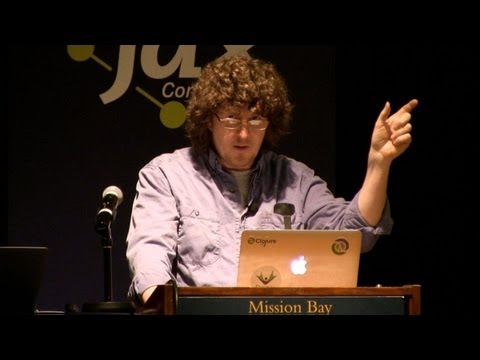
Elias Martenson presents his Emacs-based workflow for building a web application (the Potato chat platform) with Common Lisp on the backend and ClojureScript on the frontend. He demonstrates SLIME, Paredit, CIDER and debugger-driven interactive development. T…
HN commenters point to it as a live demonstration of interactive Lisp development, including compiling single functions in a running program and debugger-driven workflows.
Up next
 18 mo on HN
Ruby Conf 12 - Y Not- Adventures in Functional Programming by Jim Weirich
Confreaks
17 HN recommender · 2013–2026
 14 mo on HN
The Soul of Erlang and Elixir • Sasa Juric • GOTO 2019
GOTO Conferences
16 HN recommender · 2019–2024
 14 mo on HN
"Simple Made Easy" - Rich Hickey (2011)
Strange Loop Conference
14 HN recommender · 2022–2026
 13 mo on HN
"Making Impossible States Impossible" by Richard Feldman
elm-conf
9 HN recommender · 2017–2026
 12 mo on HN
William Byrd on "The Most Beautiful Program Ever Written" [PWL NYC]
PapersWeLove
11 HN recommender · 2017–2026
 11 mo on HN
The Value of Values with Rich Hickey
InfoQ
10 HN recommender · 2014–2023
 12 mo on HN
Why Isn't Functional Programming the Norm? – Richard Feldman
Metosin
12 HN recommender · 2019–2025
 11 mo on HN
Maybe Not - Rich Hickey
ClojureTV
14 HN recommender · 2018–2025
 11 mo on HN
Solving Problems the Clojure Way - Rafal Dittwald
Clojure/north
10 HN recommender · 2019–2025
 10 mo on HN
Lecture 1A: Overview and Introduction to Lisp
MIT OpenCourseWare
10 HN recommender · 2019–2026
 10 mo on HN
Conway's Game Of Life in APL
Dyalog
11 HN recommender · 2010–2024
 9 mo on HN
Lecture 1A | MIT 6.001 Structure and Interpretation, 1986
MIT OpenCourseWare
11 HN recommender · 2012–2024
5 comments from Hacker News
The workflow for slime/sly and swank/slynk described at the end of the article is standard if you are in the Emacs world. Sometimes I work in an Org file, sometimes in a lisp file directly. In both cases I will C-x C-e (eval-last-sexp) or run blocks, or the whole file (depending on Org vs lisp file). It is copy and paste on steroids (same for slime-eval-defun were you can be working deep inside some large function and update the whole without changing your view). There are some examples of developing in the debugger in [0] around 55 minutes (linked). This video also has great examples of other crazy interactive development workflows and is worth watching in its entirety if you are interested in this kind of thing. 0. ▶ this video
The Potato open source chat platform has a Common Lisp backend and a Clojurescript frontend. There is a fascinating talk by one of the authors on Youtube [0], and the code is on github [1]. A relatively new Web Application Environment called Radiance may also be worth looking at.[2] [0] ▶ this video [1] link [2] link
The sound in this video is pretty bad, but several years ago I did a talk showing how this development style work on a real project, and I think it may answer some of these questions. ▶ this video
A few years back I did a presentation on this very topic. Some people have said they appreciated it so I'm sharing a link here in the hope someone find it useful: ▶ this video
I've used Common Lisp for this purpose. You get instant results without even having to reload. You can simply compile a single function while the code is running. I did a talk about this a few years back: ▶ this video