Sugar: THE BITTER TRUTH
University of California Television (UCTV)13 HN recommenders · recommended in 12 months, 2010–2024
lecture · general · 2010–2024 on HN
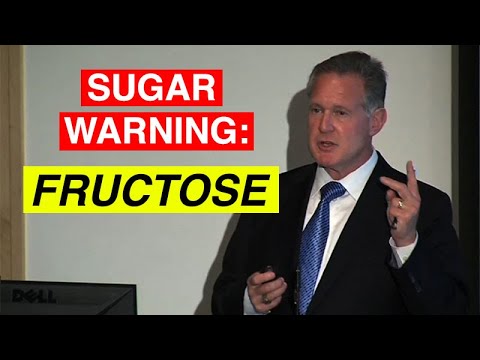
Robert Lustig of UCSF lectures on the biochemistry of sugar, arguing that fructose and lack of fiber drive the obesity epidemic via insulin. It is the widely viewed 90-minute talk that popularized the anti-sugar case.
The most-linked YouTube video on HN, recommended as an in-depth explanation of fructose metabolism.
Up next
 5 mo on HN
Fat Chance: Fructose 2.0
University of California Television (UCTV)
5 HN recommender · 2014–2024
 13 mo on HN
MIT's Pathway to Fusion Energy (IAP 2017) - Zach Hartwig
MIT Plasma Science and Fusion Center
16 HN recommender · 2017–2023
 3 mo on HN
Adam Ruins Everything - The Truth About the McDonald's Coffee Lawsuit
truTV
3 HN recommender · 2017–2023
 2 mo on HN
TOTAL teardown of a lithium phone battery.
bigclivedotcom
1 HN recommend · 2016–2024
 4 mo on HN
Why Trains are so Expensive
Wendover Productions
5 HN recommender · 2017–2022
 2 mo on HN
Why city flags may be the worst-designed thing you've never noticed | Roman Mars
TED
3 HN recommender · 2017–2023
 11 mo on HN
London Swallowed a City but Couldn't Digest It.
CGP Grey
12 HN recommender · 2012–2024
 6 mo on HN
The Economics of Airline Class
Wendover Productions
6 HN recommender · 2017–2025
 9 mo on HN
Dr. Michael Greger | How Not To Die | Talks at Google
Talks at Google
8 HN recommender · 2016–2022
 8 mo on HN
Eating less Meat won't save the Planet. Here's Why
Joseph Everett - WIL
10 HN recommender · 2021–2026
 8 mo on HN
Dr. Jason Fung - 'Therapeutic Fasting - Solving the Two-Compartment Problem'
Low Carb Down Under
7 HN recommender · 2017–2022
 7 mo on HN
Minding your mitochondria | Dr. Terry Wahls | TEDxIowaCity
TEDx Talks
7 HN recommender · 2011–2022
12 comments from Hacker News
For anyone interested in a detailed explanation of fructose metabolism (and why it's bad for you), I'd highly recommend these two talks by Robert Lustig on the subject. The first one is about how the body reacts to fructose, and the second video is a follow-up that emphasizes how fructose has contributed to the obesity epidemic in the US and elsewhere. ▶ this video link
If this article is correct, please explain why my blood pressure and cholesterol figures go through the roof when my diet includes fructose. Please also explain how and why everything goes back to normal when I cut fructose out entirely. I am an quite serious - I do not allow even trace amounts in sauces and mayo and the like, nor in hidden sources such as "agave nectar" (which is 50-90% fructose). Oh and BTW, I eat TONS of pasta, saturated fat (including butter), plants, and a really nice steak every month. I pour heavy whipping cream into my coffee every morning (not the usual trash, but the fancy expensive stuff free of polysorbate 80 and carrageenan.) Unless you're eating a fresh strawberry that hasn't been mutilated in a blender (and even then, not too many all at once), fructose makes you fat because it messes with your appetite regulation in the bad direction. Even a little fructose makes you hungry. Dietary fat (saturated or otherwise) does the exact opposite: all other things being equal, it makes you feel sated. Don't just take my experience over the last ten years into account - here's a leading endocrinologist that's overturning decades of dogma. He'll set you right: ▶ this video
I agree with you. This article also mentions they're focusing on fats/saturated fats; which is also a terrible focus. The real danger is not fat, even saturated/trans-fats, but starches and sugar. The increase in these types of carbohydrates in products like baby formula is actually leading to obesity in infants! Excess sugar can stress arteries and damage them. Cholesterol is carried to these artier by lipids (LDLs and HDLs, which are not actually cholesterol, but proteins that carry it through your bloodstream). If you eat a lot of sugar, cholesterol can build up between the walls of arteries as they fix the damage. They can eventually break down the wall, releasing plaque into the bloodstream and potentially causing heart complications. I highly recommend Dr. Lustig's video (UCTV) to learn more: ▶ this video A few years back I switched to a keto normal fat/very low carb (excluding fiber) diet. I've lost weight, gained energy and have felt a lot better. Of course this isn't for everyone. Some people have a body type that lends itself to higher carb intake (I knew a runner who'd eat 30 bananas a week) and as always do your research, consult with your doctor, dietitian, etc. before drastic changes in your diet. It's a common myth that Adkins died of his own diet. He didn't, and Reuters rededicated their column implying that he did. I honestly wonder if the obesity epidemic would have gone down today if the world didn't dismiss his ideas, or the ideas of many nutritionist for decad
I think the point is that getting rid of the subsidies would let the price of HFCS increase and would be less attractive to food producers. Regarding the idea that sucrose is healthier than HFCS, I remain unconvinced. See Robert H. Lustig's awesome expostion, Sugar: The Bitter Truth: ▶ this video He explains the endocrinology behind why our bodies cannot stay ahead of our sugar intake.
If you want some peer-reviewed background on why it's smart to cut out sugar and the foods to which it's added by manufacturers, do take a look at ▶ this video This is one of the best nutritional videos I've ever seen. There's a chunk of biochemistry in the middle but it's worth watching to the end! Don't miss it and add years to your life.
I watched ▶ this video a few days ago and was surprised to see is the #1 youtube link. It does have 11M views, however, and it is a great talk.
Don't take my word for it (how bad sugar is). Go to an expert: Dr. Robert Lustig, Endocrinologist at UCSF. "Sugar, the Bitter Truth" [0]. He'll describe the metabolic pathways of sugar. Key take-away: fructose is processed by the liver, and much of its calories is turned to fat. [0] ▶ this video
For starters, stop ingesting all things that have fructose in them. The U.S. government is really kind of complicit in allowing the spread of diabetes and NASH to happen in the first place by allowing harmful substances such as high-fructose corn syrup and to be infused into anything you can find in a store or fast food. Sure, it's ultimately an issue of education, but when the vast majority of foods have this stuff in them, educating every person on non eating most of the available foods in stores becomes very difficult. Watch how the metabolism of alcohol and fructose compare: ▶ this video
Robert Lustig does a good talk about sugar metabolism in "Sugar: The Bitter Truth": ▶ this video Also, "The Trouble with Fructose": link Despite the baity titles, it's a good talk with real biochemistry. Edit: better video added up top
This is almost right, but still manages to be dangerously wrong. Frustose and glucose are very different, one never gets converted to the other. All cells can and will take up and metabolize glucose, but only the liver can import and metabolize fructose. Metabolically, fructose does not behave like a carbohydrate, but like alcohol. Insulin affects mostly fat, muscle and liver cells. They react by storing the excess glucose, which they do harmlessly. Excess glucose does not cause insulin tolerance; fructose seems to do that, thought I don't remember the whole mechanism. Neither chitin nor lignin are carbohydrates, lignin isn't even chemically related. Even ruminants can't digest lignin, only a few funghi can do that. At any rate, the bottom line is that frustose is a problem, glucose isn't, and lumping both under "carbs" confuses matters. See ▶ this video for lots of details. (But don't take Dr. Lustig's words at face value---check other sources. Most of it is uncontroversial.)
Here's the video that started a lot of the public awareness of the issue: ▶ this video And there's also now a great documentary on Netflix called "Fed Up" ( link ), for anyone who has a subscription. It particularly tackles this silly idea that it's okay to eat and drink shitty food all day, so long as you exercise for a little bit too.
This is a relevant and very informative video about the impact of sugar on humans: ▶ this video I'd say that if you were to just dramatically reduce sugar you'll get results pretty quickly.