Planes clouds and vortices
flugsnug2 HN recommenders · recommended in 2 months, 2017–2026
demo · general · evergreen · 2017–2026 on HN
A short compilation of aircraft flying through clouds and moist air, showing the spiraling vortices that wings leave behind. The footage shows wingtip vortices and the way planes disturb cloud layers.
HN commenters link it as a visual illustration of wingtip vortices and wake turbulence when discussing lift and aircraft wakes.
Up next
 11 mo on HN
Children Of The Magenta Line
Mossie Fly
11 HN recommender · 2021–2026
 6 mo on HN
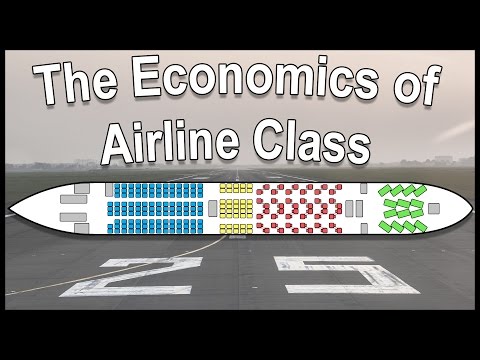
The Economics of Airline Class
Wendover Productions
6 HN recommender · 2017–2025
 6 mo on HN
David Fravor: UFOs, Aliens, Fighter Jets, and Aerospace Engineering | Lex Fridman Podcast #122
Lex Fridman
8 HN recommender · 2020–2022
 6 mo on HN
The Fastest Way to Board a Plane Feels Like the Slowest
CGP Grey
9 HN recommender · 2020–2023
 6 mo on HN
Zipline - How Rwanda Built A Drone Delivery Service
Real Engineering
9 HN recommender · 2019–2023
 5 mo on HN
Pulling Power from the Sky: The Story of Makani [Feature Film]
X, The Moonshot Factory
6 HN recommender · 2020–2025
 5 mo on HN
Joe Rogan Experience #1361 - Cmdr. David Fravor & Jeremy Corbell
PowerfulJRE
5 HN recommender · 2019–2023
 5 mo on HN
Big Plane vs Little Plane (The Economics of Long-Haul Flights)
Wendover Productions
8 HN recommender · 2017–2023
 5 mo on HN
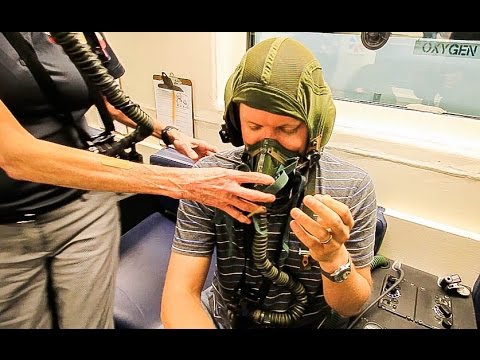
Why You Should Put YOUR MASK On First (My Brain Without Oxygen) - Smarter Every Day 157
SmarterEveryDay
5 HN recommender · 2016–2025
 5 mo on HN
The Boeing 787: Broken Dreams l Al Jazeera Investigations
Al Jazeera English
6 HN recommender · 2017–2024
 4 mo on HN
A NEW Trace! The FULL MH370 Story, so Far..
Mentour Pilot
5 HN recommender · 2024–2025
 4 mo on HN
How to crash an airplane – Nickolas Means | The Lead Developer UK 2016
LeadDev
4 HN recommender · 2019–2024
4 comments from Hacker News
Regarding your 2nd answer, taking off quickly after another aircraft has departed is difficult because of wake turbulence. The most hazardous part of wake turbulence is the spiraling wingtip vortices which can be observed in this neat video: ▶ this video One notable wake turbulence incident was in 2006 at Boeing Field in Seattle where a Cessna 172 and Boeing 747 were both on final approach for parallel runways. The Cessna 172 got flipped almost upside down and recovered 150 feet over the terrain: link
For anyone interested, there are several great youtube videos[1-4] that show the wakes (the wingtip vortices in particular) created by various aircraft. This incident brings the Reduced Vertical Separation Minima (RVSM)[5] into question. Strategic Lateral Offset Procedure (SLOP)[6] can be used used to avoid such incidents. [1] link [2] ▶ this video [3] link [4] link [5] link [6] link
Two quick errata: In Sound / Biology, a control inversion: low pitch (slider and sound) animates blue short hairs, and high pitch animates long red. In the windtunnel > Wing, lift is reported but the airstream remains undeflected.[1] [1] randomly, fwiw, I've used cloud deck slicing to illustrate downdraft, eg link link . Or perhaps moments of "yoink" like... err, ▶ this video .
One concept is "heavier than air" flight is throwing air downward. Visuals help: [1] link [2] link [3] link [4] ▶ this video