1,000km Cable to the Stars - The Skyhook
Kurzgesagt – In a Nutshell1 HN recommender · recommended in 1 month, 2019–2024
explainer · general · evergreen · 2019–2024 on HN
Kurzgesagt explains the skyhook, a rotating cable with a counterweight that could catapult spacecraft from Earth orbit toward deep space. It covers why it would make space travel cheaper and more efficient.
Used as the accessible reference for skyhook and space tether ideas in HN discussions of Mars transit, launch and space elevators.
Up next
 2 mo on HN
The LED's Challenge to High Pressure Sodium
Technology Connections
2 HN recommender · 2018–2021
 2 mo on HN
The Epic Of Gilgamesh In Sumerian
Peter Pringle
3 HN recommender · 2021–2025
 7 mo on HN
NaN Gates and Flip FLOPS
suckerpinch
7 HN recommender · 2020–2025
 12 mo on HN
Mechanical Computer (All Parts) - Basic Mechanisms In Fire Control Computers
Excelsior10000
13 HN recommender · 2014–2025
 9 mo on HN
SNES Code Injection -- Flappy Bird in SMW
SethBling
9 HN recommender · 2016–2025
 4 mo on HN
Mars Helicopter (before it went to Mars)
Veritasium
10 HN recommender · 2020–2021
 3 mo on HN
RAT POISON AND BRANDY: THE 1904 ST. LOUIS OLYMPIC MARATHON.
Jon Bois
3 HN recommender · 2019–2024
 3 mo on HN
Was Roman Concrete Better?
Practical Engineering
4 HN recommender · 2021–2024
 11 mo on HN
Light Years Ahead | The 1969 Apollo Guidance Computer
TNMoC
11 HN recommender · 2021–2026
 9 mo on HN
The Solar Gravitational Lens will Map Exoplanets. Seriously.
Launch Pad Astronomy
10 HN recommender · 2020–2025
 7 mo on HN
34C3 - The Ultimate Apollo Guidance Computer Talk
media.ccc.de
9 HN recommender · 2018–2025
 6 mo on HN
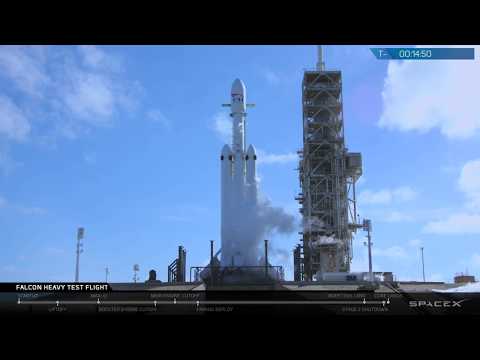
Falcon Heavy Test Flight
SpaceX
4 HN recommender · 2018–2026
6 comments from Hacker News
Regarding the time it could take to travel between Earth and Mars, I recently saw a very interesting video on a concept called a "skyhook" that suggests it might be able to economically reduce the transit time to "just" two months or so, though I assume you'd still want to wait for an appropriate launch window, and in addition it probably wouldn't be operational in time to benefit the first few generations of travelers. :P ▶ this video
I don’t know how deeply they analysed it, but Kurzgesagt seem to think the Martian moons have particular value as central gravity wells, to then reach further out to mine asteroids ▶ this video
Never mind space elevators - we could build useful sky hooks right now (and Mars might be the best place to do it...) ▶ this video
Combine balloons with skyhooks. ▶ this video Edit: According to proprietary imtringued numbers the hydrogen for a balloon capable of lifting 1kg to 50km would be $800 if you do not reuse the hydrogen. The skyhook would accept vehicles at an altitude of 100km so no, keep balloons out of the space launch industry.
Surprising that no one here has used the term "skyhook" in the comments here. Adding it to increase discoverability of this thread. Could SpaceX's starship reach the tether without the superheavy 1st stage? The video in the article is here: [1] and the sources to the video [2]. [1] ▶ this video [2] link
▶ this video Fair point, that would indeed be a problem. This part of the video alludes to what I'm getting at. Granted, they are using a moon as the weighted object, so rotation wouldn't be affected by hook events. I wonder how massive the weighted object would have to be to make rotation changes negligible, or at least manageable.