Why SpaceX is Making Starlink
Real EngineeringRecommended by 4 HN commenters across 4 months, 2019–2020
explainer · general · 2019–2020 on HN
Real Engineering explains why SpaceX is building Starlink, including the economics of satellite internet. It covers the latency advantage of light in vacuum over fiber for long-distance links.
Recommended as a clear explanation of Starlink's purpose and the case that it can beat fiber on latency for long routes.
Up next
 5 mo on HN
Are Electric Cars Worse For The Environment? Myth Busted
Engineering Explained
Recommended 5× on HN · 2018–2023
 4 mo on HN
World's Largest Batteries - (Pumped Storage)
Practical Engineering
Recommended 4× on HN · 2020–2024
 2 mo on HN
Modular Micro-Reactors – The Future of Nuclear Energy?
Illinois EnergyProf
Recommended 3× on HN · 2020–2021
 10 mo on HN
Breakthrough in Nuclear Fusion? - Prof. Dennis Whyte
MIT Club of Northern California
Recommended 11× on HN · 2016–2024
 11 mo on HN
Light Years Ahead | The 1969 Apollo Guidance Computer
TNMoC
Recommended 11× on HN · 2021–2026
 9 mo on HN
The Solar Gravitational Lens will Map Exoplanets. Seriously.
Launch Pad Astronomy
Recommended 10× on HN · 2020–2025
 7 mo on HN
34C3 - The Ultimate Apollo Guidance Computer Talk
media.ccc.de
Recommended 9× on HN · 2018–2025
 6 mo on HN
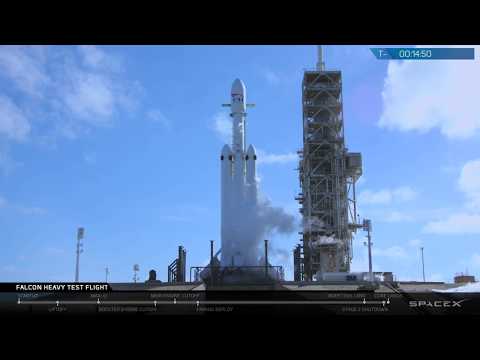
Falcon Heavy Test Flight
SpaceX
Recommended 4× on HN · 2018–2026
 7 mo on HN
I Was SCARED To Say This To NASA... (But I said it anyway) - Smarter Every Day 293
SmarterEveryDay
Recommended 9× on HN · 2023–2025
 8 mo on HN
Starbase Tour with Elon Musk [PART 1 // Summer 2021]
Everyday Astronaut
Recommended 11× on HN · 2021–2024
 5 mo on HN
Carl Sagan - Pale Blue Dot
carlsagandotcom
Recommended 5× on HN · 2011–2026
 6 mo on HN
Apollo Guidance Computer Part 1: Restoring the computer that put man on the Moon
CuriousMarc
Recommended 8× on HN · 2019–2024
7 comments from Hacker News
Right, so if you can't go through the crust then going up would be another option. Over long enough of a distance, say NYC to London (or even farther), the overhead of going up first and then a "straight" line horizontally (it's not completely straight because it has relay between the satellites via LOS laser but each arc would be fairly long) and back down would be shorter than a line following the curvature. (Edited: This is wrong. I had conflated the lower latency with shorter distance as others have pointed out.) BTW, I want to give full credit to my source: ▶ this video It also does a much better job of explaining it than I have but it is a convincing argument for how Starlink can be useful and why traders would be willing to pay a lot for it.
Light travels 47% slower in a fiber optic cable than it does in the vacuum of space. [1] [1] ▶ this video (the whole video is worth watching, but that timestamp answers your specific question.
Real Engineering has an interesting video on why it would be useful for firms trading internationally ▶ this video
Real engineering made a video on it: ▶ this video I recommend watching. The channel does really good explanations.
This video[1] speculates that Starlink will achieve lower latency than fibre Internet. Latency-sensitive industries like finance are very willing to pay a lot for improved latency. [1] ▶ this video
▶ this video According to this Engineering Explained video, it may be possible to achieve a lower latency using Star Link than over fiber if the points are far enough. People like high frequency traders might be willing to pay a ton for such a thing.
Someone smarter than I made this, which you may or may not agree with... "Why SpaceX is Making Starlink" ▶ this video TL;DR -- satellites can be faster than cables in certain cases