ATLAS AGENA ROCKET DEPRESSURIZES ON PAD, COLLAPSES AND TEARS ITSELF TO PIECES
What You Haven't SeenCited 4× on HN, 2020–2026
news · general · evergreen · 2020–2026 on HN
A one-minute clip of an Atlas Agena rocket losing pressure on the pad and collapsing. The Atlas relied on tank pressurization for structural integrity, so a simple failure tore it apart.
Commenters cite it as vivid proof that pressure-stabilized rocket tanks can fail catastrophically when pressure is lost.
Up next
 11 mo on HN
Light Years Ahead | The 1969 Apollo Guidance Computer
TNMoC
11 HN recommender · 2021–2026
 9 mo on HN
The Solar Gravitational Lens will Map Exoplanets. Seriously.
Launch Pad Astronomy
10 HN recommender · 2020–2025
 7 mo on HN
34C3 - The Ultimate Apollo Guidance Computer Talk
media.ccc.de
9 HN recommender · 2018–2025
 6 mo on HN
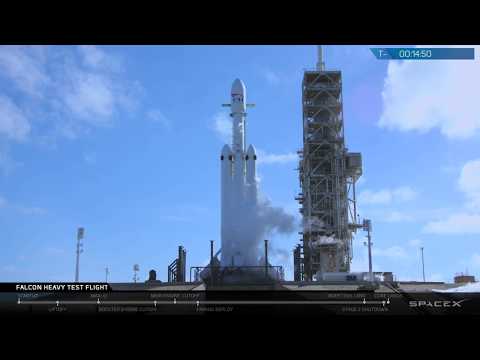
Falcon Heavy Test Flight
SpaceX
4 HN recommender · 2018–2026
 7 mo on HN
I Was SCARED To Say This To NASA... (But I said it anyway) - Smarter Every Day 293
SmarterEveryDay
9 HN recommender · 2023–2025
 8 mo on HN
Starbase Tour with Elon Musk [PART 1 // Summer 2021]
Everyday Astronaut
11 HN recommender · 2021–2024
 5 mo on HN
Carl Sagan - Pale Blue Dot
carlsagandotcom
5 HN recommender · 2011–2026
 6 mo on HN
Apollo Guidance Computer Part 1: Restoring the computer that put man on the Moon
CuriousMarc
8 HN recommender · 2019–2024
 5 mo on HN
Dr. Robert Zubrin with a brilliant answer to "Why Should We Go To Mars?"
Jamin Gray
3 HN recommender · 2016–2021
 6 mo on HN
The REAL Possibility of Mapping Alien Planets!
PBS Space Time
4 HN recommender · 2023–2024
 6 mo on HN
How Much Do Rockets Pollute? Are They Bad For Our Air?
Everyday Astronaut
6 HN recommender · 2020–2023
 6 mo on HN
Orbital Rings
Isaac Arthur
4 HN recommender · 2017–2025
4 comments from Hacker News
The vehicle is designed to hold all that fuel, plus whatever payload it carries on top, but it's not designed to have heavy loads attached to it in any other way. Rockets are so intensely optimized for weight that sometimes they're barely strong enough to stand upright if you fuel them the wrong way: ▶ this video .
Yes, the Centaur upper stage was and still is using balloon tanks. I think this is the failure you're referring to: ▶ this video And here's a picture from ULA/Tony Bruno showing a Centaur tank in their factory, being supported by a rig: link
I think it is implied in the article that only the motor is massive enough to excavate a crater. The similarity in size of the craters suggests they were created by objects of similar mass. At least one early rocket design (Atlas) had fuel tanks so insubstantial that they had to be pressurized until they were loaded with fuel on the pad, and a loss of pressure could be expensive... ▶ this video
For the record, a couple Atlas rockets did crumble under their own weight due to unexpected loss of pressure: ▶ this video And some Atlas missiles on display are still being pressurized to this day: link Like really, there is a compressor next to the rocket that keeps constant pressure inside against the slight leaks. Pretty impressive for 40-50 old rocket left outside exposed to the elements to be still this airtight. :)