Is Starlink A Secret Radar Constellation?
Noise In Space3 HN recommenders · recommended in 1 month, 2026–2026
explainer · advanced · 2026–2026 on HN
A 105-minute technical deep dive from Noise In Space evaluating whether Starlink satellites could work as synthetic aperture radar. It covers SAR signal-to-noise, amplifiers, antennas, duplexing, phased array beamforming and simulations of V2 Mini and V3 sate…
Cited as a rigorous radio-engineering analysis of what radar capability Starlink could plausibly have.
Up next
 11 mo on HN
Light Years Ahead | The 1969 Apollo Guidance Computer
TNMoC
11 HN recommender · 2021–2026
 9 mo on HN
The Solar Gravitational Lens will Map Exoplanets. Seriously.
Launch Pad Astronomy
10 HN recommender · 2020–2025
 7 mo on HN
34C3 - The Ultimate Apollo Guidance Computer Talk
media.ccc.de
9 HN recommender · 2018–2025
 6 mo on HN
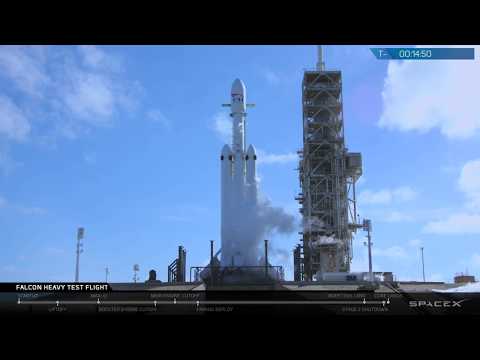
Falcon Heavy Test Flight
SpaceX
4 HN recommender · 2018–2026
 7 mo on HN
I Was SCARED To Say This To NASA... (But I said it anyway) - Smarter Every Day 293
SmarterEveryDay
9 HN recommender · 2023–2025
 8 mo on HN
Starbase Tour with Elon Musk [PART 1 // Summer 2021]
Everyday Astronaut
11 HN recommender · 2021–2024
 5 mo on HN
Carl Sagan - Pale Blue Dot
carlsagandotcom
5 HN recommender · 2011–2026
 6 mo on HN
Apollo Guidance Computer Part 1: Restoring the computer that put man on the Moon
CuriousMarc
8 HN recommender · 2019–2024
 5 mo on HN
Dr. Robert Zubrin with a brilliant answer to "Why Should We Go To Mars?"
Jamin Gray
3 HN recommender · 2016–2021
 6 mo on HN
The REAL Possibility of Mapping Alien Planets!
PBS Space Time
4 HN recommender · 2023–2024
 6 mo on HN
How Much Do Rockets Pollute? Are They Bad For Our Air?
Everyday Astronaut
6 HN recommender · 2020–2023
 6 mo on HN
Orbital Rings
Isaac Arthur
4 HN recommender · 2017–2025
8 comments from Hacker News
and soon from space? radio engineering breakdown of starlink radar capabilities, it’s a pretty impressive bird if you were designing it only for that: ▶ this video
Yeah, I agree. A massive radar network, passive or active is the most likely possibility I have come across. You'd need a LOT of compute at each node to get the most out of the network. I found this video[1] to be a pretty convincing analysis of the absolute max capability you could expect, and it would indeed be impressive. [1] ▶ this video
Check out this video that goes into a very deep technical explanation about how the satellites can be used as a Synthetic Aperature Radar to build a realtime representation of the entire globe at meters of resolution: ▶ this video
The US, UK, AU, and Russia have been back and forth on leadership relative to some metric or another wrt Over the Horizon systems throughout the post war period. > the world's finest radar and navigation tech Hadn't realised the UK had a sat nav constellation up (nav tech) and .. are we counting Starlink as radar tech? * link * ▶ this video
Think of it less as a comms system with a small increase in bandwidth, and more as a radar system with a larger increase in resolution. * ▶ this video
More like a giant military radar larping as an space based ISP. ▶ this video Elon has always been a Department of Defense/intelligence asset larping as a capitalists. You can't exactly go to congress and get a quarter of the government budget to do globe spanning surveillance from space, or convince them to let you fund, build and maintain a platform for psyopping your own civilian population (x) So you go get your illegal projects funded through capital markets with through an asset like Elon. As soon as the department of defense started focusing on subterranean warfare and how its the future of wars Elon starts a tunneling company. Elon is just Howard Hughes v2, they're running the same script again.
The data centres are for the secret radar constellation masquerading as an ISP company that is Starlink You are watching the slave grid being erected over your head ▶ this video See 1:38:00
On the military side, "Starlink V3 with data center" looks a hell of a lot like an orbital Synthetic Aperture Radar asset, which requires both a big antenna and a good deal of onboard computation to mitigate bandwidth requirements. See ▶ this video and specifically for the economics of AI vs surveillance - link