What is a Browser?
Ji Lee2 HN recommenders · recommended in 2 months, 2009–2025
other · general · evergreen · 2009–2025 on HN
Street interviews of over 50 passersby in Times Square, asked what a browser is. Many answers show people confuse browsers with search engines or the internet.
Cited as evidence that ordinary users often don't understand basic technology like browsers, as a reminder for designers and developers.
Up next
 3 mo on HN
Modern Times Streetwise - part 1/4 - 1996 BBC Documentary how become a London cabbie.
TaxiWarrior
3 HN recommender · 2014–2017
 2 mo on HN
Rhyme: Why Eminem is one of the most impressive lyricists ever
Library of Alexandria
2 HN recommender · 2014–2022
 3 mo on HN
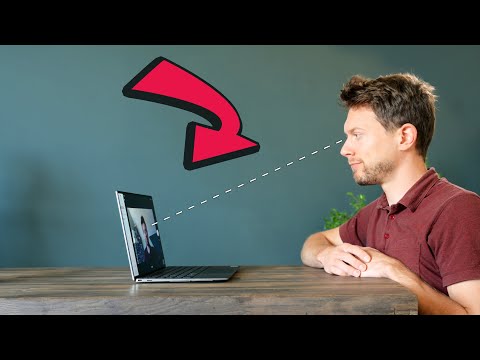
Weird webcam mod that enables eye-contact conversation
DIY Perks
5 HN recommender · 2020–2026
 2 mo on HN
What is a rocket mass heater?
paul wheaton
2 HN recommender · 2018–2022
 3 mo on HN
You Suck at Photoshop - Distort, Warp, & Layer Effects
My Damn Channel
3 HN recommender · 2010–2024
 2 mo on HN
I have APHANTASIA (and you may too...without realising it!)
JAMIEvstheVOID
2 HN recommender · 2019–2023
 2 mo on HN
Oldest US mall blends old/modern with 225-sq-ft micro-lofts
Kirsten Dirksen
2 HN recommender · 2017–2022
 3 mo on HN
VFX Artists React to DUNE Bad & Great CGi
Corridor Crew
4 HN recommender · 2021–2023
 11 mo on HN
Bret Victor - Inventing on Principle
Rui Oliveira
12 HN recommender · 2013–2025
 9 mo on HN
Mike Monteiro: F*ck You, Pay Me
CreativeMornings HQ
12 HN recommender · 2015–2026
 8 mo on HN
Music Software & Bad Interface Design: Avid’s Sibelius
Tantacrul
8 HN recommender · 2019–2026
 5 mo on HN
!!Con 2016 - How I Code and Use a Computer at 1,000 WPM!! By Sina Bahram
Confreaks
2 HN recommender · 2019–2022
12 comments from Hacker News
It's old now (and I wonder how much it's changed) - but there is this great video of Google employees asking people in Times Square what the difference is between a browser and a search engine: ▶ this video Most people conflate the two. IIRC the video was used internally as a tool to press the notion that they _had_ to build a browser or risk losing their search engine dominance.
Your strengths and weaknesses have curves, troughs, peaks and spaghetti complexity. Personally I completely accept that I'm pretty mediocre as a "developer", but honestly I don't really care because I don't personally consider myself a developer, I just look at myself as someone who simply likes to explore, learn and play with web based technologies. This way I don't get sucked into the pigeon hole psychology of the professional world. If someone else wants to look at me in that light that's fine , but I keep an invisible boundary between myself and that kind of thing. I also like to occasionally and inadvertently ask inane questions at stackoverflow which get down voted at machine gun intervals. It's good for the 'soul'. I have a mentor that has been programming since the 70's , I once lived in a place where an extremely smart Belgian software engineer was staying who helped me while programming, and I currently met a really smart engineer near where I live who has been gradually throwing me suggestions coupled with some pseudo mentorship. All of these people are very smart,very empathetic and willing to share. Being around people like that in my view is absolutely needed for your sanity. You've probably seen this video. It's the one where Google attempts to explain what a web browser is to random people on the street. Watch it if you haven't. It will lend perspective. ▶ this video Ok that's all.
Good for you. I've been doing tech support since 1988. I've seen many many PCs with hundreds of apps, some maybe heading into thousands, sometimes with custom hackery to get different versions running in parallel and stuff. Yes this is a thing. It is common. And the typical user does not know what an "app" is, or what OS they are using. I've lost count of the number of people that told me their computer was running Word or Office (not Windows), or who think they access the Web via Google because they don't know what a web browser is. Here is some proof, in case you don't believe me. ▶ this video If you can name the 20 apps you use the most often, you are the elite of the elite, the top 1% of 1% of computer users. Normal people are not like that. They don't know what they use or what it's called or what OS they run or what an "OS" is, and they outnumber us by approximately a million to one.
> browser instead of integrating a browser into an OS. I don't think the average user cares, as long as they can do what they need to do. See ▶ this video
> This is a conscious decision that the user has made to use Chrome and send their URLs to Google Not to pick on this one point, but I want to add that I doubt many users are really conscious of it. People on HN are in a bubble; go to the local mall and ask people what they know. Ask them what a web browser is. ▶ this video That's why people in the IT field have a responsibility to provide safe products to the public. It's like someone on Wall Street saying that a typical person is making a 'conscious decision' to accept all the complex risks of a sophisticated financial instrument, or that I'm making a 'conscious decision' to accept all the risks of an airplane when I get on it - I have little idea how the plane works; it's up to the manufacturer, airline and goverment to ensure it's safe.
> I realize these technologies are not currently doing anything for you. I sympathize. But we need them in browsers now so that we can use them in 10 years. 6 years ago many people didn't even knew what web browsers were (What is a Browser? ▶ this video )
Doesnt sound like a very knowledgeable headmaster. Larry invented PageRank and did a respectable implementation of it before he had other engineers take it over. Here is a video, ▶ this video , of everyday people trying to explain what a browser is, a browser, the most important piece of (general use) software developed since the word processor or spreadsheet. Try asking the general public what PageRank is, much less who invented it, and be prepared for a montage of silent deer-in-headlights responses with the occasional stammering about librarians for good measure :)
Look, I'm not saying don't go for this idea. I'd love to see you try it. My doubts shouldn't get in your way. Code it up. As for why it would be difficult to use and insecure? I'm guessing most of the people you hang out with are probably geeks. For perspective, take a look at this video: ▶ this video Imagine each one of those people in the video has a personal data store that contains their complete medical history, right alongside all their Google searches, Amazon purchases and tweets. How secure of a password do you think they picked? How hard would it be to trick them with a phishing attack? How much do you think they even know how to do with it in the first place?
Generally, it's hard to convince nerds that something trivial to them is not trivial to non nerds. In what reality is it obvious that "to 'get more of something' I have to copy a url (what's a url?) from a browser tab to another web application?" Before telling me that poeple just have to click the "feed icon", watch this: ▶ this video and ask yourself if you think people will go from: "I want more of this site" to "Why don't I click that funky little orange icon in the address bar?"
Most people don't understand the difference between "Google" and a "Browser" [1], cynically, I don't hold much hope people will care what browser cookies are. I've already had to explain to my parents that cookies aren't evil, the sites they visit (BBC/Google etc) are mainstream and fine. As an EU resident and webmaster of several sites for myself and clients. I see little benefit to my visitors other than causing me a lot of grief over trying to follow guidelines and hoping my implementation doesn't break them. I was speaking to a client about it today, he hasn't seen anything about it and I doubt many small business owners have seen (or cared) much about it. [1] ▶ this video
I think you are far over-estimating the size of the set of people who know the difference between ads and organic results on Google. I would also bet the percentage of people who can differentiate sites by URL is is very small. If the link text says "Honda", many (most?) will believe they are going to a Honda sanctioned site. I would love to see real user research on this topic. Google showed pretty well there are a lot of people who are confused, to say the least[1]. 1. ▶ this video
I didn't take that as an anti-intellectualism slight. People who write tech pieces on the web, be it on blogs or tech publications, are more computer savvy than the the majority of computer users. If you don't believe this, go watch the Google on-the-street video asking people what a browser is ( ▶ this video ). I was one of those power users who hated the ribbon when it was introduced in Office 2007. But my wife and kids - they loved it. [Edit - since I can't reply to thread below (why is that?)] I sell an Excel add-in, so I have a different perspective than most power users. The ribbon is a pain to program compared to the old command bars, making me dislike it at first. I've learned to appreciate it, though, because it's a lot easier to convey the add-in's features via the ribbon than it is using 16x16 icons on a command bar.