Flexible Muscle-Based Locomotion for Bipedal Creatures
Goatstream1 HN recommender · recommended in 1 month, 2017–2022
demo · intermediate · evergreen · 2017–2022 on HN
A 2013 research demo of simulated bipedal creatures whose natural gaits are found by optimizing muscle-based controllers, with no motion capture or keyframe animation. It shows physics-based walking and running emerging from musculoskeletal models.
HN cites it as an earlier, smoother precedent whenever new learned-locomotion or simulated-walking work appears.
Up next
 4 mo on HN
How a transistor works
Ben Eater
4 HN recommender · 2020–2023
 13 mo on HN
The Beauty of Bézier Curves
Freya Holmér
16 HN recommender · 2021–2026
 10 mo on HN
Ed Catmull, Pixar: Keep Your Crises Small
Stanford Graduate School of Business
9 HN recommender · 2010–2017
 8 mo on HN
"Money doesn't interest me" - Ton Roosendaal 2017 Interview
Blender Guru
7 HN recommender · 2018–2025
 8 mo on HN
DNA animation (2002-2014) by Drew Berry and Etsuko Uno wehi.tv #ScienceArt
WEHImovies
9 HN recommender · 2020–2026
 6 mo on HN
"NO CGI" is really just INVISIBLE CGI - 1
The Movie Rabbit Hole
6 HN recommender · 2024–2026
 5 mo on HN
Captain Disillusion: World's Greatest Blenderer - Live at the Blender Conference 2018
Captain Disillusion
4 HN recommender · 2019–2022
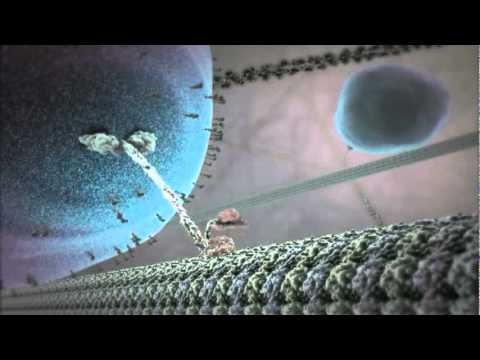 5 mo on HN
The Inner Life of the Cell Animation
XVIVO Scientific Animation
5 HN recommender · 2017–2024
 5 mo on HN
World Building in Blender - Ian Hubert
Blender
4 HN recommender · 2019–2026
 4 mo on HN
Learn Low Poly Modeling in Blender 2.9 / 2.8
Imphenzia
4 HN recommender · 2020–2025
 4 mo on HN
How Prince of Persia Defeated Apple II's Memory Limitations | War Stories | Ars Technica
Ars Technica
5 HN recommender · 2020–2026
 4 mo on HN
Chinese Invisibility Cloak Hoax DESTROYED!!!
Captain Disillusion
4 HN recommender · 2021–2025
8 comments from Hacker News
Very interesting. I guess it shouldn't be too surprising that the Fosbury Flop seems to be the optimal high jump method, even if it wasn't developed until the 1960s. I didn't see the link to the video with animations at first! It's here in case anyone else missed it: link Which made me revisit this classic: ▶ this video
There is a paper on two-legged animals learning different methods of walking: ▶ this video (or link for the slightly better known "music video" version). Soda Constructor's wikipedia page also links to a 3D applet named "Springs World 3D", I was playing with that one back in the day.
swangin.mp4 AKA "Flexible Muscle-Based Locomotion for Bipedal Creatures" also has a similar vibe: ▶ this video
I would hope that they can use a framework that's general enough to adapt to other form factors. So, making a humanoid is a way of giving themselves a difficult enough initial problem that they're less likely to be fooled by early success: the humanoid robot will have to self-balance, walk, open doors, and do a lot of the complex things that humans do without thinking in order to be considered a minimum-viable product. In the long run if this pans out, I'd expect to see farming and weeding hexapods, equipment-hauling centaurs, wheeled platforms with arms for getting around office spaces, construction bots with long-fingered hands and asymmetrical multi-jointed appendages, and so on. If the AI has a general capacity for motor-skill learning, then you can just give it whatever body is most optimal for the task at hand. I'm reminded of this video on training an AI to walk through simulation: ▶ this video
Since we have machine-learning based walking models for several years now, see e.g. [1] or [2], I'm wondering why walking isn't yet a solved problem by now (?) [1] ▶ this video [2] link
This seems very useful work. But I wonder why it took so long to get here since [1] was published. [1] ▶ this video
This was from 2013: ▶ this video I'm wondering what challenges we have solved since then, beside the mechanical implementation.
Clearly needs some energy constraint factored in to look less like monty python :) I also wonder if the gravity is realistic. A similar video from 2013: ▶ this video Looks much smoother, because of muscle and nerve simulations. At 0:55 you can see the generations learning how to walk.