Grasshopper Takes Its First Hop / 9-21-12
SpaceXCited 4× on HN, 2012–2020
news · general · 2012–2020 on HN
SpaceX footage of the Grasshopper vertical takeoff and landing test vehicle making its first roughly 6-foot hop in McGregor, Texas, on September 21, 2012. It was an early step toward a reusable Falcon 9 first stage.
HN references it as the first Grasshopper test flight, a milestone in the history of reusable rockets.
Up next
 11 mo on HN
Light Years Ahead | The 1969 Apollo Guidance Computer
TNMoC
11 HN recommender · 2021–2026
 9 mo on HN
The Solar Gravitational Lens will Map Exoplanets. Seriously.
Launch Pad Astronomy
10 HN recommender · 2020–2025
 7 mo on HN
34C3 - The Ultimate Apollo Guidance Computer Talk
media.ccc.de
9 HN recommender · 2018–2025
 6 mo on HN
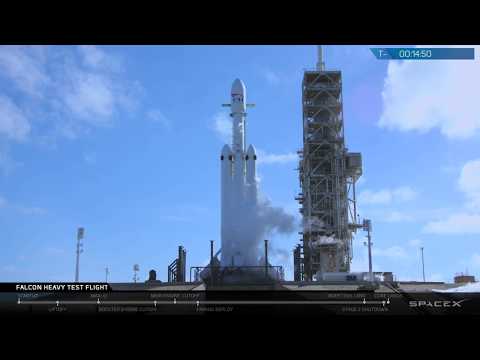
Falcon Heavy Test Flight
SpaceX
4 HN recommender · 2018–2026
 7 mo on HN
I Was SCARED To Say This To NASA... (But I said it anyway) - Smarter Every Day 293
SmarterEveryDay
9 HN recommender · 2023–2025
 8 mo on HN
Starbase Tour with Elon Musk [PART 1 // Summer 2021]
Everyday Astronaut
11 HN recommender · 2021–2024
 5 mo on HN
Carl Sagan - Pale Blue Dot
carlsagandotcom
5 HN recommender · 2011–2026
 6 mo on HN
Apollo Guidance Computer Part 1: Restoring the computer that put man on the Moon
CuriousMarc
8 HN recommender · 2019–2024
 5 mo on HN
Dr. Robert Zubrin with a brilliant answer to "Why Should We Go To Mars?"
Jamin Gray
3 HN recommender · 2016–2021
 6 mo on HN
The REAL Possibility of Mapping Alien Planets!
PBS Space Time
4 HN recommender · 2023–2024
 6 mo on HN
How Much Do Rockets Pollute? Are They Bad For Our Air?
Everyday Astronaut
6 HN recommender · 2020–2023
 6 mo on HN
Orbital Rings
Isaac Arthur
4 HN recommender · 2017–2025
4 comments from Hacker News
Very few rocket launches end with any kind of soft landing, let alone main boosters. Soft-landing a small payload, or in the case of the shuttle, a winged reentry vehicle, is the exception. (And yes, the Shuttle also soft-ish watered its SRBs underr chutes.) Retrorocket-soft-landing intact boosters from production launches fully upright was science fiction until four years ago. link The test platform was first hopped in 2012, only 8 years ago. ▶ this video (I'm not a Musk fanboi,I thought the powered landing was nuts, he proved me wrong.)
I upvoted this thinking it was a new test, but sadly this is an older result from two months ago. To make amends for upvoting without reading the article, here is the history of Grasshopper's public flights Date Altitude Duration Youtube 2012-09-21 1.8 m 3 seconds ▶ this video 2012-11-01 5.4 m 8 seconds link 2012-12-17 40 m 29 seconds link 2013-03-07 80 m 34 seconds link 2013-04-17 250 m 61 seconds link 2013-06-14 325 m 68 seconds link
This follows from the first test flight in late-September ▶ this video . > "Testing of Grasshopper continues, with the next big milestone -- a hover at roughly 100 feet -- expected in the next several months." This is preparation for the vertical take-off and landing (VTOL) rocket SpaceX wants to build link And the reason why they're doing this: link > But a fully reusable rocket could change the equation dramatically. Musk illustrated the point by citing SpaceX's Falcon 9, which costs between $50 million to $60 million per launch in its current configuration. > "But the cost of the fuel and oxygen and so forth is only about $200,000," Musk said."So obviously, if we can reuse the rocket, say, a thousand times, then that would make the capital cost of the rocket for launch only about $50,000."
This follows from the first test flight in late-September ▶ this video . > "Testing of Grasshopper continues, with the next big milestone -- a hover at roughly 100 feet -- expected in the next several months." This is preparation for the vertical take-off and landing (VTOL) rocket SpaceX wants to build link And the reason why they're doing this: link > But a fully reusable rocket could change the equation dramatically. Musk illustrated the point by citing SpaceX's Falcon 9, which costs between $50 million to $60 million per launch in its current configuration. > "But the cost of the fuel and oxygen and so forth is only about $200,000," Musk said."So obviously, if we can reuse the rocket, say, a thousand times, then that would make the capital cost of the rocket for launch only about $50,000." (Resubmission of link . I rarely resubmit, but this really is HN material and warrants quality discussion)