Succinct Data Structures
Edward Kmett1 HN recommender · recommended in 1 month, 2017–2025
talk · advanced · evergreen · 2017–2025 on HN
Edward Kmett's 2013 talk at Prezi in Budapest on succinct data structures, which store data in close to the information-theoretic minimum space while supporting fast queries. It ties together the research and walks through his Haskell succinct library.
Commenters credit it as the place they first learned about succinct data structures, and found it left a lasting impression.
Up next
 10 mo on HN
CppCon 2017: Matt Kulukundis “Designing a Fast, Efficient, Cache-friendly Hash Table, Step by Step”
CppCon
9 HN recommender · 2018–2026
 8 mo on HN
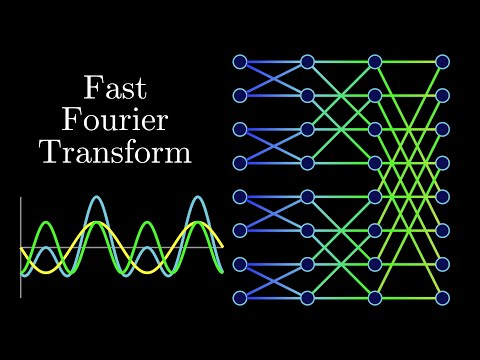
The Fast Fourier Transform (FFT): Most Ingenious Algorithm Ever?
Reducible
7 HN recommender · 2021–2026
 9 mo on HN
Modern Dictionaries by Raymond Hettinger
SF Python
9 HN recommender · 2016–2025
 7 mo on HN
CppCon 2014: Chandler Carruth "Efficiency with Algorithms, Performance with Data Structures"
CppCon
7 HN recommender · 2014–2024
 7 mo on HN
CppCon 2017: Juan Pedro Bolivar Puente “Postmodern immutable data structures”
CppCon
5 HN recommender · 2017–2025
 6 mo on HN
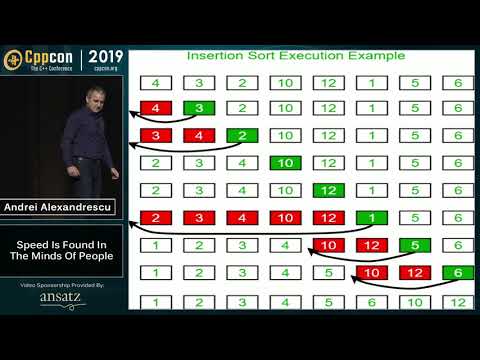
Sorting Algorithms: Speed Is Found In The Minds of People - Andrei Alexandrescu - CppCon 2019
CppCon
7 HN recommender · 2019–2024
 6 mo on HN
The Fastest Way to Board a Plane Feels Like the Slowest
CGP Grey
9 HN recommender · 2020–2023
 6 mo on HN
30 Weird Chess Algorithms: Elo World
suckerpinch
8 HN recommender · 2019–2026
 6 mo on HN
Robust-first computing: Demon Horde Sort (full version)
Dave Ackley
3 HN recommender · 2015–2023
 5 mo on HN
Stanford Lecture: Don Knuth—"A Conjecture That Had To Be True" (2017)
Stanford Online
1 HN recommend · 2017–2023
 4 mo on HN
A Sudoku Solver in APL
Dyalog
4 HN recommender · 2015–2022
 5 mo on HN
Advanced Topics in Programming Languages: A Lock-Free Hash Table
GoogleTalksArchive
4 HN recommender · 2013–2024
3 comments from Hacker News
I don't feel like it tonight. Drinking whiskey and trying not to think about how effed up the Israel footage and the North Korea situation are. Maybe that's why it's not the best post. I don't mean to crap on the work presented. Great article, good summary, and the tech is solid. It's just older than what excites me; a lot of progress has been made in 20 years and the majority of it hasn't found commercial applications. But here is a citation root for a lot of amazing work in this space: link My absolute hero Edward Kmett gave a talk stitching a lot of this work together a long time ago: ▶ this video . I have no idea if he's pursued it, it's just one of his many talks that left me with an incredibly lasting impression. Variants of this technique work for arbitrary documents and structures, work better at very high volume, have cache oblivious properties, and support transactions. Universal indexes that are reasonably good for all queries (as opposed to specfiic queries) are also possible. Coupled with discrimination-based techniques for O(n) table joins, there's probably a whole startup around there. Sorry I can't do better right now.
I first heard of the concept of succinct data structures from Edward Kmett, a famous Haskeller behind many popular Haskell libraries. He gave a talk on succinct data structures a long time ago: ▶ this video
I find it mildly amusing that people are competing on the fastest decoder of horribly inefficient format. Don't get me wrong, I like e.g. ZX Spectrum demos, but the practical utility of such endeavor is questionable. But that aside, I wonder how this compares to the compressed indexes approaches (see ▶ this video and link ), obviously, once the index is built.