Mitochondria: the cell's powerhouse
Harvard Online2 HN recommenders · recommended in 2 months, 2021–2022
explainer · intro · evergreen · 2021–2022 on HN
A short Harvard animation narrated by Professor Rob Lue introducing mitochondria as the cell's powerhouses and how cells turn food and oxygen into energy.
Recommended as a beautiful, accessible animation of cellular energy production.
Up next
 5 mo on HN
Electron transport chain
Harvard Online
6 HN recommender · 2020–2024
 11 mo on HN
What Bodies Think About: Bioelectric Computation Outside the Nervous System - NeurIPS 2018
The Artificial Intelligence Channel
12 HN recommender · 2018–2024
 9 mo on HN
Joe Rogan Experience #1035 - Paul Stamets
PowerfulJRE
10 HN recommender · 2017–2025
 8 mo on HN
DEF CON 25 - John Sotos - Genetic Diseases to Guide Digital Hacks of the Human Genome
DEFCONConference
11 HN recommender · 2017–2023
 8 mo on HN
DNA animation (2002-2014) by Drew Berry and Etsuko Uno wehi.tv #ScienceArt
WEHImovies
9 HN recommender · 2020–2026
 7 mo on HN
I Genetically Engineered *MYSELF* to Fix Lactose Intolerance
The Thought Emporium
8 HN recommender · 2018–2026
 7 mo on HN
mRNA Translation (Advanced)
DNA Learning Center
4 HN recommender · 2014–2025
 7 mo on HN
Animations of unseeable biology | Drew Berry | TED
TED
7 HN recommender · 2017–2025
 7 mo on HN
Michael Levin: The electrical blueprints that orchestrate life | TED
TED
7 HN recommender · 2021–2026
 6 mo on HN
Jack Szostak (Harvard/HHMI) Part 1: The Origin of Cellular Life on Earth
Science Communication Lab
6 HN recommender · 2016–2021
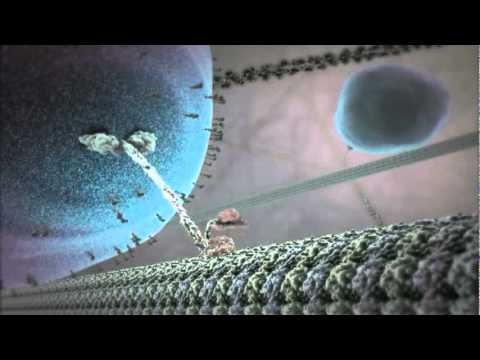 5 mo on HN
The Inner Life of the Cell Animation
XVIVO Scientific Animation
5 HN recommender · 2017–2024
 6 mo on HN
Bret Weinstein on "The Portal" (w/ host Eric Weinstein), Ep. #019 - The Prediction and the DISC.
Eric Weinstein
5 HN recommender · 2020–2023
3 comments from Hacker News
An incredible story! Somewhere in link or ▶ this video the narrator casually says "... and this is why we breathe oxygen ..."
This reminded me of a beautiful animation of "Mitochondria: the cell's powerhouse" which I recently watched. ▶ this video
You want molecular dynamics. They are simulations, not real images. But otoh (visible) light rays are "about as big" as a very large protein, so you can't image them. And because of computational expense they're slow motion by necessity, which is good because very, very complex enzyme interactions means ~2-3000 interactions per second. Example: ▶ this video