DC-X Flight 8
Spaceman Sam ConiglioCited 10× on HN, 2012–2025
demo · general · evergreen · 2012–2025 on HN
Footage of DC-X Flight 8 from July 1995 at White Sands, in which the Delta Clipper Experimental reusable rocket turned over into a re-entry profile and re-oriented itself for landing.
HN cites it as proof that vertical-landing reusable rockets were flown decades before SpaceX, including the same hover-slam landing.
Up next
 11 mo on HN
Light Years Ahead | The 1969 Apollo Guidance Computer
TNMoC
Recommended 11× on HN · 2021–2026
 9 mo on HN
The Solar Gravitational Lens will Map Exoplanets. Seriously.
Launch Pad Astronomy
Recommended 10× on HN · 2020–2025
 7 mo on HN
34C3 - The Ultimate Apollo Guidance Computer Talk
media.ccc.de
Recommended 9× on HN · 2018–2025
 6 mo on HN
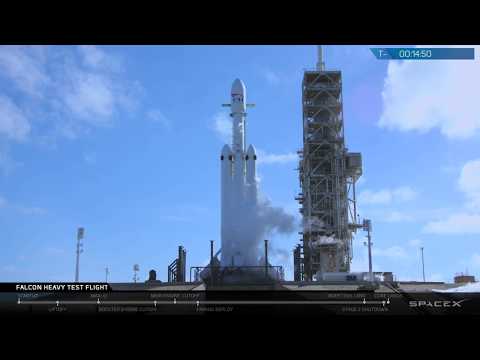
Falcon Heavy Test Flight
SpaceX
Recommended 4× on HN · 2018–2026
 7 mo on HN
I Was SCARED To Say This To NASA... (But I said it anyway) - Smarter Every Day 293
SmarterEveryDay
Recommended 9× on HN · 2023–2025
 8 mo on HN
Starbase Tour with Elon Musk [PART 1 // Summer 2021]
Everyday Astronaut
Recommended 11× on HN · 2021–2024
 5 mo on HN
Carl Sagan - Pale Blue Dot
carlsagandotcom
Recommended 5× on HN · 2011–2026
 6 mo on HN
Apollo Guidance Computer Part 1: Restoring the computer that put man on the Moon
CuriousMarc
Recommended 8× on HN · 2019–2024
 5 mo on HN
Dr. Robert Zubrin with a brilliant answer to "Why Should We Go To Mars?"
Jamin Gray
Recommended 3× on HN · 2016–2021
 6 mo on HN
The REAL Possibility of Mapping Alien Planets!
PBS Space Time
Recommended 4× on HN · 2023–2024
 6 mo on HN
How Much Do Rockets Pollute? Are They Bad For Our Air?
Everyday Astronaut
Recommended 6× on HN · 2020–2023
 6 mo on HN
Orbital Rings
Isaac Arthur
Recommended 4× on HN · 2017–2025
10 comments from Hacker News
The feet landing extension reminds me of the Delta Clipper DC-X rocket, the first reusable VTOL rocket from 30+ years ago: ▶ this video I wonder if that's the optimal design for VTOL rocket landers? Or is that more particular to smaller lighter rockets and eventually you need heavier duty options for bigger rockets? Also the DC-X was eventually intended to be single-stage-to-orbit (SSTO). Do any of these reusable rockets plan on being SSTO? Whether from Space-X/Blue Origin or this or the Chinese ones? SSTO is where you're going to dramatically change the economics of rockets, as you now only have to worry about refueling when launching satellites, instead of using an expendable second stage..
Musk succeeded where his companies tried to disrupt extremely moribund or set in their ways industries. SpaceX disrupted the space launch industry, which had not advanced at all since the 1970s. SpaceX really just picked up and ran with the idea of vertical landing reusable rockets, which was not new. Werner von Braun was exploring it for Saturn V back in the 60s, and Lockheed finally did it at prototype scale with the DC-X in the 90s: ▶ this video (You can see at the end that the DC-X even does the same "hover slam" maneuver as Falcon 9 to land with maximum propellant efficiency.) Tesla was similar. Auto manufacture itself isn't moribund, but old school auto makers always hated EVs and resisted doing anything serious with them. Tesla's rise was a classic exploitation of the innovators' dilemma by calling them on this and forcing their hand. Now that some are embracing EVs, Tesla is facing increasingly stiff competition but has at least carved out a brand. Musk has not been particularly successful competing in less moribund industries. The Boring Company is kind of a flop. Neuralink seems questionable so far, to say the least. The Hyperloop, even if it worked, wouldn't be competitive at all with high speed rail on cost. It'd be faster and in theory more energy efficient but nowhere near enough to compensate for the added capital cost or complexity. Now if Musk had created, say, a rail transport division of Tesla he could have absolutely disrupted rail transport which is another fa
link > You may well be forgiven for thinking that rockets which take off vertically and then land again vertically were a recent development by the likes of Blue Origin and SpaceX but a quick look back the history of rocketry and you’ll see that this technique is far from new and was first used nearly 60 years ago ... > The image of rockets landing vertically on their tail fins has been popularised in Science fiction since buck Rodgers in the early 1930’s, though it took nearly 30 years to bring the technology to a point where it could be used practically ... > The first instance of a rocket-powered vertical take off and vertical landing was shown in 1961 with the Bell Rocket belt. ... > But within a few years there would be a rocket-powered vertical take off and vertical landing vehicle that would be a total success and be seen by hundreds of millions of people around the world. > That vehicle was the Apollo lunar lander, a design that was used in the most inhospitable place man had even been to and worked without fail on six separate missions. ... > It wasn’t until the mid 1990’s that the first true vertical take-off and vertical landing rocket was seen in the form of the McDonnell Douglas Delta Clipper Experimental or DC-X. Video of the DC-X from 1995, launching and landing, ▶ this video .
I love SpaceX, but I don't find them quite as miraculously impressive as some people. SpaceX is "just" doing what NASA did in their glory days: rapidly iterating, innovating, and then carrying those innovations all the way through to real world flight. That last part is key. In industry we call that "shipping." NASA didn't stop innovating per se. In the 1980s and 1990s they worked out their own version of vertical take-off and landing and actually test flew it: ▶ this video Linear aerospike engines are pretty neat too: link Problem is absolutely none of this stuff ever got close to operational. It kept getting cancelled in the prototype stage. If the DC-X had been developed into a fully reusable first stage, we'd have had something like Falcon 9 by the year 2000 and might be on Mars by now.
> But I think the point I was making stands. There are certainly innovations that sounds illogical but turn out to be very successful. Just because something sounds like a bad idea doesn't mean it is, it just means it hasn't worked yet. No because your point was about horses being replaced by cars, which is what people (and probably horses) were skeptical about at that time. In the same way IBM was saying that computers will never appear in homes, etc. But these devices were already there. The misconceptions were about predicting demand and miniaturization. This is completely different from terraforming. You are comparing "oh these devices sure never will be popular enough to make this other thing obsolete" with "lets nuke the Mars to create an atmosphere so we can live on it" (always winter, yeay).[0] Your argument is bad because by saying "technologies were laughed at in the past" every technology that sounds laughable should be taken seriously? No. This is the same trap that Theranos investors had fallen in. It is all a fantasy. We humans are very bad at estimating what is possible and what not. E.g. our inability to divert asteroids [1]. That is already a hard problem and currently not possible to do. I am not against crazy technological ideas, for example the space elevator had a surprisingly good feasibility to being realized before we polluted our planet's atmosphere with junk. Terraforming Mars is in the Theranos land of crazy ideas though. > Just like I also didn't t
There was already a working program that had their funding axed: Here's a video from 1995: ▶ this video . There were others too.
Yes. If you read interviews, they had stuff like Elon having complaints that they aren't pushing the envelope hard enough since they don't get any crashes. Maybe they tested the control system's abilities by pushing it over very quickly. I bet there's people at SpaceX who were involved on the DC-X that did a successful translation to horizontal and back in 1995. ▶ this video Hope SpaceX has enough spare hardware that they can get quickly back up to testing again. I don't see any reason they wouldn't since they have produced quite many leg sets already - maybe they were planning to moving to newer hardware iterations anyway and the vehicle was "expendable", or at least the risk with dangerous tests was more acceptable.
No, I'm referring to on-earth tests, such as this ▶ this video However I can't find the exact one I had in mind, or perhaps I was off with the date.
Nicely done, nicely done. Reminds me a bit of the early DC-X flights, this link: ▶ this video is DC-X flight #8 which I expect GrassHopper to do at some point as well (this was 1995 btw, imagine the computers they had on DC-X vs what they have on Grasshopper!) Blue Origin is a bit ahead here in terms of take off and landing. But it has the challenge of not benefiting from a paid launch contract like SpaceX currently has. What I find particularly interesting is that either the Dragon or the Blue Origin craft already have the delta-V to land an return to orbit from the moon, if they can get there. The thing that will break that wide open is on-orbit refueling. The game changes in a particularly compelling way when you can launch "gas cans" to orbit and refuel existing craft that are already in orbit. Not only does that extend the life of satellites but it enables Multi-launch configurations. United Launch Associates gave a pretty compelling talk about how they would meet some of those challenges in their long duration vehicle paper: link Exciting times, 20 years late but still.
As far as I know, this is only the second turbopump fed liquid rocket to land vertically, after DC-X (that became DC-XA). ▶ this video This is important, as in practice only turbopump rockets have enough performance for orbital uses. If it can routinely and safely land vertically, then it's very easy to build a reusable first stage out of this. If everything works out, a reusable Falcon could fly every few days: Ideally you'd just refuel and go again, like an airplane. In this first generation though I expect a lot of maintenance and handwork by lots of people every flight. This will require a whole ecosystem too: low maintenance satellites that can be slapped on the rocket and launched at any time. Otherwise very flexible operations too like low overhead range and radar tracking sevices, safety zones etc. If the rocket can abort and land in case of problems, and demonstrates good safety by flying a lot, then a lot of safety criteria can be relaxed, which should enable better flexibility.