The Maths of General Relativity (1/8) - Spacetime and Worldlines
ScienceClic English3 HN recommenders · recommended in 3 months, 2021–2023
course · intro · evergreen · 2021–2023 on HN
The first of an eight-part ScienceClic series building general relativity, covering worldlines, proper time and coordinate systems with animated visualizations.
Praised for its visualizations and pedagogy in threads about physics and differential geometry.
Up next
 8 mo on HN
I bought 1000 meters of wire to settle a physics debate
AlphaPhoenix
8 HN recommender · 2021–2026
 8 mo on HN
The Speed of Light is NOT About Light
PBS Space Time
8 HN recommender · 2017–2023
 7 mo on HN
Why No One Has Measured The Speed Of Light
Veritasium
6 HN recommender · 2020–2024
 6 mo on HN
Richard Feynman - The.Character of Physical Law - Part 1 The Law of Gravitation (full version)
Tinkerin' Thinkers
6 HN recommender · 2013–2022
 6 mo on HN
HD Feynman: FUN TO IMAGINE complete (with optional Chinese subtitles)
Christopher Sykes
4 HN recommender · 2021–2025
 6 mo on HN
A new way to visualize General Relativity
ScienceClic English
8 HN recommender · 2020–2026
 6 mo on HN
Quantum Fields: The Real Building Blocks of the Universe - with David Tong
The Royal Institution
5 HN recommender · 2019–2025
 6 mo on HN
The Physics and Philosophy of Time - with Carlo Rovelli
The Royal Institution
5 HN recommender · 2018–2022
 7 mo on HN
How Special Relativity Makes Magnets Work
Veritasium
7 HN recommender · 2014–2024
 5 mo on HN
The Biggest Ideas in the Universe: Introduction
Sean Carroll
5 HN recommender · 2021–2025
 6 mo on HN
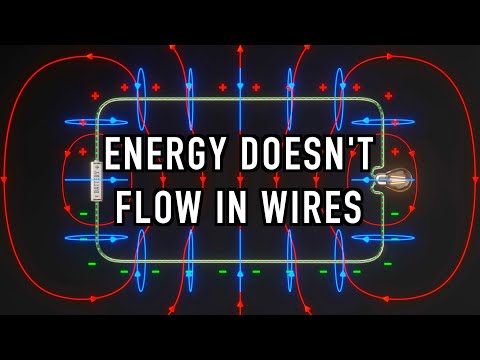
The Biggest Misconception About Electricity
Veritasium
7 HN recommender · 2021–2026
 5 mo on HN
Watch electricity hit a fork in the road at half a billion frames per second
AlphaPhoenix
5 HN recommender · 2024–2026
3 comments from Hacker News
ScienceClic on youtube has some really great videos, the first half of the string theory video [1] does a good job framing the conflict at a high level, string theory being one attempt to resolve the problem. It doesn't go into math but mentions that in the standard model, interactions are local, which for example means something like photon emission is instantaneous. When applied to gravity/gravitons, you get infinities in the math. This sort of makes sense to me, but I have yet to find anything that does an understandable job explaining how/why exactly the math breaks down. There's a series on the maths of general relativity [2] which I haven't completed but I'm hoping will provide a bit more background to understand the math. Also, the article mentions that the new theory was motivated by solving the black hole information paradox [3], which there's a good video [4] about as well [1] link [2] ▶ this video [3] link [4] link
It's difficult to find material that's a series, rigorously demonstrated and advanced at the same time (there's lots excellent material that ticks either one or the other of those boxes). Here are some examples I subscribe to that come close: Covers Quantum Field Theory and General relativity in as approachable a manner as I imagine is possible while still going deep into detail: link Theoretical machine learning, Information theory and probabilistic inference : link Heavy emphasis on analysis and measure theory : link While ScienceClic's coverage of differential geometry topics is mostly a thin vertical slice of the subject, it covers it with incredible visualizations and pedagogical approach: ▶ this video .
An attempt at a true ELI5 is the bodies exist in what we know as spacetime, not as separate independent concepts of space and time which we perceive from our day to day experience, so we have to know a bit about the difference. Chiefly in spacetime everything always travels the same "speed" (c, the universal speed limit) and it's just a matter of how much of that speed appears as "traveling through space" and how much appears as "traveling through time". When 2 bodies warp spacetime it causes changes in the way each body's spacetime speed is distributed causing them to accelerate towards each other. The ELI15 version is think about vectors in our normal concept of 3D space first, if I told you a body was always moving at 100 meters per second and it was 100% in the horizontal direction you'd say there was 0 meters per second in the vertical direction. Now say something curves this geometry a little bit, the body will still be traveling at 100 meters per second but now a tiny bit of that speed may appear to manifest in the vertical direction and a tiny bit less appear to manifest in the horizontal direction. Same general story with spacetime except the math is a lot more complex leading to some nuance in how things actually change. The ELI20 version should you want to understand how to calculate the effects yourself is probably best left to this 8 part mini series rather than me ▶ this video and the 8th episode recap actually has a challenge problem to calculate what causes a stati