Joe Armstrong - Keynote: The Forgotten Ideas in Computer Science - Code BEAM SF 2018
Code SyncRecommended by 4 HN commenters across 4 months, 2018–2022
talk · intermediate · evergreen · 2018–2022 on HN
Erlang co-creator Joe Armstrong's Code BEAM SF 2018 keynote revisits good ideas from the history of computing that were dropped, and asks which should be revived. It also touches on Erlang and Elixir.
HN people recommend it as a reading list of historical CS ideas worth knowing, and as a favorite among Armstrong's talks, especially after his death.
Up next
 2 mo on HN
Web 2.0 Expo NY: Clay Shirky (shirky.com) It's Not Information Overload. It's Filter Failure.
O'Reilly
Recommended 2× on HN · 2010–2024
 3 mo on HN
Computers for Cynics 0 - The Myth of Technology
TheTedNelson
Recommended 3× on HN · 2013–2024
 14 mo on HN
"Simple Made Easy" - Rich Hickey (2011)
Strange Loop Conference
Recommended 14× on HN · 2022–2026
 6 mo on HN
CppCon 2017: Carl Cook “When a Microsecond Is an Eternity: High Performance Trading Systems in C++”
CppCon
Recommended 5× on HN · 2017–2025
 5 mo on HN
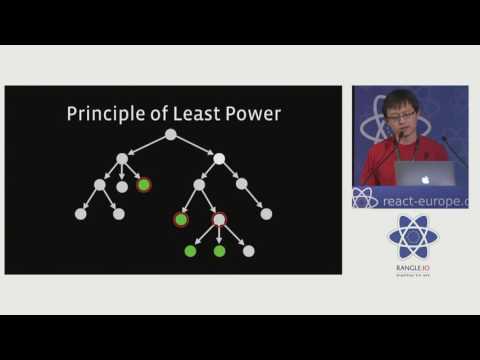
Cheng Lou - On the Spectrum of Abstraction at react-europe 2016
ReactEurope
Recommended 5× on HN · 2016–2022
 3 mo on HN
The Infinite Pattern That Never Repeats
Veritasium
Recommended 4× on HN · 2021–2023
 3 mo on HN
Diablo: Original Game Development
jon d
Recommended 3× on HN · 2021–2023
 15 mo on HN
AT&T Archives: Similiarities of Wave Behavior (Bonus Edition)
AT&T Tech Channel
Recommended 12× on HN · 2014–2026
 14 mo on HN
Micro Men - 720p (2009)
gimpymoo
Recommended 15× on HN · 2015–2026
 11 mo on HN
Light Years Ahead | The 1969 Apollo Guidance Computer
TNMoC
Recommended 11× on HN · 2021–2026
 12 mo on HN
Mechanical Computer (All Parts) - Basic Mechanisms In Fire Control Computers
Excelsior10000
Recommended 13× on HN · 2014–2025
 12 mo on HN
Project Code Rush - The Beginnings of Netscape / Mozilla Documentary
The Documentary Network
Recommended 13× on HN · 2015–2026
7 comments from Hacker News
Definitely! I also like "How we program multicores" [0], it made "iff you want the same guarantees Erlang gives you, you'll be in the same performance ballpark in any language, yes, C++ also" click for me. Joe could explain the basic ideas and where they came from so concise and humble [1], you can probably just binge watch this whole list, one other gem being "The forgotten ideas in computer science" [2]... [0] link [1] link [2] ▶ this video
This is so sad. RIP Joe. I'll miss him so much. Erlang is one of the most Perlis languages for me. I'm always a little bit cynical and think Erlang deserve more attention. Several months ago Joe post this tweet about a game company refused to tell other people they are using Erlang. link I just watched his great talk last year not long ago - The Forgotten Ideas in Computer Science: ▶ this video
I love any talk with Joe Armstrong or Alan Kay in it. Joe Armstrong - Keynote: The Forgotten Ideas in Computer Science - Code BEAM SF 2018 ▶ this video
Ted Nelson's Computers for Cynics probably doesn't contain technical information that's new to any of you, but Ted has a knack for reframing things in ways that make the arbitrariness of certain historical decisions clear: link On the subject of hypertext, The Web That Wasn't gives a nice history of the idea (for anybody who thinks it starts with TBL -- surprisingly many people!): link Another reframing-oriented talk is Clay Shirky's "It's not information overload, it's filter failure", which ultimately leads to Shirky suggesting the kinds of user-oriented filtering features that Mastodon has implemented: link At the intersection of neurology and information science, Peter Watts always has something interesting to say, and as a former marine biologist focusing on the nervous system of starfish, this is absolutely in his wheelhouse: link This one ("moving away from defensive programming") justified strong typing in a pretty clear way: link Dan Dennett is just as relevant as Doug Hofstadter when it comes to metacognition: link Forgotten Ideas in Computer Science starts slow, but if you don't have much of a historical background (like, if you're only vaguely aware of what happened in CS in the 70s), it's a laundry list of things you should look up and be aware of before you start your next project: ▶ this video Everybody should understand procedural generation: link Likewise, since AI is hyped up right now, we should all remind ourselves that IA is a thing too: link M
"[Read] everything from Ted Nelson" – Joe Armstrong Keynote: The Forgotten Ideas in Computer Science - Code BEAM SF 2018: ▶ this video
Devastating. I'd like to point out a recent tweet @joeerl shared [0][1] that contained things he felt were good wisdom but lost over time: -- Ideas that we forgot: 1. Flow based programming. 2. Pipes. 3. Linda Tuple Spaces. 4. Hypertext (=/= HTML). Computer Science 101: 1. Observational equivalence. 2. Isolation. 3. Composition. 4. Causality. 5. Physics. Two papers to read: 1. The Emperor's Old Clothes - ACM. 2. A Plea for Lean Software - Nikalus Wirth. Two videos to watch: 1. The Computer Revolution Hasn't Happened Yet - Alan Kay. 2. Computers for Cynics - Ted Nelson. Four old tools to learn: Emacs, Bash, Make, Shell. Three books to read: 1. Algorithms + Data Structure = Programs. 2. The Mythical Man Month. 3. How to Win Friends and Influence People. Correct a typo: ?? Learn git -> locate program that creates page -> locate typo -> correct -> send push [sic] request. !! Select text -> type in correction -> people see change. Two projects: 1. Link to content hash not a name (request content by sha256, immune to pepole in the middle). 2. Elastic Links (links should not break if you move an endpoint). -- Easily one of the best thinkers of his generation [2]. RIP. [0] link [1] ▶ this video [2] link
It seems like what Paul is describing, is the niche filled by libraries/frameworks. When you have a website to build, you reach for an existing web framework, because it has already done the bottom-up steps for you. The same could be said of choosing a language, OS, hardware, etc. Existing technologies allow for increased productivity, at the cost of it becoming increasingly difficult to understand the bigger picture. The 'bottom-up' part at this point, is choosing which Ruby/Java/Python/etc libraries to use. The productivity bar has been set high, leaving little time for bottom-up decision making or education. Hence MongoDB and the never-ending tales of mediocre solutions gaining adoption due to marketing hype. Curiously enough - academia isn't able to solve this problem well, because they're encouraged to produce 'novelty', rather than sit down and digest the mess we're in, to help clarify matters a little. They're in the same rat-race, of getting things done on a 6-12 month schedule. There's a quote that I really like - "Prolific programmers contribute to certain disaster." [0] Ah well :) [0] ▶ this video