The Expert Myth
Veritasium6 HN recommenders · recommended in 5 months, 2022–2026
explainer · general · evergreen · 2022–2026 on HN
Veritasium examines which experts have real expertise, drawing on chess research and work by Klein and Kahneman. It explains that expertise comes from pattern recognition built through deliberate practice in valid, feedback-rich environments.
Frequently recommended in threads on learning, the 10,000 hours rule and deliberate practice as a clearer account of how expertise develops.
Up next
 1 mo on HN
These are the asteroids to worry about
Veritasium
1 HN recommend · 2021–2023
 3 mo on HN
How Kodak Exposed Nuclear Testing
Veritasium
3 HN recommender · 2021–2025
 3 mo on HN
The Biggest Chemical Coverup In History
Veritasium
3 HN recommender · 2025–2026
 3 mo on HN
The Most Underrated Algorithm
Veritasium
5 HN recommender · 2022–2024
 7 mo on HN
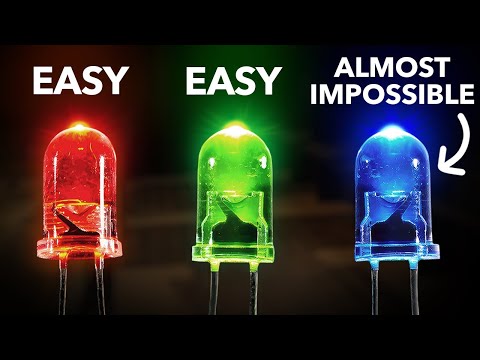
Why It Was Almost Impossible to Make the Blue LED
Veritasium
10 HN recommender · 2024–2026
 2 mo on HN
I took an IQ test to explain what's wrong with them
Veritasium
3 HN recommender · 2023–2025
 3 mo on HN
Lecture 1: Introduction to Information Theory
Jakob Foerster
3 HN recommender · 2018–2024
 3 mo on HN
How to Survive in Gamedev for Eleven Years Without a Hit
GDC Festival of Gaming
3 HN recommender · 2017–2024
 15 mo on HN
1. Introduction to Human Behavioral Biology
Stanford
15 HN recommender · 2012–2026
 13 mo on HN
Essential Ideas for Parents
Jason Salotti
9 HN recommender · 2015–2025
 13 mo on HN
The Century of the Self (Full Adam Curtis Documentary)
David Lessig
13 HN recommender · 2016–2026
 12 mo on HN
Randy Pausch's Last Lecture: Achieving Your Childhood Dreams
Carnegie Mellon University
12 HN recommender · 2008–2023
12 comments from Hacker News
It's absolutely pseudoscience. 10k hours doing what ? And why would we expect to see an approximately equal amount of time to achieve expertise across so many different human endeavors? Veritasium has a really good video on the subject [0], with a much more compelling explanation for what it takes to develop expertise. He comes up with 4 things, but the two that stood out the most to me are that the field needs to be deterministic—the more randomness is involved the less expertise is possible—and that the learner needs consistent and accurate feedback on what they get right and wrong. Absent those factors no number of hours will do you any good. [0] ▶ this video
Deliberate practice is a well studied phenomenon. My favourite talk in the subject is this one from Veritasium ▶ this video
Derek from Veritasium had a pretty good video on becoming an expert in anything and I didn't see age as a blocking factor. I'd say go for it! Also check out the video here, it's worth a watch ▶ this video
The Veritasium youtube channel has a few interesting videos related to this topic: This one is on IQ: link Pay attention to the stats on how IQ correlates to success (near the end). This one is about becoming an expert: ▶ this video This one is about someone who just worked harder than everyone else: link
I'd also add this standard. Another amazing YouTuber is Veritasium. He went from [1] to [2]. The production quality is more than slightly improved, but the "spirit" remains identical. And I think that spirit is what drives success or failure. The production quality is just icing. [1] - link [2] - ▶ this video
The youtuber Veritasium recently did a video on the 10,000 hour expert. Summary: you need 4 things to become an expert. From comment with timestamps: 5:00 Repeated attempts with feedback. 6:47 Valid environment. 11:23 Timely feedback. 13:50 Don't get to comfortable. Video link: ▶ this video Comment link: ▶ this video
There's been many studies around the concept "how do you get expertise? In what field can you actually develop expertise?" such as Naturalistic Decision Making [1] [2]. The wisdom from there can be applied to the question of automation. If your task is for example, to pilot a preset route with stable condition and very low surprise, you will fall for the "getting too comfortable" trap and we tend to start to get lazy(or efficient) and offload the mental effort and skills atrophy. A common workaround to this is to have regular training(deliberate practice) that introduce the "tricky" situation to keep the skill up. Problem ofc arises when people don't keep this up. This can be seen in the diagnostic performance differences between junior and senior doctors, not always in the favor to the senior [3]. If you add a layer of automation but the insight gathered by working on that layer is great (and falls off) then deliberate practice start to become a requirement [1] link [2] ▶ this video [3] link
Weschler’s definition of intelligence fits almost all functional adults, and most animals on the planet for that matter, and it doesn’t really back up your claim above about extreme intelligence. You’ve conflated a lot of things together here. There’s no evidence of any concepts that average adults can’t understand given time and interest. Ability to solve Fermat’s last theorem is function of interest and grit and time and context and education and whole slew of things not directly related to intelligence. Your example actually demonstrates my point quite nicely: there are a lot of people who understand Wiles’ proof even though they didn’t come up with it. You and I could too, if we wanted; the barrier is willingness to devote the large amount of time and energy required, not intelligence. > ‘massive outlier’ is a matter of perspective, but the amount of competition their best time is >1% faster than It seems like you understood my point about standard deviations and ranking versus absolute values, but you’re insisting on looking at rankings still? Why? This is exactly the common mistake I was referring to. Yes, Usain Bolt is the fastest sprinter in the world, which puts him at a little over 6 standard deviations above the norm, if I used my lookup table correctly. He’s faster than around eight billion people. But does that mean he’s eight billion times faster than the average person, or a hundred times faster, or even ten times faster than the average? Well, standard deviati
>The idea is generalists know a lot about everything and when to pass it off to a subject matter expert. ▶ this video link It's all about history repeating; or better yet understanding when it's something new and often forcing that. They say 10,000 hours to become an expert, but that's brute forced learning. When you actually learn how to learn, what universities USED TO teach and have since stopped teaching, you can do it much quicker. People who know how to learn can become an expert in under 1000 hours. >In 2025, with everything in tech changing by the minute, I’m realizing I need to set boundaries about how deep I go on any particular topic. But I’m unsure how. Particularly if I don’t want to get left behind as things continue to evolve. that's the wrong way to approach it; or perhaps definition of depth? Depth to me is about a subject that cant be understood until certain other learning milestones have been learnt. Which is perhaps a depth, but also something you can force as something new. A new pattern that will as above be part of the learning. It's fine to go deep, so long as you're seeing a new pattern you cant predict. The limit isnt about depth, it's about seeing something new.
Not just a problem in US but I'd say one of the issue is that we have expert inflation, and not all expertise are equally valid. We have some insight from Decision theory. Klein and Kahneman have both identified required properties for valuable expert intuition (or knowledge, tacit or not) to be available to aquire. (here's a simplified version of this by Veritasium [1]) Most people would see through the conartist claiming "I'm a roulette expert. I've done roulette for 10 years, I have 10 years of roulette expertise, you should listen to me when it comes to what number you should bet on a roulette!" Yet we all fall for other form of expert where their problem domain follow similar structures that makes expert knowledge acquisition either hard or impossible. But every expert with a PhD want to claim their expertise to be as valid as the actual valid expertise. Combine that with internet, short form (tweet etc) communication, we tend to dumb down the conversation using "expert" to cover all the domains, to the fraud-experts advantage. Certain fields, you should probably trust the expert almost blindly (Emergency Care, firefighters) but others, maybe not (clinical psychologist, policy maker, economists). Problem is that if we just bundle them all up, people will end up not trusting either. "bundling up" is a recurring tactic by conartists of all kind (subprime mortgage anyone?) If we would "rate" different field on their expertise validity (or scientific validity etc) easily und
The 2:00 timestamp in this Veritassium video on expertise goes into exactly that phenomenon. We acquire expertise by recognizing the patterns in what we do. But once you take the patterns away, a lot of that "expertise" disappears too: ▶ this video Jazz piano vs classical is a perfect example of this: same instrument, two paradigms with totally different idioms.
There might be fundamental incompatibilities here because of orthogonal goals - if you're an ambitious person in a corporate hierarchy won't one (or maybe even primary) goal be to climb the ladder? And if you're a founder won't your goal be to 'grow the product or service'? Now one way to climb the ladder may be to grow the product or service, but in a larger org the ability to influence a product or service in a major way might be a bit limited, with decision-making at the business level being controlled by upper echelons. So the ladder-climbing process would select for different skills and temperament than founding/running a company. Essentially, in a corporate hierarchy, we're asking people with ladder-climbing skills to become business people as they reach the top, and not everyone can make that transition successfully. In fact, I'd go so far as to say that very few can actually make that transition successfully. Human brains learn through feedback [1]. To become a good business person, you need to run a business and get feedback just like a real founder/CEO, including business failures. Your question essentially becomes - how can a CEO structure incentives so that managers at all levels become good business people? It's a great question, to which there is no simple answer that I know of. Would appreciate any pointers to potential solutions. One way could be to treat each team at a certain level (say no more than 50 people) as a business of its own. It might not be the mo