AI can't cross this line and we don't know why.
Welch Labs2 HN recommenders · recommended in 2 months, 2024–2025
explainer · intermediate · evergreen · 2024–2025 on HN
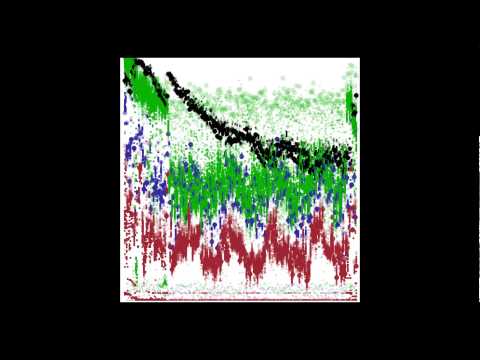
A Welch Labs explainer on neural scaling laws and the compute-efficient frontier, asking why model loss seems to hit a line it cannot cross. It draws an analogy to an ideal gas law for AI.
Recommended as a well-made, digestible introduction to scaling laws and why models cluster along a similar efficiency frontier.
Up next
 3 mo on HN
Glitter Bomb 1.0 vs Porch Pirates
Mark Rober
3 HN recommender · 2018–2024
 2 mo on HN
Making of Second Reality / Future Crew
Mika Tuomi
2 HN recommender · 2011–2024
 16 mo on HN
The spelled-out intro to neural networks and backpropagation: building micrograd
Andrej Karpathy
17 HN recommender · 2022–2025
 14 mo on HN
But what is a neural network? | Deep learning chapter 1
3Blue1Brown
16 HN recommender · 2017–2025
 10 mo on HN
AlphaGo - The Movie | Full award-winning documentary
Google DeepMind
10 HN recommender · 2020–2025
 10 mo on HN
Transformers, the tech behind LLMs | Deep Learning Chapter 5
3Blue1Brown
13 HN recommender · 2024–2026
 10 mo on HN
USENIX Security '18-Q: Why Do Keynote Speakers Keep Suggesting That Improving Security Is Possible?
USENIX
10 HN recommender · 2018–2026
 11 mo on HN
Lecture 1 | Machine Learning (Stanford)
Stanford
11 HN recommender · 2008–2020
 10 mo on HN
MarI/O - Machine Learning for Video Games
SethBling
10 HN recommender · 2015–2026
 8 mo on HN
Deep Dive into LLMs like ChatGPT
Andrej Karpathy
10 HN recommender · 2025–2026
 10 mo on HN
Computer program that learns to play classic NES games
suckerpinch
9 HN recommender · 2015–2025
 9 mo on HN
RL Course by David Silver - Lecture 1: Introduction to Reinforcement Learning
Google DeepMind
9 HN recommender · 2017–2026
5 comments from Hacker News
I'm not deep enough in the ecosystem to ingest that paper but it's title reminded me of an interesting video I saw recently: "AI can't cross this line and we don't know why" ▶ this video
Please someone correct me if I’m wrong, but my understanding of ML/LLMs is that this kind of hand crafting has been tried, but it is easier to train/less finicky to let behavior like this emerge from more data, see [1] “Bitter Lesson” and [2] “Scaling Laws”. MAMBA as an architecture claims to have some significant gains performance wise, but to my knowledge there haven't been any really large models (>~100B params) with open weights/leaked MAMBA architecture been disclosed other than this (7B). As mentioned by other comments, another dimension not to forget is the training data quality. Not only quantity but also quality really matters, is what we are learning more and more with LLMs.. [1] link [2] see eg ▶ this video for a well made/easily digestable intro
Yep we do. There is a 1 year old video on YouTube, which describes this limitation ▶ this video Called efficient compute frontier
Because they are hitting Compute Efficient Frontier. Models can't be much bigger, there is no more original data on the internet, so all models will eventually cluster to similar CEF as was described in this video 10 months ago ▶ this video
My attempt at a summary: authors characterize the data-compute pareto front (aka how bitter is the lesson, exactly?) For a different perspective, error vs compute, see ▶ this video and comments (I particularly liked the one about string theorists rediscovering a fundamental theorem in GR decades too late-- rediscovering how to integrate happens in every field, it's nothing to be ashamed of :)