Lecture 1 | Machine Learning (Stanford)
Stanford11 HN recommenders · recommended in 11 months, 2008–2020
course · intermediate · 2008–2020 on HN
The first lecture of Andrew Ng's Stanford CS229 Machine Learning course, giving an overview of the course. It introduces supervised and unsupervised learning, learning theory and reinforcement learning.
Recommended as the rigorous, math-heavy original course, deeper than the Coursera version, for learning machine learning.
Up next
 3 mo on HN
State of GPT | BRK216HFS
Microsoft Developer
6 HN recommender · 2023–2025
 3 mo on HN
- Startups - David H. Hansson, Partner at 37signals -TWiST #E337
This Week in Startups
3 HN recommender · 2013–2015
 2 mo on HN
Enhancing Photorealism Enhancement
ISL and Collaborators
2 HN recommender · 2021–2025
 2 mo on HN
Elon Musk - CEO of Tesla Motors and SpaceX | Entrepreneurship | Khan Academy
Khan Academy
2 HN recommender · 2013–2020
 5 mo on HN
Lecture 01 - The Learning Problem
caltech
5 HN recommender · 2016–2023
 16 mo on HN
The spelled-out intro to neural networks and backpropagation: building micrograd
Andrej Karpathy
17 HN recommender · 2022–2025
 14 mo on HN
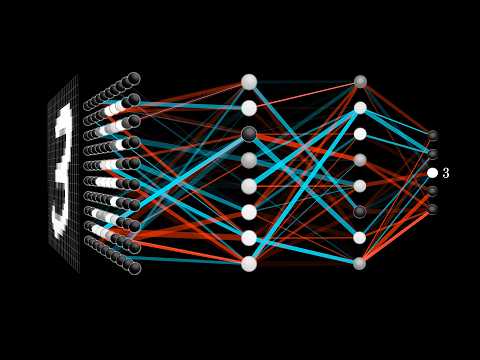
But what is a neural network? | Deep learning chapter 1
3Blue1Brown
16 HN recommender · 2017–2025
 10 mo on HN
AlphaGo - The Movie | Full award-winning documentary
Google DeepMind
10 HN recommender · 2020–2025
 10 mo on HN
Transformers, the tech behind LLMs | Deep Learning Chapter 5
3Blue1Brown
13 HN recommender · 2024–2026
 10 mo on HN
USENIX Security '18-Q: Why Do Keynote Speakers Keep Suggesting That Improving Security Is Possible?
USENIX
10 HN recommender · 2018–2026
 10 mo on HN
MarI/O - Machine Learning for Video Games
SethBling
10 HN recommender · 2015–2026
 8 mo on HN
Deep Dive into LLMs like ChatGPT
Andrej Karpathy
10 HN recommender · 2025–2026
12 comments from Hacker News
I'd suggest going back to the original youtube[1] and course materials[2]. Coursera version is nothing but a hand-wavy watered down "feel good" version of the original class. I also really like the Caltech's take "Learning from data"[3] [1] ▶ this video [2] link [3] link
Machine Learning: * ▶ this video : Andrew Ng's machine Learning course, the recommended entry point by most people * link : More kaggle focused, but also more modern and has interesting projects Do both courses simultaneously, take good notes, write useful flashcards, and above all do all the exercises and projects Deep Learning * link - Very hands-on, begin with " Practical Deep Learning for Coders" and then "Advanced Deep Learning for coders" * link : More bottom-up approach, helps to understand the theory better Do those two courses in parallel (you can try 2 weeks of coursera followed by one of fastai in the beginning, and then just alternate between them), take notes, write good flashcards and above all do the exercises and projects. After that you will be done with the beginning, your next step will depend on what area interested you the most, and getting way too many resources right now can be extremely confusing, so I would recommend doing a follow-up post after you worked through the above resources. Also as non-ML stuff I recommend Scott Young's Ultralearning and Azeria's self improvement posts ( link )
there are some lectures about machine learning on youtube. I think they are good to watch: link and ▶ this video and my favorite channels are Standford and MIT open courseware link and link
Watch Ng at 57 minutes discuss the "cocktail party" problem and present an amazing solution: ▶ this video
Nope, it's still around on youtube and on the Stanford Engineering Everywhere site. The coursera version of the class is much more introductory and skips significant parts of the full Stanford version. ▶ this video link
One caveat though: the Coursera ML course is CS229A(pplied), which focuses on applying machine learning, rather than the mathematics behind it. The "real" CS229 lectures are on YouTube [1], and go much more in depth. 1. ▶ this video
Thanks for posting the other two course. I can't wait till October. The Machine Learning course has a great a playlist on youtube as well. ▶ this video
This reminds me of CS229, of which there's an online version: ▶ this video It's considerable more focused in scope, presenting the mathematics behind some of the more popular algorithms extensively used in machine learning, which is a subset of artificial intelligence. The course starts off pretty slow, but quickly gains speed and momentum. By the end, you should be fairly comfortable with clustering and classification/regression, among other topics. The lecture notes are also fantastic.
Build a better chess rating system and enter your system into the following competition: link . You may want to use machine learning techniques, which you can learn using the Andrew Ng's Stanford lectures ( ▶ this video ).
I second the nomination of Bishop. It is the standard text. It is only two years old, and Bishop will teach you machine learning the way that the field practices it nowadays. In my lab of fourteen people, we must have six or so copies of Bishop. I don't understand what is impractical about Bishop. If you are looking blindly to use an off-the-shelf machine learning implementation, that's one thing. Machine Learning has been described as the study of bias. If you want to understand when to pick certain techniques, and develop appropriate biases, then read Bishop. "The Elements of Statistical Learning" by Hastie, Tibshirani and Friedman gives more of a statistician's approach. The treatment is simply less broad, and also more dated. You can also look at Andrew Ng's video lectures: ▶ this video He is very well-respected in the field. For certain students, watching a lecture may be preferable to reading a book.
Start leaning from the guy right now: ▶ this video Stanford class on machine learning by Andrew Ng, 20 lectures.
I hope everyone was referring to Andrew's blackboard course: ▶ this video instead of the one that started Coursera: link