Why American Cities Are Broke - The Growth Ponzi Scheme [ST03]
Not Just Bikes14 HN recommenders · recommended in 10 months, 2021–2024
explainer · general · evergreen · 2021–2024 on HN
Not Just Bikes explains the Strong Towns argument that car-dependent American suburbs cost more to maintain than they generate in taxes. It describes the growth Ponzi scheme that props up municipal finances.
HN keeps pointing to it as the clearest explanation of how low-density infrastructure is financed and why it is unsustainable.
Up next
 2 mo on HN
Thermoelectric cooling: it's not great.
Technology Connections
3 HN recommender · 2025–2025
 6 mo on HN
Canceling | ContraPoints
ContraPoints
7 HN recommender · 2020–2025
 4 mo on HN
How The Auto Industry Carjacked The American Dream | Climate Town
Climate Town
3 HN recommender · 2021–2025
 5 mo on HN
Why I changed my mind about nuclear power | Michael Shellenberger | TEDxBerlin
TEDx Talks
6 HN recommender · 2018–2021
 13 mo on HN
MIT's Pathway to Fusion Energy (IAP 2017) - Zach Hartwig
MIT Plasma Science and Fusion Center
16 HN recommender · 2017–2023
 3 mo on HN
What's It Really like Working at Valve?
People Make Games
3 HN recommender · 2023–2024
 11 mo on HN
“Hello, world” from scratch on a 6502 — Part 1
Ben Eater
11 HN recommender · 2019–2026
 5 mo on HN
How Bankrupt American Cities Stay Alive - Debt [ST04]
Not Just Bikes
7 HN recommender · 2021–2024
 12 mo on HN
How Self-Driving Cars will Destroy Cities (and what to do about it)
Not Just Bikes
17 HN recommender · 2024–2026
 11 mo on HN
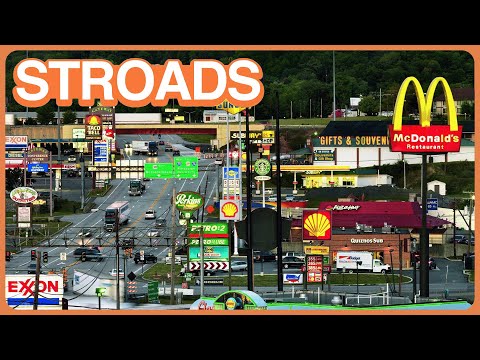
Stroads are Ugly, Expensive, and Dangerous (and they're everywhere) [ST05]
Not Just Bikes
12 HN recommender · 2021–2025
 10 mo on HN
Why This Channel Exists (and why I hate Houston)
Not Just Bikes
11 HN recommender · 2021–2025
 9 mo on HN
The Wrong Way to Set Speed Limits [ST06]
Not Just Bikes
9 HN recommender · 2021–2025
12 comments from Hacker News
> Do you have a citation for this? I don't have a citation for construction costs, and I will concede that there are many factors that may make some low density developments cheaper per unit then some higher density development. However, construction is only part of the picture. Low density development imposes terrible financial costs for cities that contain them. That's because the taxable value per square mile is much lower, but infrastructure (sewer, roads, etc) has the same per-mile maintenance and replacement costs. The infrastructure maintenance costs in many low density developments is often greater then the amount of tax revenue the development generates. For more information on the hidden costs of low density development, I can't recommend this video [1] by Not Just Bikes enough. [1] ▶ this video
I don't think you understand how much it costs to maintain the infrastructure to your house. Not Just Bikes did an excellent series on this specific problem. ▶ this video
In large parts of the United States it should affect single-family homes. A lot of cities constructed their suburbs with one-term fees and subsidies, but are charging extremely low taxes on the houses once constructed. In fact, the taxes are so low that they don't pay for the upkeep of the infrastructure required to service those houses. They are losing money on every house and are trying to make up for it in volume! The sole reason they have been able to continue is because the dense urban core is subsidizing the suburbs. But it'll inevitably end up with decrepit and neglected infrastructure, and cities going bankrupt. The only way to solve this is to increase the revenue per land area, which means a higher land tax, which in turn means a bigger tax increase per-person for single-family homes than for multi-family dwellings. If you want to know more, the following NotJustBikes videos are a good introduction of the subject: ▶ this video link
It is indeed the system, and you (to no fault of your own, probably) are part of that system. NotJustBikes, while a little anti-car-propogandaey for my tast, does a good just explaining why it'd be basically impossible for suburbia to ever pay for itself: ▶ this video
> Those costs aren't really all that high, and are easily outweighed by the dramatically lower costs in the suburbs. Everything is cheaper there, land, buildings, repairs, goods and services. He's talking about infrastructure cost (how much it costs your municipality to provide the services that you use, like the roads) while you are talking about cost of life (how much it costs you to pay for other things that you need, like food or getting your car serviced). On the infrastructure front, suburbia simply cannot compete with cities. Infrastructure cost is bound to be more efficient where people live in more densely populated areas. The length of pipes that a municipality needs to lay down in order to serve a single family home in the suburbs is the same as a whole 6-story building in the city (the diameters of the pipes might differ). On a per-capita basis, there's no contest. A particular factor in the funding of suburban streets is that the initial paving is often subsidized by the federal government. Once the streets start crumbling down after ~20 years of usage, then the real cost hits. Here's an explanation by Not Just Bikes: ▶ this video
I disagree that it’s naive. Here is a video talking about why that term is being used: ▶ this video And the Strong Towns write up that has links to more reading that I believe informed that video: link
Suburbia is TERRIBLE from long-term efficiency and sustainability point of view. They create car-centric living style which is very hard to get rid off after it settles in. Here is a really good video about it: ▶ this video
I feel like this video on city growth is relevant, and was pretty interesting: ▶ this video It suggests that a lot of the construction/repair needs of major cities could be reduced significantly, but it's a flaw inherent to their design that needs correcting first.
The Strong Town series by Not Just Bikes on YouTube is often linked on HN but the third video[0] in the series covers your question. Take a look if you are curious about where the "making ourselves poor" point of view is hatched. [0] ▶ this video
They don't charge you the full cost of providing those services. There is a whole playlist about this: ▶ this video
> It would significantly expand taxes How exactly? Do you have any examples? Also, have you ever seen the price of car infrastructure? I would be willing to bet that denser walkable urban infrastructure projects are waaaaay cheaper than building and maintaining sprawling road, sewage, and power transmission networks. Sprawl is seriously draining the finances of many small cities and towns in the US. There's a whole book about it: link You could also just watch this smug video ▶ this video
Americans seems to abhor car/fuel/etc. taxes to the point that they vote out any politician who dares suggesting anything even approximating that, and as a result they have a huge infrastructure maintenance backlog waiting to pop. Not helped by the fact that suburban sprawl is incredibly expensive to maintain (per the tax revenue the municipality gets) compared to more densely built environments. The "Not Just Bikes" youtube channel has a series of videos on the strongtowns, uh, thingy, that goes into more details. In particular this one describes the financing of suburban infrastructure: ▶ this video