“Hello, world” from scratch on a 6502 — Part 1
Ben Eater11 HN recommenders · recommended in 11 months, 2019–2026
tutorial · intro · evergreen · 2019–2026 on HN
Ben Eater starts a series building a working computer on breadboards around the 6502 microprocessor. In this first part he gets a 'hello world' running from scratch.
HN repeatedly recommends it as the best hands-on way to understand how a CPU and a computer work from first principles.
Up next
 2 mo on HN
Is Organic Really Better? Healthy Food or Trendy Scam?
Kurzgesagt – In a Nutshell
2 HN recommender · 2019–2025
 1 mo on HN
Real Life Emoji Keyboard!
Tom Scott
1 HN recommend · 2019–2024
 3 mo on HN
How We're Redefining the kg
Veritasium
3 HN recommender · 2017–2024
 3 mo on HN
Emojli: Behind the Scenes and Why You Should Never Build An App
Tom Scott
3 HN recommender · 2016–2019
 5 mo on HN
How I Designed a Free Music Font for 5 Million Musicians (MuseScore 3.6)
Tantacrul
5 HN recommender · 2021–2024
 3 mo on HN
The Art of the Bodge: How I Made The Emoji Keyboard
Tom Scott
4 HN recommender · 2018–2024
 12 mo on HN
Juice it or lose it - a talk by Martin Jonasson & Petri Purho
grapefrukt
12 HN recommender · 2013–2025
 4 mo on HN
This giant model stopped a terrible plan
Tom Scott
5 HN recommender · 2018–2026
 15 mo on HN
AT&T Archives: Similiarities of Wave Behavior (Bonus Edition)
AT&T Tech Channel
12 HN recommender · 2014–2026
 12 mo on HN
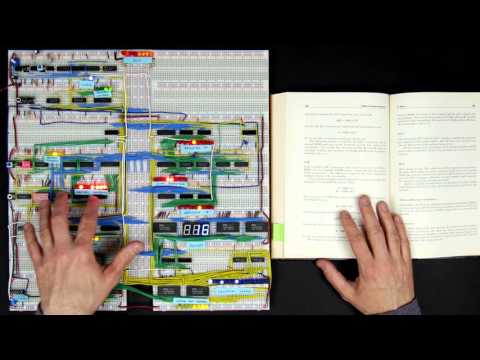
8-bit computer update
Ben Eater
14 HN recommender · 2017–2023
 10 mo on HN
Finding the Missing Memristor - R. Stanley Williams
The Qualcomm Institute
12 HN recommender · 2010–2024
 10 mo on HN
[LIVE] How to Achieve Proper Grounding - Rick Hartley - Expert Live Training (US)
Altium
9 HN recommender · 2021–2025
12 comments from Hacker News
For anyone interested in the 6502, assembly and just in general how things like loops, conditional branches, hardware communication, etc all work, I HIGHLY recommend Ben Eater's videos on the subject: ▶ this video They are incredibly fascinating!
i would suggest to follow Ben Eater's 8 bit computer ▶ this video and would strongly recommend to build it (you can see the parts on his website link or buy the whole kit)
I found the „Hello world from scratch“[1] series from Ben Eater incredibly helpful in connecting the dots between electricity and modern computers. Strictly speaking it is about electronics, still it is superbly presented and incredibly enlightening when coming from „normal“ software engineering perspective of things. What actually got me there was the book „Code“ by Charles Petzold[2] which traces the development from early circuitry like light bulbs and telegraph wires to modern digital logic. I found that after being introduced to these concepts, learning about the fundamental physics was much more accessible since it was framed in the context of contemporary application. 1: ▶ this video 2: link
After stumbling on Ben Eaters “Hello world from scratch” [1] I went out and bought the cpu some parts and breadboards. The chip is only a few dollars. It is highly recommended if you want to dive down into computers and digital logic on first principles. Also great fun to get a break from all the screens and layers upon layers of software that I have to deal with daily. 1. ▶ this video
Here is an amazing video on how to build a computer based on 6502 on a breadboard, and program it in binary to get a Hello World equivalent. I highly recommend it: ▶ this video
The (awesome) youtube electronics teacher Ben Eater has just started a series of videos building a 6502 based computer on a breadboard, and he sells kits. I just got my kit, so I'm really looking forward to the rest of the videos. He also offers the schematics for those wanting to jump ahead. ▶ this video link
I respectfully disagree, BASIC/Java/Arduino hides too much about how the CPU works from users. Getting a 6502 kit from Ben Eater, and walking though how the CPU works will implicitly show how languages abstracted away whats actually happening. And more importantly, the skills necessary to understand how to write efficient programs. ▶ this video link Starting with a simple architecture is highly recommended. =3
Ben Eater's 8-bit projects are the easiest place to start if you don't already deeply understand how such computers work. He starts with the hardware and eventually builds up to writing non-trival assembly for it. ▶ this video
Ben Eater's fantastic video series on building a breadboard 6502 based computer and an 8-bit breadboard computer from scratch might be appreciated in this thread. 6502 playlist: ▶ this video 8-bit build playlist: link He also sells kits if one is interested in playing along.
Ben Eater has a video series called "'Hello, world' from scratch on a 6502" that you might find interesting: ▶ this video
If fritzing gets #1 spot on HN I would like to wholeheartedly recommend link as well. IMHO much saner workflow and good UX in the latest version.I did a simple PCB and got it manufactured on link for a couple bucks. Quite a rewarding experience. I would also suggest that anyone who cares about computers gets to know basic electronics. How do transistors work, what is a bus (e.g I2C or SPI) and how is it all connected? (Drumroll ... a PCB of course). There is a ton of tutorials on youtube that do it end to end. E.g Phils Lab link for a PCB design. Or Ben Eaters excellent beginner tutorial "Hello World from Scratch" ▶ this video
For anyone itching for more Ben Eater, he's currently working on a series where he takes a 6502-type processor and turns it into a usable computer. Here's the first video: ▶ this video