Amputee Makes History with APL’s Modular Prosthetic Limb
Johns Hopkins Applied Physics Laboratory2 HN recommenders · recommended in 2 months, 2014–2016
news · general · 2014–2016 on HN
Johns Hopkins APL shows Les Baugh, a bilateral shoulder-level amputee, controlling two Modular Prosthetic Limbs by thought after a short training period. Nerves rerouted to his chest drive the arms.
HN cites it as an astonishing glimpse of advanced thought-controlled prosthetics.
Up next
 3 mo on HN
Will AI outsmart human intelligence? - with 'Godfather of AI' Geoffrey Hinton
The Royal Institution
3 HN recommender · 2025–2025
 1 mo on HN
Joe Rogan Experience #2255 - Mark Zuckerberg
PowerfulJRE
2 HN recommender · 2025–2026
 3 mo on HN
Y Combinator's Paul Graham sits down with Jason at LAUNCH Festival 2014
This Week in Startups
3 HN recommender · 2014–2016
 12 mo on HN
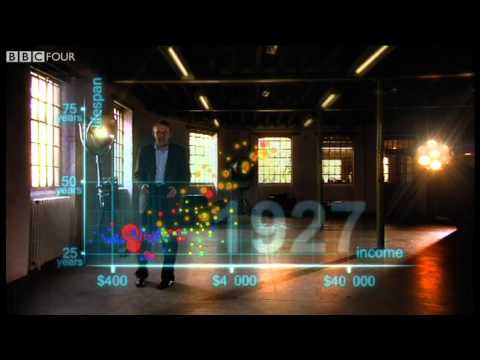
Hans Rosling's 200 Countries, 200 Years, 4 Minutes - The Joy of Stats - BBC
BBC
10 HN recommender · 2010–2023
 3 mo on HN
RailsConf 2016 - Rails to Phoenix by Brian Cardarella
Confreaks
4 HN recommender · 2016–2016
 5 mo on HN
Steve Jobs, "Computers are like a bicycle for our minds." - Michael Lawrence Films
Michael Lawrence
5 HN recommender · 2010–2025
 3 mo on HN
The Biggest Misconception in Physics
Veritasium
3 HN recommender · 2025–2025
 2 mo on HN
Secret Life Of Machines 104 The Washing Machine
Retrotv
2 HN recommender · 2015–2020
 15 mo on HN
1. Introduction to Human Behavioral Biology
Stanford
15 HN recommender · 2012–2026
 12 mo on HN
Stanford's Sapolsky On Depression in U.S. (Full Lecture)
Stanford
14 HN recommender · 2009–2026
 11 mo on HN
What Bodies Think About: Bioelectric Computation Outside the Nervous System - NeurIPS 2018
The Artificial Intelligence Channel
12 HN recommender · 2018–2024
 11 mo on HN
The great porn experiment | Gary Wilson | TEDxGlasgow
TEDx Talks
10 HN recommender · 2012–2023
4 comments from Hacker News
That's a great point. I described the next revolution as possibly one of automation, but that might not be enough. Maybe automation and robotics is better... hmm. This particular thing from Johns Hopkins is just incredible and gives us a glimpse of what might be in 50 years: ▶ this video
I'm sceptical the school kid project shown in your link actually works significantly. Johns Hopkins University Applied Physics Laboratory made a real one, I think by surgically moving 'spare' nerves to various points at the inside surface of the patients chest and then putting electrodes on the exterior surface. There's an interesting video explaining a bit: ▶ this video from link
>This particular thing from Johns Hopkins is just incredible and gives us a glimpse of what might be in 50 years: ▶ this video Who's going to be able to afford those?
Must not have watched the video: ▶ this video This part of the video shows the arms are not attached. I'm sure he was trained to use the arms when they were not on him first.