Hans Rosling's 200 Countries, 200 Years, 4 Minutes - The Joy of Stats - BBC
BBC10 HN recommenders · recommended in 12 months, 2010–2023
explainer · general · evergreen · 2010–2023 on HN
Hans Rosling uses augmented-reality animation to show 200 countries over 200 years in four minutes, built from 120,000 data points. It tracks life expectancy and income to show the world's development.
HN commenters send it as a short antidote to cynicism, showing long-term global progress and the shrinking gap between rich and poor countries.
Up next
 3 mo on HN
Pentagon Wars - Bradley Fighting Vehicle Evolution
66NOVA66
3 HN recommender · 2014–2024
 2 mo on HN
MAKRO | XLOOKUP: META BREAKER? | Microsoft Excel Stream Highlights 10/19
KRAZAM
2 HN recommender · 2020–2026
 2 mo on HN
See how the rest of the world lives, organized by income | Anna Rosling Rönnlund
TED
2 HN recommender · 2018–2023
 3 mo on HN
New Earthships capture more energy, water & food at lower cost
Kirsten Dirksen
3 HN recommender · 2020–2026
 5 mo on HN
Why Louisiana Stays Poor
Together Louisiana
6 HN recommender · 2018–2024
 4 mo on HN
The Ranks of Global Billionaires: Not All Billionaires Are Made Equal
Economics Explained
4 HN recommender · 2020–2022
 3 mo on HN
Rapping, deconstructed: The best rhymers of all time
Vox
3 HN recommender · 2019–2023
 5 mo on HN
How Great Leaders Inspire Action | Simon Sinek | TED
TED
4 HN recommender · 2011–2022
 14 mo on HN
A Better Default Colormap for Matplotlib | SciPy 2015 | Nathaniel Smith and Stéfan van der Walt
Enthought
15 HN recommender · 2015–2026
 11 mo on HN
DON'T PANIC — Hans Rosling showing the facts about population
Gapminder Foundation
8 HN recommender · 2017–2021
 8 mo on HN
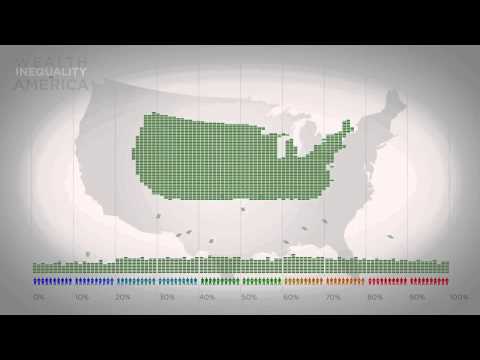
Wealth Inequality in America
politizane
8 HN recommender · 2013–2025
 7 mo on HN
Animations of unseeable biology | Drew Berry | TED
TED
7 HN recommender · 2017–2025
12 comments from Hacker News
Spend five minutes and watch this. Amazing presentation my Hans Rausling, economist, on rising global property. ▶ this video
It's admittedly a 12 year old YouTube, but I always liked watching this when I was feeling especially cynical about the overall trajectory of the world: ▶ this video
This is just personal but anytime I feel similar to the OP, I watch something by Hans Rosling [1] or Anna Rosling [2]. Although 10 and 5 years old respectively, I feel the general sentiment is still true - that human progress is slow, in the background and might be ebbing and flowing in your specific sub-population. And when compared to the present, media narrative driven present its hard to see the improvements happening across the global population. It helps me put stuff in perspective - of course mileage may var (and maybe it's just helping me delude myself into getting out a funk but it works!). [1] Hans Rosling's 200 Countries, 200 Years, 4 Minutes - ▶ this video [2] See how the rest of the world lives, organized by income - Anna Rosling Rönnlund link
Can your zero sum hypothesis explain the following amazing video from Hans Rausling, economist, on rising prosperity? ▶ this video
There are lots of things to worry about. There are lots of promising possibilities. Here is a talk from Hans Rosling talking about long term global economic and poverty trends that gives an optimistic outlook. 4min. ▶ this video And while that is promising, the question for me comes down to happiness which is different than prosperity. I'm just starting to think more about that.
Fair point. In defense of my moral model, it's backed up by this idea: are things perfect? No. Is the system working? Yes, and astonishingly well. Is there a better way to get from here to there, where "there" is some improved state of prosperity and development? No. Human nature is what it is, and our systems must exploit our nature rather than combat it. It's all based on measurable positive outcomes, rather than some theoretical idea that being eye-wateringly rich is somehow bad - morally bad, or bad for society. That idea is rooted in the old, pre-growth, pre-industrial paradigm, when all wealth was seized by force in some way. Today, some wealth is from violence, but the overwhelming majority is new money that was created out of nothing but good old human intelligence. Here are some references backing up my idea that the system works. Here's one focusing on the most important metric, human development: link This one is from the World Bank. You have to go into the metrics and countries. There are metrics that aren't of interest here, but some are, like access to clean cooking fuels, or electricity. But it's easy to see that most of it is pointing in the right direction. link Here's a book about all the things that ordinarily fuel existential pessimism: link Here's a book about how innovation progresses exponentially, and what it means for the masses: link Here's that classic video by Hans Rosling giving us some perspective on the progress over the last century: [V
To quote David Mitchell (the comedian, not the author) it would be tempting to take this kind of thing seriously if it wasn't for a damnable sense of perspective. Some thoughts: 1. Much like how the entire centrist media machine feeds off the insanity of the current US administration, somehow this article is at the top of HN. We put it there. (Well, 42 of you did, as of the time I wrote this.) 2. Perhaps the best-kept secret in the world is that it is getting better by almost every measurement. The late, great Hans Rosling was superb at breaking down these dimensions in video form (eg. ▶ this video ) but if you want the real deal, I recommend Steven Pinker's excellent "Enlightenment Now". 3. I couldn't care less that Intel has "stalled" since you can now buy a Raspberry Pi that pwns my first computer by an order of magnitude or three and costs less than $25. Meanwhile, Apple is refocusing on Mac hardware again because so many "poor" people have phones now that they can see a sales ceiling... this means that a huge percentage of the planet has a significant computer on them all of the time. 4. Not only does age and wisdom allow you to observe tech over many cycles, but the older I get the more I realize that tech is nothing outside of its relationship to politics, culture, and ourselves. Look at how young children just assume everything is a screen, now. Tech is now an important aspect of the daily political conversation. In just 15 years we've gone from a society that rents VHS mo
Not utopia compared to what? My great grandmother had to have 8 kids so that she could have 4 or 5 adult children. That was less than 100 years ago. My grand parents were the children of subsistence farmers without running water or electricity. They went to high school, worked in factories, and could get broadcast TV in their living room. Electricity and running water became a base default. My parents work in an office pushing papers around. Even the society of their youth seems alien in its antiquatedness of both social mores and amenities. I get paid to think things and can reasonably expect to live essentially disease free until my 70's. Achieving 90 in relatively good health and vitality doesn't seem out of the question. Seems pretty utopic to me. What not-utopia are you talking about? EDIT: Watch: ▶ this video Over the past 200 years, the difference between 1st world and 3rd world has all but vanished. We still have a ways to go, but no utopia is perfect. Even in the movies.
The people who grow my coffee beans also live much better than they used to. We're enjoying a before unseen period of peace and prosperity. Globally. Watch: ▶ this video Over the past 200 years, the difference between 1st world and 3rd world has all but vanished. We still have a ways to go, but no utopia is perfect. Even in the movies.
It took the west a long time to figure out the stable government structures. I saw one theory that civilisation started around the Med because it was easy to get about by boat and was slow in Africa because it was pretty hard to get about before jet aviation. I figure that now they've got internet they'll catch up. Hans Rosling's thing is interesting showing Africa catching a bit towards the end ▶ this video
No, something has changed and PG understands it while you don't. As link explains, what you are missing is that what people really want is wealth, not money. And wealth is things of value created by people. As productivity improves, we can create more wealth. One form of that wealth is that we can make more efficient use of fundamentally scarce resources. Which admittedly does not increase them, but does decrease pressure on them. The aggregate effect of these trends over time is truly remarkable. See ▶ this video for a vivid demonstration of how remarkable it is.
I am making a statement about the reasoning that results in current policies. I'm not saying that the policies are well-executed (indeed I think they are not), merely that they have something more than just "reward a well-connected lobby" justifying them. As for African poverty and famine, you're right that measures that protect farmers in rich countries will hurt farmers in poor ones. However the #1 cause of African famine remains corruption and war inside of Africa. And on current economic trends, we'll see economic powerhouses emerging in Africa in near decades. So as sad as our neglect of the interests of over a billion Africans is, it does not seem to be a permanent boot in the face. For perspective, take 5 minutes to watch ▶ this video . There are - today - African countries that are better off than any country in the world was 70 years ago. If others continue on trends that have happened elsewhere, things are going to improve fairly dramatically. I agree with you that our agricultural policies create problems. But I'm optimistic about what the future holds for people who are impacted.