What prevents the poor from reaching the middle class? | VISION TALKS
American Enterprise Institute2 HN recommenders · recommended in 2 months, 2014–2024
talk · general · evergreen · 2014–2024 on HN
Megan McArdle's AEI Vision Talk 'Capital and Poverty' argues that social and financial capital work differently in low-income communities, and that this explains barriers to reaching the middle class.
Cited to explain why poor people's seemingly irrational financial decisions can rationally protect their social safety net.
Up next
 3 mo on HN
CppCon 2015: Chandler Carruth "Tuning C++: Benchmarks, and CPUs, and Compilers! Oh My!"
CppCon
3 HN recommender · 2015–2020
 7 mo on HN
CppCon 2014: Chandler Carruth "Efficiency with Algorithms, Performance with Data Structures"
CppCon
7 HN recommender · 2014–2024
 1 mo on HN
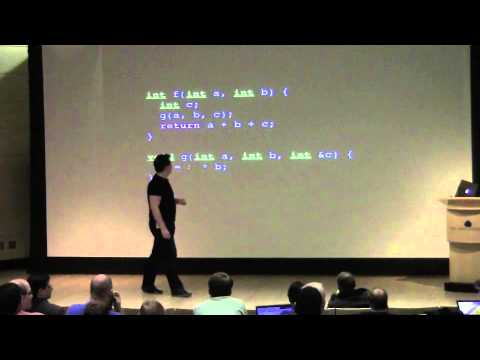
2013 Keynote: Chandler Carruth: Optimizing the Emergent Structures of C++
CppNow
1 HN recommend · 2013–2018
 11 mo on HN
What Happened to Horses Is Happening to Us
CGP Grey
11 HN recommender · 2014–2026
 10 mo on HN
Winners Take All | Anand Giridharadas | Talks at Google
Talks at Google
9 HN recommender · 2018–2026
 10 mo on HN
The Coming Collapse of the Middle Class with Elizabeth Warren
University of California Television (UCTV)
10 HN recommender · 2008–2022
 8 mo on HN
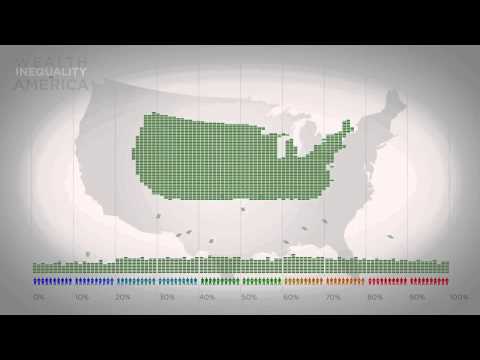
Wealth Inequality in America
politizane
8 HN recommender · 2013–2025
 8 mo on HN
Roblox Pressured Us to Delete Our Video. So We Dug Deeper.
People Make Games
9 HN recommender · 2021–2026
 7 mo on HN
Immigration, World Poverty and Gumballs
NumbersUSA
7 HN recommender · 2013–2024
 6 mo on HN
Democracy at Work: Curing Capitalism | Richard Wolff | Talks at Google
Talks at Google
6 HN recommender · 2017–2026
 6 mo on HN
I Tried To Make Something In America (The Smarter Scrubber Experiment) - Smarter Every Day 308
SmarterEveryDay
6 HN recommender · 2025–2026
 6 mo on HN
Where in the world is it easiest to get rich? | Harald Eia | TEDxOslo
TEDx Talks
5 HN recommender · 2016–2023
4 comments from Hacker News
> This reflects a false belief that people who live in poor neighborhoods are less compassionate. In fact research suggests that people living in poverty tend to be more compassionate towards each other than rich people are toward the impoverished. It's comforting for wealthier people to hold this belief, because it makes us feel less bad about our own lack of compassion. From what I recall, its less that the poor are more compassionate, instead they participate in _reciprocal altruism_ as a form of insurance against further loss. I remember this talk ▶ this video -- poor people make seemingly dumb decisions because if they don't help their social network when it comes knocking, they're in effect _cutting themselves off_ from said network. The middle class is more insulated from this effect because those with emergency savings don't often need to borrow $500 because of a broken car or need to house their recently homeless sister and children, so capital can accumulate more easily.
A different theory is that some people value social capital above other forms of capital and that can be a rational thing to do: ▶ this video
> There's something I remember being told (or maybe read about too) I heard it from a youtube video ▶ this video
For readers jumping to the comments: Any surplus went into the social capital (dowry etc), distributing it inside the countryside as non-fungible untaxable wealth. Putting a year's saving or even surplus into easily transportable goods like money would be a really dumb thing to do, as it was incredibly risky (dumb) thing to do. The author links to a talk on how this still plays a role in poor communities today: ▶ this video