The Coming Collapse of the Middle Class with Elizabeth Warren
University of California Television (UCTV)10 HN recommenders · recommended in 10 months, 2008–2022
lecture · general · 2008–2022 on HN
Elizabeth Warren's 2007 Berkeley lecture, when she was a Harvard law professor, on why middle-class families are under growing financial strain. She draws on bankruptcy research to examine rising costs of housing, health care and education.
HN cites it often in debates on inequality, cost disease and stagnant middle-class income, praising its data-driven approach.
Up next
 2 mo on HN
Raymond Hettinger - Dataclasses: The code generator to end all code generators - PyCon 2018
PyCon 2018
2 HN recommender · 2018–2021
 11 mo on HN
Republic, Lost | Lawrence Lessig | Talks at Google
Talks at Google
10 HN recommender · 2011–2017
 3 mo on HN
Hillel Wayne - Beyond Unit Tests: Taking Your Testing to the Next Level - PyCon 2018
PyCon 2018
3 HN recommender · 2018–2023
 4 mo on HN
The surprising pattern behind color names around the world
Vox
4 HN recommender · 2017–2025
 2 mo on HN
Is Meat Really that Bad?
Kurzgesagt – In a Nutshell
2 HN recommender · 2021–2022
 10 mo on HN
Why American Cities Are Broke - The Growth Ponzi Scheme [ST03]
Not Just Bikes
14 HN recommender · 2021–2024
 7 mo on HN
The hardest problem on the hardest test
3Blue1Brown
8 HN recommender · 2017–2025
 4 mo on HN
Nebraska retiree uses earths's heat to grow oranges in snow
Kirsten Dirksen
4 HN recommender · 2019–2026
 11 mo on HN
What Happened to Horses Is Happening to Us
CGP Grey
11 HN recommender · 2014–2026
 10 mo on HN
Winners Take All | Anand Giridharadas | Talks at Google
Talks at Google
9 HN recommender · 2018–2026
 8 mo on HN
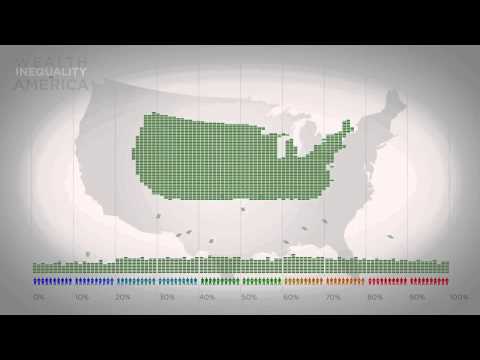
Wealth Inequality in America
politizane
8 HN recommender · 2013–2025
 8 mo on HN
Roblox Pressured Us to Delete Our Video. So We Dug Deeper.
People Make Games
9 HN recommender · 2021–2026
12 comments from Hacker News
Elizabeth Warren has answers: The Coming Collapse of the Middle Class with Elizabeth Warren ▶ this video Everyone should watch the video. She answers for the question of having more cars etc.
This is a great point. Not to get political myself, but if you compare this talk to Elizabeth Warren's "The Coming Collapse of the Middle Class"[1] from a few years back, it's night and day. Before she made economic claims, she described her exhaustive process with government agencies to get reliable data; the ways she tested the data when it seemed implausible; the various theories she tested and rejected to explain the data ... it's gripping stuff, because she develops insights based on research and hard-nosed science. That's what TED should be about. [1] ▶ this video
This talk by Elizabeth Warren, before she was a US Senator, talks a lot about this problem of essentials like housing, education, and healthcare going up much faster than, say, a new TV price: ▶ this video
> Single income households were a common occurrence, since dual income households competing for housing were not out competing single income houses. And I don't mean this in a crypto conservative way, even Elizabeth Warren wrote a book about it: link I haven't read the book, but her speech a decade ago is really eye opening. ▶ this video
This 2008 talk by Elizabeth Warren shows how much more complicated the situation is than the picture you paint. ▶ this video
It's more complicated than that. You need to live in a cheap part of town to afford rent but your city is un-walkable and has poor public transportation? Buy or lease a car so you can reliably get to work on time. You have a family and want to send your children to the best (or even decent) public schools? Live in a more expensive area - you have to buy access to good schools in many places, and the monthly payment on a mortgage for a house is cheaper than renting. You want a college education? Pay up. You want health care? Better have good insurance. There are many reasons that people have debt, and it's not all exorbitant spending. At the same time SOMEONE is profiting off that debt, and they have a vested interest in keeping that debt alive. This is a good talk that discusses nonintuitive pains the middle class is experiencing: ▶ this video
I'd advise giving this a watch. The data has surprised everyone, including the people researching it: ▶ this video
This is very interesting. I think it's also worth pointing out that the data tends to show that the use of personal bankruptcy to game the system is actually very low. I find that when the subject is brought up in a political context, this distinction is often not made. Here is a great lecture from Elizabeth Warren on the subject: ▶ this video
In 2007, before the financial crisis and before becoming Chairman of the Congressional Oversight Panel investigating the Troubled Assets Relief Program, Dr. Elizabeth Warren gave a very interesting talk at UC Berkeley titled "The Coming Collapse of the Middle Class." ▶ this video At the time I thought it was a little alarmist, but in view of recent developments I recommend watching it (58 minutes, sorry). It speaks directly to the point about wages and how middle class households employ revolving credit to make up the the difference. The graphs and data are interesting.
I was watching a video by Elizabeth Warren of Harvard Law School on the topic the other day. The gist of it is (I think) basically that housing and healthcare are taking up most of the money of the middle class. In the 1970-ties a single earner could bring in enough money to support the whole family. Now in the middle class both parents have to work, which doubles the financial risk for the family if one of them (for example) looses a job. If you are interested: the link is ▶ this video
If you look at a chart of TV prices over 50-80 years, this has always been a trend [1]. Institutes using this as an argument for declining poverty are missing the point that while most goods have gone down in cost over the years, services (childcare) and things of value (education) have gone up substantially [2]. [1]: link [2]: Elizabeth Warren's classic "Twin Income Trap" talk: ▶ this video
Elizabeth Warren gave a talk about this about a decade ago (before becoming a senator): ▶ this video For a family of 4 compared 1975 to 2005, all inflation-adjusted: Median housing went up by 76%, median number of rooms only went from 5.8 to 6.1 (5% increase), and the house is older. 74% increase in median health-care costs for a family of 4 with employer sponsored health-care. 52% increase in spending on cars, but cars are cheaper; many more families have 2+ cars. Childcare went from the median family of 4 spending $0 to being a significant expense. Tax liability went up by 21%