The hardest problem on the hardest test
3Blue1Brown8 HN recommenders · recommended in 7 months, 2017–2025
explainer · intermediate · evergreen · 2017–2025 on HN
3Blue1Brown walks through a very hard Putnam competition problem and its elegant solution, emphasizing the visual intuition and the thought process behind solving it.
HN fans list it among their favorite 3Blue1Brown videos for showing how mathematical problem solving actually unfolds.
Up next
 2 mo on HN
The Black Hole Information Paradox
PBS Space Time
2 HN recommender · 2018–2021
 11 mo on HN
Jan Willem Nijman - Vlambeer - "The art of screenshake" at INDIGO Classes 2013
Dutch Game Garden
10 HN recommender · 2014–2025
 6 mo on HN
Bret Victor - The Humane Representation of Thought
Colin McDonnell
4 HN recommender · 2017–2025
 3 mo on HN
Alan Kay : July 2007 : A Conversation with CMU Faculty & Students
CMU Robotics Institute
3 HN recommender · 2017–2024
 9 mo on HN
Ideas about a new programming language for games.
Jonathan Blow
7 HN recommender · 2014–2025
 5 mo on HN
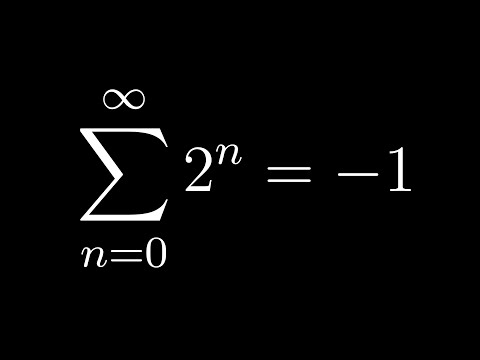
What does it feel like to invent math?
3Blue1Brown
6 HN recommender · 2016–2024
 4 mo on HN
Why Russia is Invading Ukraine
RealLifeLore
10 HN recommender · 2022–2022
 4 mo on HN
Bret Victor - Seeing Spaces
Colin McDonnell
3 HN recommender · 2017–2024
 18 mo on HN
Vectors | Chapter 1, Essence of linear algebra
3Blue1Brown
17 HN recommender · 2018–2026
 15 mo on HN
But what is the Fourier Transform? A visual introduction.
3Blue1Brown
16 HN recommender · 2018–2025
 14 mo on HN
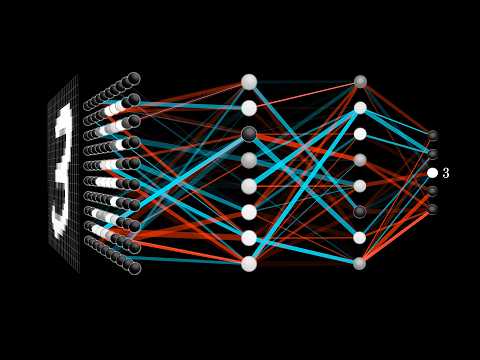
But what is a neural network? | Deep learning chapter 1
3Blue1Brown
16 HN recommender · 2017–2025
 13 mo on HN
The Beauty of Bézier Curves
Freya Holmér
16 HN recommender · 2021–2026
8 comments from Hacker News
I like the 3blue1brown youtube series for explaining mathematical problem solving, like this example explaining a difficult problem from the Putnam: ▶ this video "And those of you who follow the channel know that rather than just jumping straight to the solution, which in this case will be surprisingly short, when possible I prefer to take the time to walk through how you might stumble upon the solution yourself. That is, make the video more about the problem-solving process than the particular problem used to exemplify it." I bailed out of math around calculus, and these videos helped me at least appreciate what I was missing.
This is an extension of an animation library used by math YouTuber 3blue1brown [0]. He has an excellent channel that I would recommend anything from. One of my favorite videos of his is where he shows the thought process behind solving a level 6 Putnam competition problem and makes it seem almost doable [1]. [0] link [1] ▶ this video
3Blue1Brown is really great for learning/refreshing math. He has great visualizations. I especially enjoyed this video (not exactly a math tutorial more of a cool explanation): ▶ this video
Indeed, I'd recommend the "interesting proof" vignettes by 3Blue1Brown: ▶ this video These are my favorite videos of his
So many things I could say about this, but I"ll let Alan Kay speak for me - link Alan talks about how ideas in Calculus could be manifested from an early age and a richness in understanding built up as they aged up: - at very young ages, kids really respond well through "doing" / the enactive channel. When asked to draw a circle, kids in Papert's group would first emulate what a LOGO turtle would do by rotating their body in a circle (making tiny increments in x and y). - as they got a bit older, the visual / iconic channel was more developed and they could understand the abstraction of a circle on pencil/paper and how the concepts carried over there - closer to early teens, symbols were much easier to grasp and relate to, etc. With this context in mind, there have been some cool efforts to mix the second and third channels I just mentioned to communicate advanced math concepts. Vi Hart and Grant Sanderson's youtube channels come to mind. Here are my favorite videos by Grant: - "What does it feel like to invent math": link - On the visual intuition behind a hard problem on the Putnam exam - "The hardest problem on the hardest test": ▶ this video - From vectors to matrices to vector spaces to higher-level ideas like the link between linear algebra and calculus: "Essence of linear algebra" series: link What I especially like about Grant's videos, is that he often walks through what a mathematician would do, the questions she would ask, etc.
Related — these videos give a sense of how someone might actually go about thinking through and solving these kinds of problems: - A 3Blue1Brown video on a particularly nice and unexpectedly difficult IMO problem (2011 IMO, Q2): link -- And another similar one (though technically Putnam, not IMO): ▶ this video - Timothy Gowers (Fields Medalist and IMO perfect scorer) solving this year’s IMO problems in “real time”: -- Q1: link -- Q4: link
I strongly disagree with this comment. I sincerely doubt 100% of the HN audience always considers those things. You might think some of those things are basic, but that doesn't make them useless. This kind of lack of empathy for new learners can make it incredibly difficult to teach concepts to those who don't have as much knowledge as you may have. See ▶ this video for a great video by 3blue1brown on this topic.
I enjoyed watching this similarly insightful video [1] on "The hardest problem on the hardest test" of the Putnam Competition. [1] ▶ this video