But what is the Fourier Transform? A visual introduction.
3Blue1Brown16 HN recommenders · recommended in 15 months, 2018–2025
explainer · intro · evergreen · 2018–2025 on HN
3Blue1Brown's animated visual introduction to the Fourier Transform, showing how a signal breaks into frequency components.
HN's default recommendation for understanding the Fourier transform intuitively; many say it was the explanation that made it click.
Up next
 12 mo on HN
Preventing the Collapse of Civilization / Jonathan Blow (Thekla, Inc)
DevGAMM
14 HN recommender · 2020–2025
 3 mo on HN
Gender Neutral Pronouns: They're Here, Get Used To Them
Tom Scott
3 HN recommender · 2013–2015
 6 mo on HN
BlueHat IL 2019 - Andrew "bunnie" Huang - Supply Chain Security: "If I were a Nation State...”
Microsoft Israel R&D Center
6 HN recommender · 2019–2024
 6 mo on HN
Cybersecurity as Realpolitik by Dan Geer presented at Black Hat USA 2014
Black Hat
1 HN recommend · 2014–2023
 4 mo on HN
Mark Blyth ─ Global Trumpism
Watson School of International and Public Affairs
3 HN recommender · 2016–2019
 3 mo on HN
Chernobyl 3828
TeleconStudio
2 HN recommender · 2014–2019
 4 mo on HN
Flat Earth: A Measured Response
hbomberguy
3 HN recommender · 2019–2024
 3 mo on HN
TasBlock at AGDQ 2017: TASBot
TASVideosChannel
3 HN recommender · 2019–2025
 13 mo on HN
D/A and A/D | Digital Show and Tell (Monty Montgomery @ xiph.org)
FL Studio
15 HN recommender · 2017–2026
 8 mo on HN
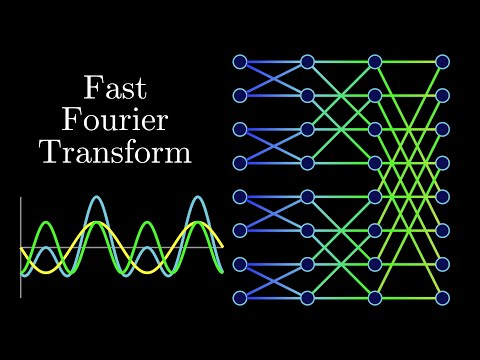
The Fast Fourier Transform (FFT): Most Ingenious Algorithm Ever?
Reducible
7 HN recommender · 2021–2026
 6 mo on HN
(1/4) Intro/History: Introducing a 100-year-old mechanical computer
engineerguy
6 HN recommender · 2015–2023
 5 mo on HN
David Kriesel: Traue keinem Scan, den du nicht selbst gefälscht hast
media.ccc.de
4 HN recommender · 2019–2025
12 comments from Hacker News
It's an absolutely brilliant bit of maths that breaks a complex waveform into the individual components. Kind of like taking an orchestral song and then working out each individual instrument's contribution. Learning about this left me honestly aghast and in shock that it's not only possible but that someone (Joseph Fourier) figured it out and then shared it with the world. This video does a great job explaining what it is and how it works to the layman. 3blue1brown - ▶ this video
Grant makes some amazing content. His visualization of the Fourier Transform[1] actually enabled me to understand the how it was happening behind the what was happening with one of the most used algorithms in computing. [1] ▶ this video
This is what made it click for me, can recommend it: 3Blue1Brown -- But what is the Fourier Transform? A visual introduction. ▶ this video
I can also highly recommend 3Blue1Brown's treatment of the topic: ▶ this video (...which I see now is cited in the video that you link to!)
I never understood how multiple electrical frequencies can be in a copper cable. I always thought they must merge and therefore it must be impossible to find the right set of original frequencies and their strength. Then I learned about the Fourier transform in this beautiful video: ▶ this video
Dude really needs to subscribe to 3Blue1Brown: ▶ this video (but anyone interested in stuff like this should be. I guess I'm surprised to see someone like this writing a blog post who isn't regularly checking out that channel)
This is an explanation (from the amazing three blue one brown) of the DFT not the DCT, but this was the first thing that ever really made sense to me. It is explained by someone who really knows math incredibly well and is an amazing teacher, with amazing visuals: ▶ this video
I found the 3Blue1Brown explanation to be more intuitive to understand, but this article has more practical examples/details. Here's the 3Blue1Brown explanation: ▶ this video link
(Almost-)linear models do linear things, it seems, and the Fourier transform is the quintessential linear thing. It is also an extremely neat piece of the real world, but I’m hesitant to guess your background and offer an explanation because your phrasing makes me suspect an engineering one. With concepts usually being the first to be culled in a course targeted at engineers, there could be quite a bit of concept debt to pay off before I could really offer something I could honestly call an explanation. Have you tried the 3Blue1Brown video on the topic[1]? It does not AFAIR offer any answers as to why the Fourier transform should exist or be useful, but it does show very well what it does in the immediate sense. [1] ▶ this video
Just a nit. The pair of equations the author showed at the beginning of the article are not the equations of the Fourier Transform and its inverse. The Transform is a continuous function operating on an infinite input. The equation for the Transform involves the use of the integral taken over +/- infinity. What is shown, using the summation operator, is a discrete form on the Transform where the input is a limited time series. A good alternative explanation can be found on Grant Sanderson's 3 Blue 1 Brown channel ▶ this video
There's no all in one stop for understanding radio but these 5 resources helped me a lot. The RF Get Down courses. This is by far the best material online to learn RF and how modulation works: link 3blue1brown's video tutorial on the fourier transform: ▶ this video AT&T Archives: Similiarities of Wave Behavior link Quadrature Signals: Complex, But Not Complicated by Richard Lyons, link link Antenna Theory's website and forums, link I also highly recommend getting a $20 rtl-sdr USB software defined radio dongle. They're great toys for learning RF, what modulation is , and exploring the spectrum.
If the part about the tack on the board under the clocks wasn't clear, and you're a visual learner, this video from 3Blue1Brown about the [classic] Fourier Transform might help clarify the relationship to periodicity: ▶ this video