Chernobyl 3828
TeleconStudio2 HN recommenders · recommended in 3 months, 2014–2019
documentary · general · evergreen · 2014–2019 on HN
A Ukrainian documentary about the liquidators who cleaned radioactive debris off the Chernobyl reactor roof in two-minute shifts. It presents their firsthand accounts and footage of the work.
Recommended as a moving, first-person account of the people who dealt with the worst of the Chernobyl cleanup.
Up next
 3 mo on HN
Gender Neutral Pronouns: They're Here, Get Used To Them
Tom Scott
3 HN recommender · 2013–2015
 6 mo on HN
BlueHat IL 2019 - Andrew "bunnie" Huang - Supply Chain Security: "If I were a Nation State...”
Microsoft Israel R&D Center
6 HN recommender · 2019–2024
 15 mo on HN
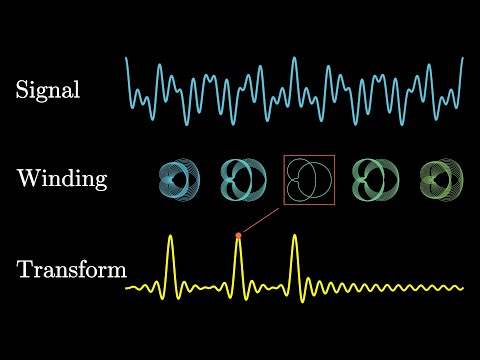
But what is the Fourier Transform? A visual introduction.
3Blue1Brown
16 HN recommender · 2018–2025
 6 mo on HN
Cybersecurity as Realpolitik by Dan Geer presented at Black Hat USA 2014
Black Hat
1 HN recommend · 2014–2023
 4 mo on HN
Mark Blyth ─ Global Trumpism
Watson School of International and Public Affairs
3 HN recommender · 2016–2019
 4 mo on HN
Flat Earth: A Measured Response
hbomberguy
3 HN recommender · 2019–2024
 3 mo on HN
TasBlock at AGDQ 2017: TASBot
TASVideosChannel
3 HN recommender · 2019–2025
 12 mo on HN
George Lakoff: Moral Politics
University of California Television (UCTV)
3 HN recommender · 2016–2024
 13 mo on HN
MIT's Pathway to Fusion Energy (IAP 2017) - Zach Hartwig
MIT Plasma Science and Fusion Center
16 HN recommender · 2017–2023
 10 mo on HN
Breakthrough in Nuclear Fusion? - Prof. Dennis Whyte
MIT Club of Northern California
11 HN recommender · 2016–2024
 7 mo on HN
How close is nuclear fusion power?
Sabine Hossenfelder
15 HN recommender · 2021–2022
 5 mo on HN
Energy Investments Dialogue | Bill Gates | Global Energy Forum
Stanford ENERGY
3 HN recommender · 2019–2020
8 comments from Hacker News
One of the most impressive documentaries I've ever seen is "Chernobyl 3828"[1]. It is about the 3828 "liquidators" (cleanup crew) - euphemistically called the "bio robots" - that had to clean up the worst section of roof above the reactor. Maximum allowed dose was two minutes exposure to that section the roof. It has some of the same footage as the sequence in your link to t=3430, but there is a key difference: Chernobyl 3828 is about the people . The psychology of the cleanup was complicated. Some people ran while others faced the danger and accepted a "red badge of courage" because if they didn't, someone else would have to go in their place . [1] ▶ this video
I understand and partly agree. The geeky stuff was very limited and the narrative and exposition was somewhat dramatized. I am also not sure if the real characters really acted towards the state in such a brave unassailable way as depicted... Still I think the show adopts a valid viewpoint and gives a powerful and needed message about a corrupt totalitarian system. But you are right that telling the story from the point of view of organizational challenges or from a point of view of a real person putting their life in danger in taking part in the effort would be very interesting too. There are some great documents on youtube from these different points of view, e.g. the story told by Starodumov and Bordakov: ▶ this video
> Chernobyl-style "bio-robot" "liquidators" Anybody that isn't familiar with the "liquidators" should watch Chernobyl 3828 , a Ukrainian documentary about the cleanup of the worst part of the roof with comments by the people currently working their two-minute shifts as a "bio-robot". link ▶ this video
The people that were very unfortunately necessary that deserve to be remembered are the 3828 "liquidators" that cleaned up the radioactive graphite (mixed with bits of reactor fuel/waste) that covered the roof above the reactor. In their own words[1]: > [the remote control bulldozer] has overridden a graphite block with it's right caterpillar track, and now was sitting on 12,000 Roentgen fragment. [...] Starodumov was already thinking about something else... what all of us have already known: robots failed, and the extra radioactive zones will have to be cleaned by men. > The shift lasted only two minutes. [...] Here, the unthinkable background radiation of nearly 8000 Roentgens. 20 meters away from us is the naked muzzle of the destroyed reactor. [...] With each succeeding group, with each fragment removed, the background radiation will reduce. This means the risk for the next group will already be lower. [1] (this includes footage of the cleanup) ▶ this video
> There is still a lot of that material I never said there wasn't. The cleanup is ongoing and will take a very long time, but it still isn't "destroyed for good". At least the caesium eventually goes away. The Pb, Hg, and As in the 1.1 billion gallons of fly ash slurry that the Tennessee Valley Authority spilled[0] over homes and into the Emory and Clinch rivers doesn't have a half life. > economy and agriculture The tsunami also did incredible damage to the economy and agriculture of Japan. > Can you claim without flinching that this will never ever happen? Absolutely. Even the idiotic RBMK design can be run safely after being modified to fix the void coefficient. I suggest actually reading my link[1] above, which explain in great detail the problems in the design of that reactor. Even with those problems, it took incredible effort[2] to trigger the steam explosion. > 'heroes of Chernobyl' I'm give a lot of respect and thanks to those that had to deal with Chernobyl's immediate aftermath and the 600,000 liquidators that were part of the cleanup afterwords. In particular, the 3828 people that cleaned up the worst section of roof in two minute shifts. Their story - in their own words[3] - is something I will never forget. [0] link [1] link [2] link [3] ▶ this video
I thank the 3828 liquidators that cleaned up the worst of the Chernobyl roof, two minutes at a time. ▶ this video > died for nothing While that is certainly true, it's worth remembering that most are still alive, though many are now having trouble in the healthcare system thanks to poor CCCP records (or finding those records now).
Ever since it became easier to get into the Chernobyl area, there has been an increase in people trying to dramatize it. I suggest watching this short video with Tom Scott, about his recent visit, where they try to inject a bit of reality into the situation: a lot of looted/stripped buildings that have stood abandoned for decades. It's impressive, but doesn't have a lot to do with radiation or the reactor. link There are certainly a lot of areas where you shouldn't linger for extended periods of time. The reactor accident (and how the situation was handled afterwords[1]) was absolutely terrible. That said, it is important to remember that - even accounting for the Chernobyl disaster (and the utterly insignificant radiological [3] disaster in Fukushima) - nuclear power is still the only viable option if we want to have energy in the future, as it is the cleanest . Everything else pollutes more and only a few technologies even come close to making enough power. Unfortunately, the Hiroshima Syndrome[4] is epidemic, and the current wave of "Chernobyl disaster theatre" is only making these fears worse. We need to find better ways to educate people and counter the decades of misinformation and fear. The HN crowd like to "disrupt" things, so may I suggest finding ways to disrupt the common fears about radiation? [1] My greatest respect and thanks to the people - the "liquidators" - who had to be the "bio-robots" that cleaned up the worst areas when the mechanical robots failed fro
Related video, also workers at Chernobyl, but another piece of the reactor: the roof. ▶ this video "Military people call such places "FRONTLINE", liquidators who worked at the Chornobyl nuclear station called it "ROOF COATING". It was the most contaminated, and therefore the most dangerous, place in the zone. The remains of the roof coating of the 4th reactor. The operation on decontaminating the roof lasted more than five months. We will tell about only two days."